


Getting around in Lapland
There is a different rhythm to travelling in Finnish Lapland. Roads slip between silent forests, the sky stretches beyond the fells, and distances are measured not only in kilometres, but in the space they give you to breathe. Yet before the journey begins, one practical question remains: do you need a car?
In the heart of Rovaniemi, life is close at hand. In Levi, paths and seasonal buses connect many of the places visitors seek. Farther from the bustle, near the Pallas fells and the small village of Raattama, the journey becomes quieter — and transport needs a little more thought. A remote cabin might be the perfect place to listen to the stillness, but the nearest shop may be a drive away.
This guide is an invitation to plan with care, and then travel without hurry. Discover the ways north by air, rail and road; the possibilities and limits of local transport; and the essentials of winter driving. Along the way, we share the perspective of Villa Lapland, our peaceful retreat beside the Pallas–Yllästunturi landscape.
1. Finding Your Own Pace: Do You Need a Car?
Before booking a car, imagine the days you hope to have. Perhaps they will be filled with cafés and guided adventures. Perhaps you would rather walk through snowy woods, follow a reindeer trail with your eyes, or watch the last pale light settle over the fells. There is no single right way to discover Lapland. Your choice of transport should simply leave room for the experience you came to find.
Where you may not need a car
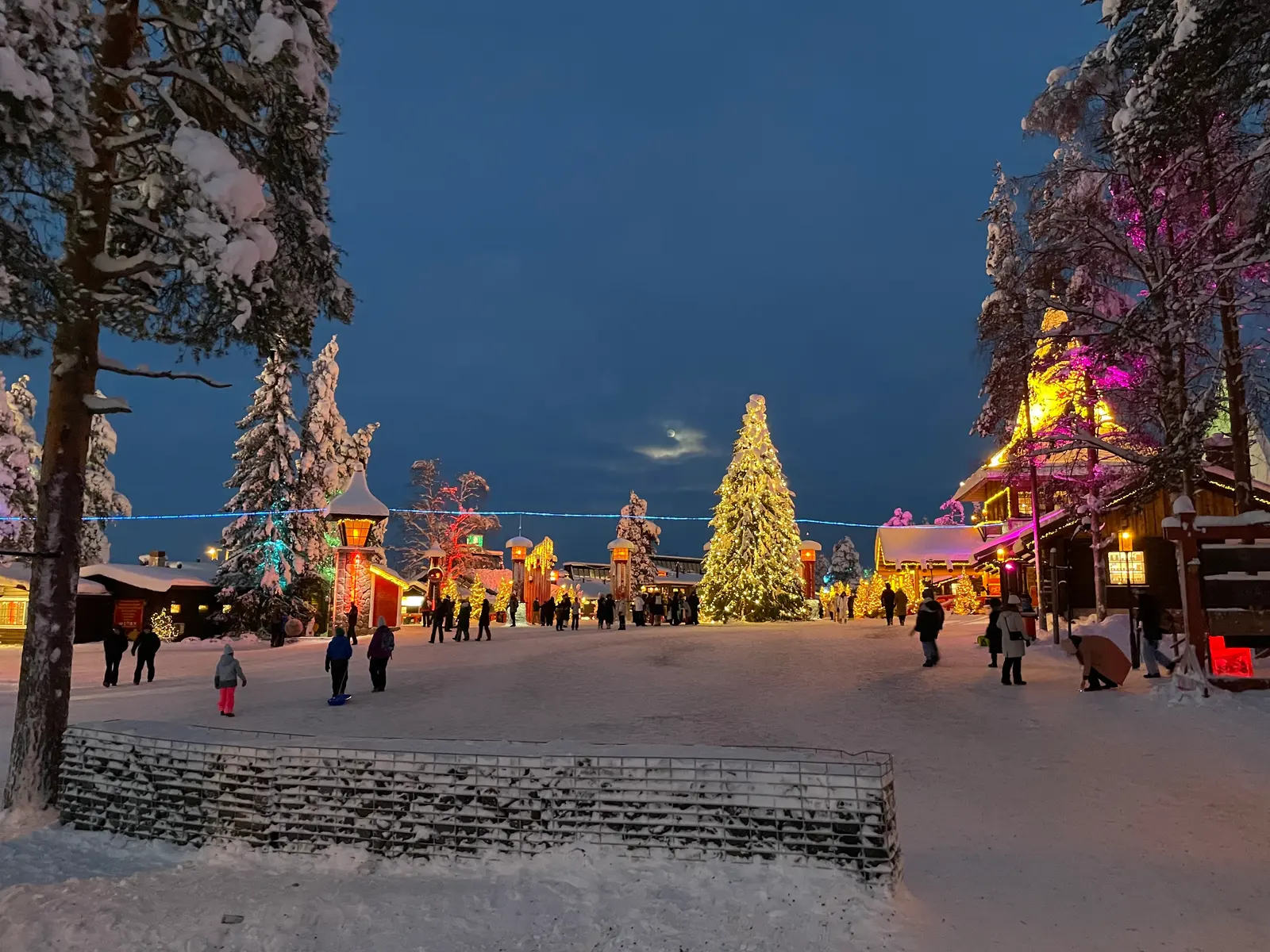
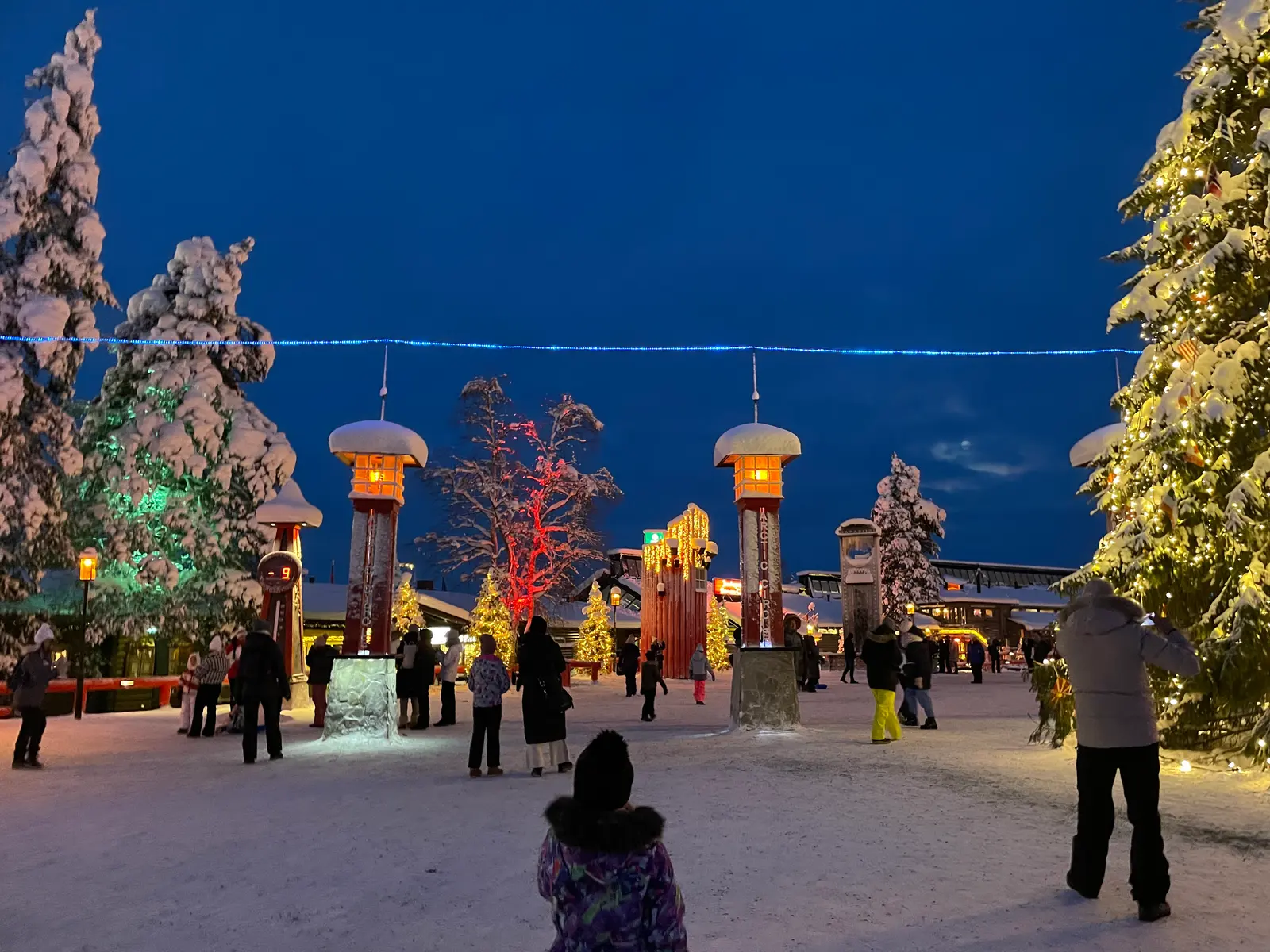
Rovaniemi: the urban centre is relatively compact. Buses, taxis and organised tour pickups make a car optional, particularly if you stay centrally and want to visit Santa Claus Village or join guided activities. Check the location of your accommodation rather than assuming everything in the wider Rovaniemi area is walkable.
Levi: guests staying in the centre may walk to restaurants, shops and ski facilities, and seasonal ski buses provide additional connections. A car becomes more attractive when you want to visit other villages or go beyond the resort.
Saariselkä and central Ylläs villages: depending on your exact accommodation, seasonal buses and local services may cover many everyday needs. Do not assume an isolated cabin marketed under the name of a resort is actually inside its walkable centre.
Where a car is particularly useful
In smaller communities such as Raattama, in the Pallas–Yllästunturi region, or at cabins outside village centres, a car gives you freedom over your timetable. It lets you buy groceries when you want, explore trailheads at sunrise, visit a restaurant in another village or adapt your plans when the weather changes. Rural public transport is not designed around every visitor’s daily sightseeing schedule.
That does not mean every guest needs a car. If your idea of a perfect holiday is reading beside the fireplace, enjoying the sauna, taking nearby walks and watching the sky from your terrace, a pre-booked transfer and advance shopping arrangements can be an entirely sensible choice.
A useful rule: If you will spend more time exploring than relaxing at your accommodation, compare the convenience of a car with the total cost and limitations of transfers. If you plan to stay put, work out the cost of getting there and back before booking seven days of rental car you will hardly use.
How Will You Find Your Way Through Lapland?
A few simple choices can help you find a way of travelling that feels right. This planner offers guidance and illustrative costs, not live prices or bookings.
Optional cost comparison
Enter quotes you have actually obtained. The example values below are hypothetical placeholders, not current market rates.
A car will probably make your stay more flexible
For a rural cabin with independent day trips, a car is usually the most convenient option if you are comfortable with winter driving.
These are planning figures only. Parking, insurance, deposits, availability and extra tours are not included.
2. The Journey North: Arriving in Finnish Lapland
Finland is long. Travelling from Helsinki into Lapland means covering hundreds of kilometres, even before you reach the remote northern parts of the region. For most international visitors, the practical choices are to fly north, use a train from southern Finland or make a longer road trip. The right choice depends on your departure point, time, luggage and whether you want a car when you arrive.
Flying: the quickest starting point
Kittilä is the natural airport for much of western Lapland, including Levi and the Pallas area. Rovaniemi has a broad range of visitor services and is convenient for trips centred on the Arctic Circle. Ivalo serves northern Lapland, including Saariselkä and Inari. Kuusamo is useful for Ruka and the eastern region, while Kemi–Tornio serves southwest Lapland. Routes and seasonal international schedules change; always compare the entire onward journey before choosing the cheapest flight. Check Finavia’s official airport information.
A seemingly cheaper flight can become more expensive when it leaves you with a long taxi journey, inconvenient connection or an extra rental-car day. Compare landing times, available car rental opening hours and the journey to your accommodation. In winter, arriving in daylight can be a meaningful advantage for visitors driving on snow for the first time.
The overnight train: arrive while you sleep
Finland’s rail operator VR runs overnight trains to Rovaniemi, Kolari and Kemijärvi. Private sleeping cabins are available on selected services, and vehicle transport is offered on relevant car-carrier services. This makes the train a very appealing alternative to driving all the way north from Helsinki, particularly if you want your own car for the final leg of the journey. Check destinations, dates, berths and car-carriers with VR.
Kolari is especially worth considering for western Lapland and the Ylläs region. From the station, you will still need an onward bus, rental car or taxi. If you intend to visit Pallas or stay in Raattama, plan that final connection before buying the train ticket. A train ticket to Lapland does not necessarily mean that the last rural part of the journey is straightforward without a car.
Driving north from southern Finland
Driving yourself is a valid choice if the road trip is part of the experience. You can stop in smaller towns, bring more luggage and avoid airline baggage limits. But a drive from Helsinki to Lapland is a full-day or multi-day undertaking, not an incidental airport transfer. In winter, limited daylight, changing road grip and heavy holiday traffic can make the journey more tiring than its distance suggests.
Plan breaks and preferably an overnight stop if you are travelling a long way, particularly with children or after a working day. Weather can change between southern Finland and Lapland. Checking a forecast for your destination alone is not enough: evaluate the whole route.
3. Airports and Stations: Choosing Your Gateway
Lapland is not a single resort. The route that makes sense for Inari can be completely wrong for Levi or Pallas. Below is a geographical planning overview, not a real-time route or distance quotation.
| Staying around | Useful arrival point | What to plan next |
|---|---|---|
| Rovaniemi / Santa Claus Village | Rovaniemi Airport or rail station | City bus, airport bus, taxi or local transfer |
| Levi / central Kittilä | Kittilä Airport | Airport bus, taxi or rental car |
| Ylläs / Äkäslompolo | Kittilä Airport or Kolari station | Seasonal shuttle, regional bus, taxi or car |
| Muonio / Pallas / Raattama | Kittilä Airport; compare Kolari train | Rental car or pre-booked rural transfer |
| Saariselkä / Ivalo / Inari | Ivalo Airport | Shuttle, regional bus, taxi or car |
| Ruka / Kuusamo | Kuusamo Airport | Resort transfer or rental car |
| Pyhä / Luosto | Rovaniemi Airport or Kemijärvi station | Check seasonal onward connections |
What about Enontekiö? It can be geographically interesting for parts of northwestern Lapland, but do not assume it offers the same year-round scheduled passenger options as Kittilä or Rovaniemi. Check which flights actually operate on your travel dates before including it in your plan.
4. Travelling Gently: Lapland Without a Car
Regional and long-distance buses
Finland has an extensive intercity and regional bus network, but frequency varies enormously. A major route may have convenient daily options; a small village may have services mainly designed around local needs, school days or particular seasons. Some journeys require changing buses or spending hours waiting for the connection.
The first place to check is Matkahuolto’s journey planner, which includes nationwide long-distance services and participating local transport. Check your actual travel date, including the return trip. Sundays and public holidays can be very different from ordinary weekdays. If you arrive on a late flight, verify that the onward service still operates.
Airport and resort shuttles
Resort airports often have dedicated seasonal connections to popular destinations. These can be excellent value for a traveller staying in a resort centre. However, the word “airport shuttle” does not guarantee a door-to-door service to every remote holiday home. Ask where the bus stops and how far that stop is from your accommodation. Walking the final kilometres with suitcases in freezing weather is rarely a good beginning to a holiday.
Taxis and pre-booked private transfers
Private transfers are often the simplest solution for a couple or group that does not want to drive. They are particularly useful when you arrive late, travel with large luggage or stay somewhere with limited public connections. Ask for a written quote covering the whole vehicle, the number of passengers, luggage, possible waiting time and any late-night or holiday supplement.
For rural journeys, book ahead. Do not assume an available car will be waiting at the airport or that a taxi will happen to be available in a small village when you want to return. A return transfer and a grocery stop may be cheaper than a week-long rental car, but add the cost of any later restaurant visits, activity transfers or spontaneous excursions before deciding.
Guided activities with pickup
Many operators provide pickups from selected accommodation or central meeting points. This can remove the need to drive to an activity at all. Before paying, check the actual pickup area: “pickup included” may refer only to the operator’s main resort or town. Outside resort centres, an additional charge or separate transfer may apply. Always confirm this with the provider.
It is also worth resisting the urge to fill every day with an organised tour. Some of Lapland’s best experiences are local, simple and unhurried: a short walk through snow-covered forest, a quiet lake or an evening outside with a chance of seeing the northern lights. Our DIY Lapland travel guide explains that approach in more detail.
5. Renting a Car: Freedom with a Little Foresight
A rental car can transform a trip. It allows you to choose when to leave, avoid rigid tour timetables and explore quieter areas. It can also be costly — particularly around Christmas and New Year, when demand rises sharply and suitable vehicles may sell out. We deliberately avoid publishing a fixed “normal daily rate” here: prices depend on travel dates, airport, vehicle class, rental length, extras, insurance and demand.
Compare the total rental cost
Do not compare the advertised daily price with a transfer quote and stop there. Request a complete rental quotation for your exact dates. Look at the excess and optional excess-reduction products, deposit or card pre-authorisation, additional drivers, child seats, kilometre allowance, cross-border restrictions, after-hours collection and the conditions for returning the car in another location. A cheaper daily price may not be cheaper in practice.
For the comparison on this page, the planner lets you enter a real quoted daily price, your estimated fuel or charging bill, and your transfer plus local taxi costs. It does not invent a live price. If you expect to take several independent day trips, also consider the value of your time and flexibility, not just euros.
Do you need a 4×4?
Not automatically. The roads used by most visitors are maintained throughout winter, and a suitable front-wheel-drive or rear-wheel-drive car with appropriate winter tyres can often be sufficient. All-wheel drive may help with traction when starting on slippery surfaces or navigating deeper snow, but it does not shorten your braking distance or remove the need to drive carefully.
Vehicle condition, tyres, suitable ground clearance for the actual route, and driver confidence matter more than a fashionable SUV badge. If your accommodation has a steep or rarely cleared access road, ask the host about access conditions before selecting the vehicle.
Collecting your car: a winter checklist
- Confirm suitable winter tyres and inspect their general condition.
- Locate the ice scraper, snow brush and — where provided — a small snow shovel.
- Ask whether the car has an engine or cabin preheater, how it works and whether a cable is supplied.
- Check insurance, roadside assistance contact details and what to do after an animal collision.
- Know how to operate lights, demisting, heated windows and winter driving aids before departure.
- Make sure your phone can charge in the vehicle and download offline maps as a backup.
6. When Winter Holds the Roads

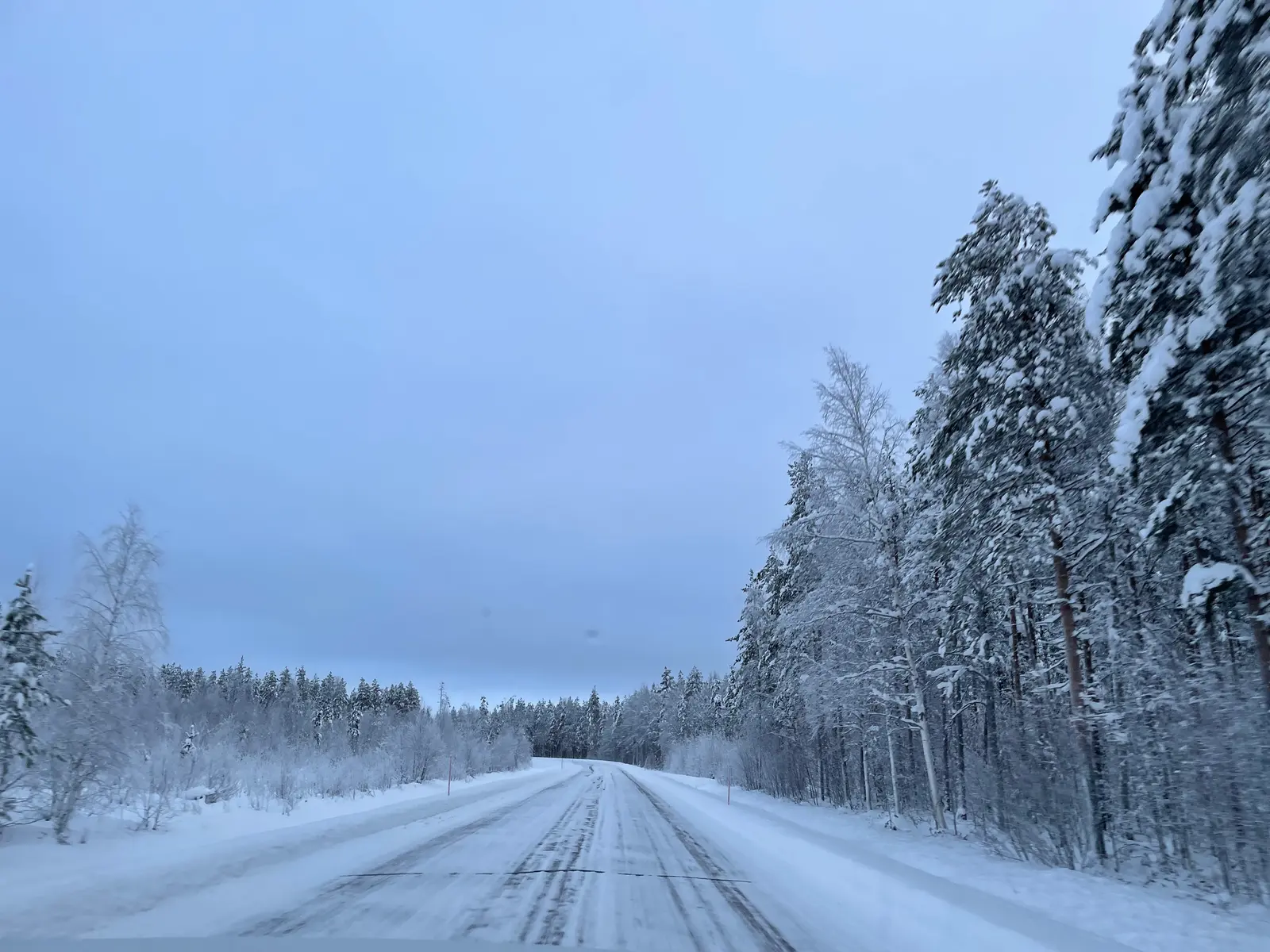
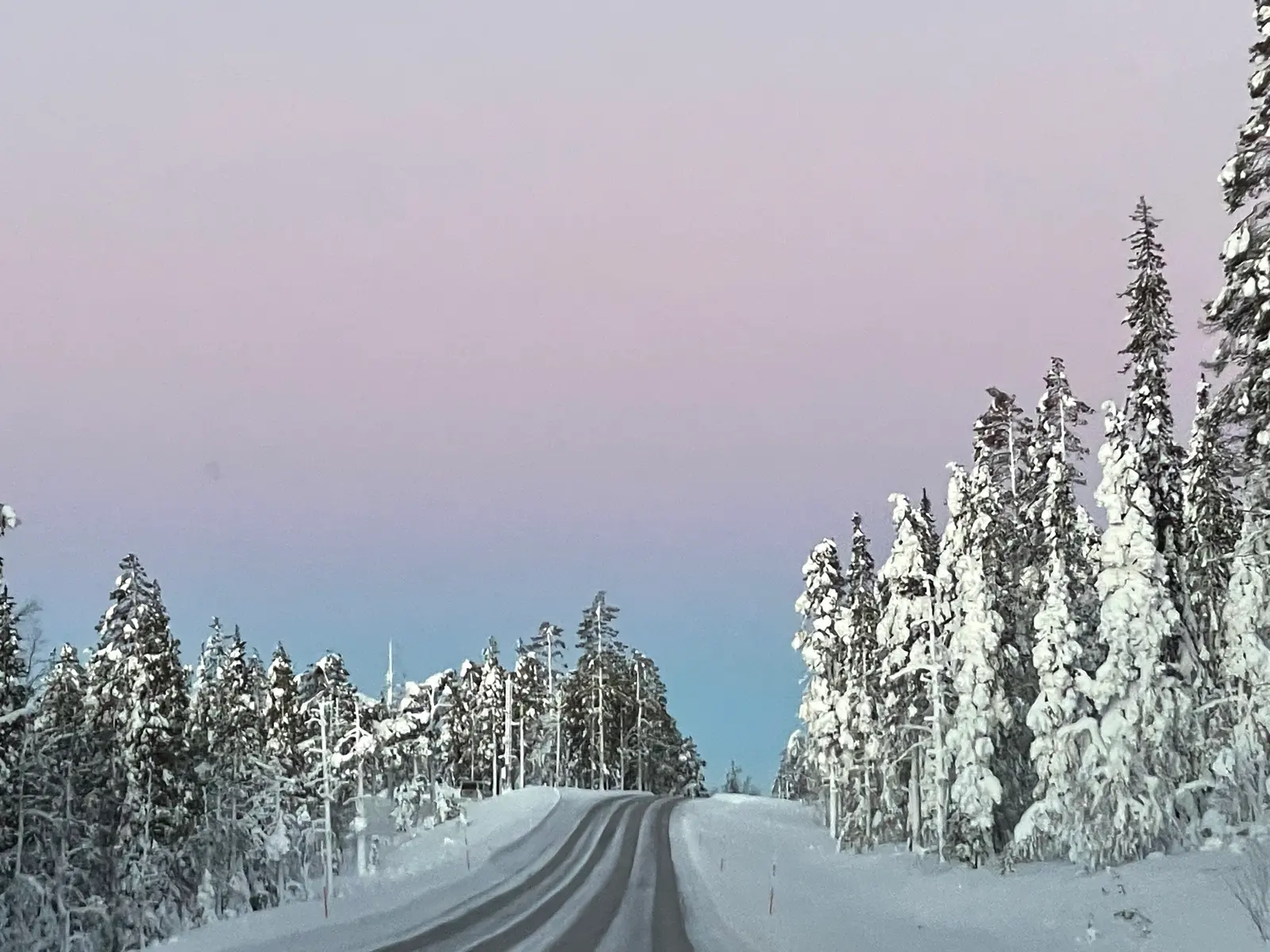
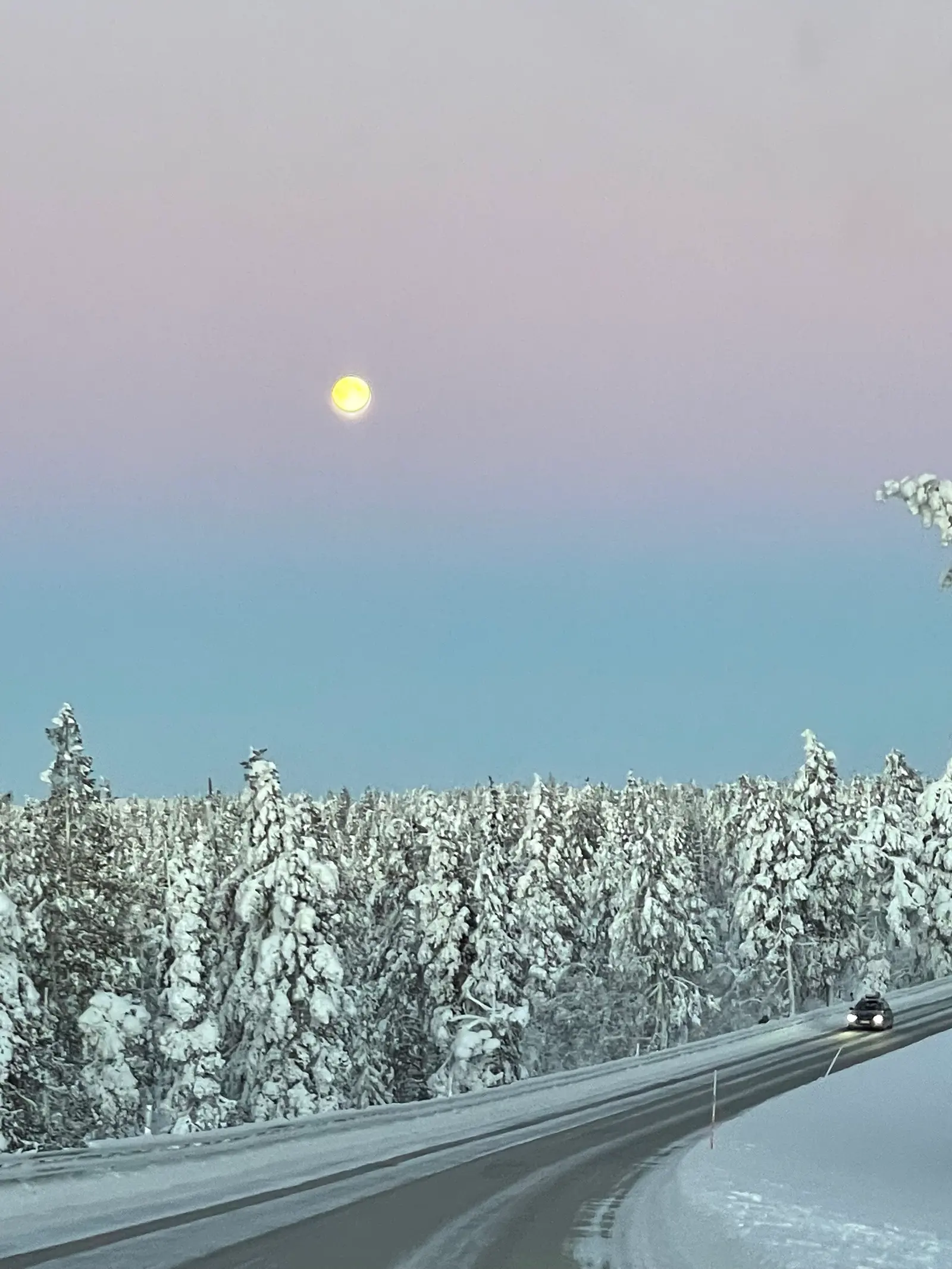
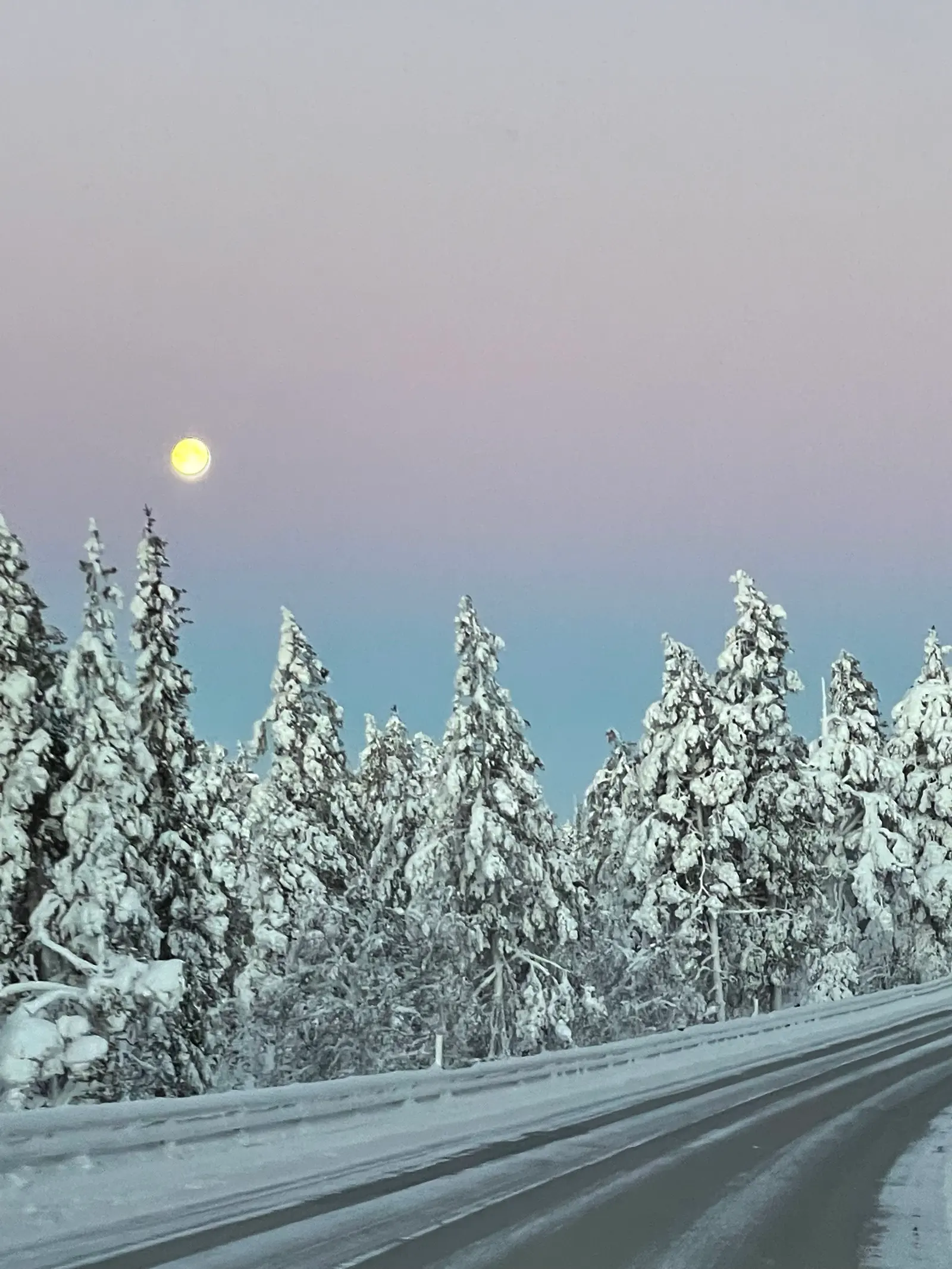
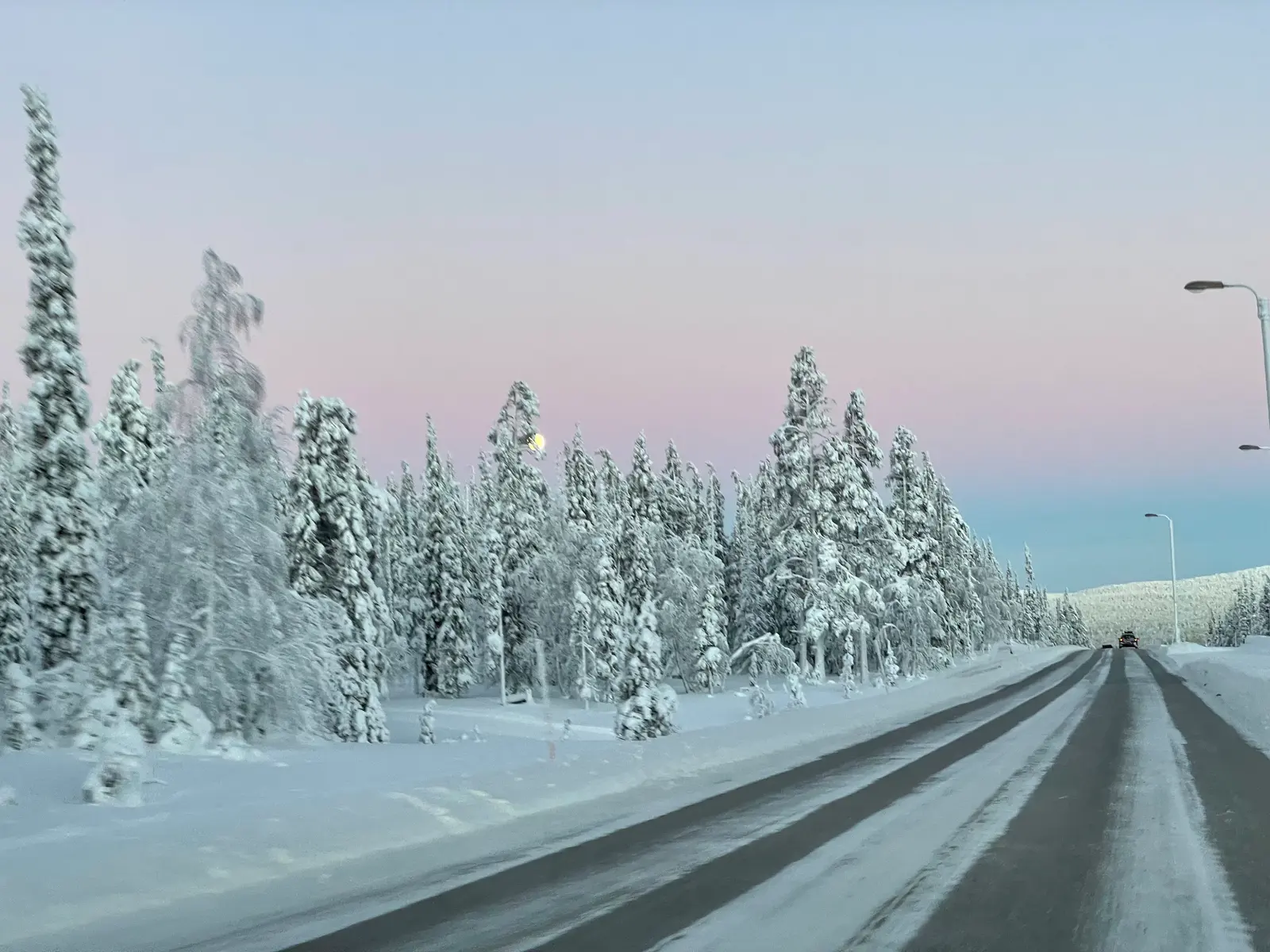
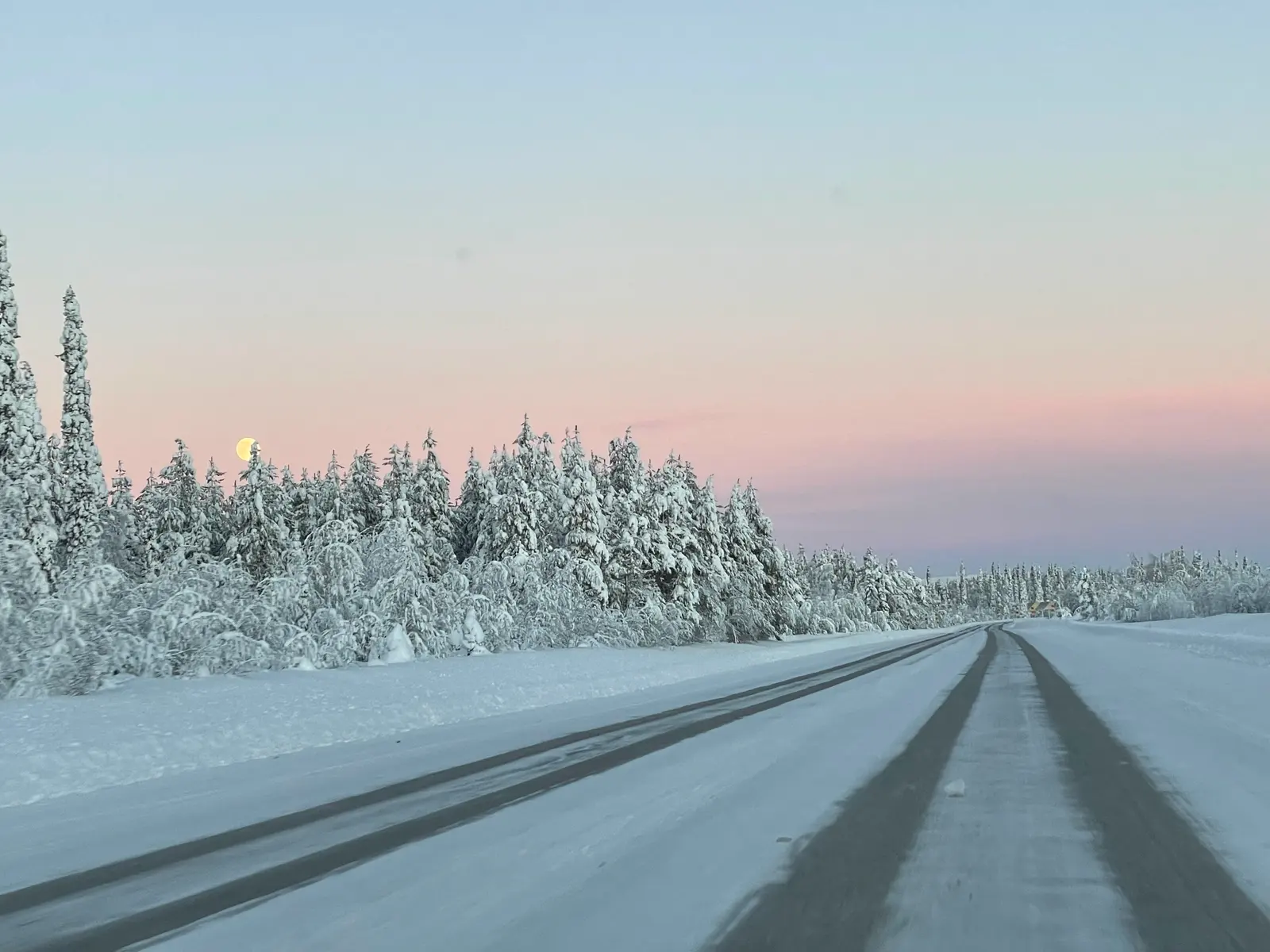
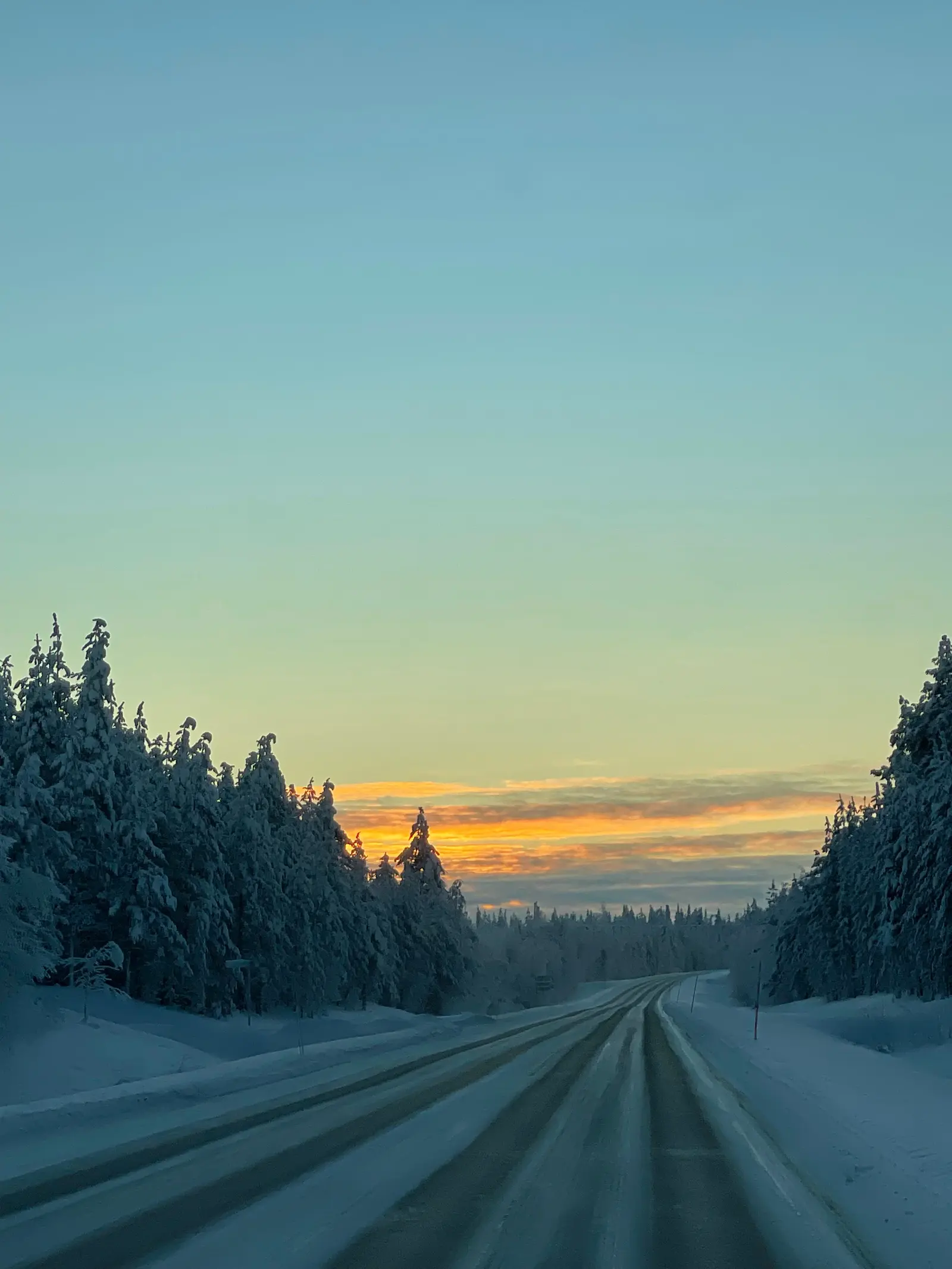
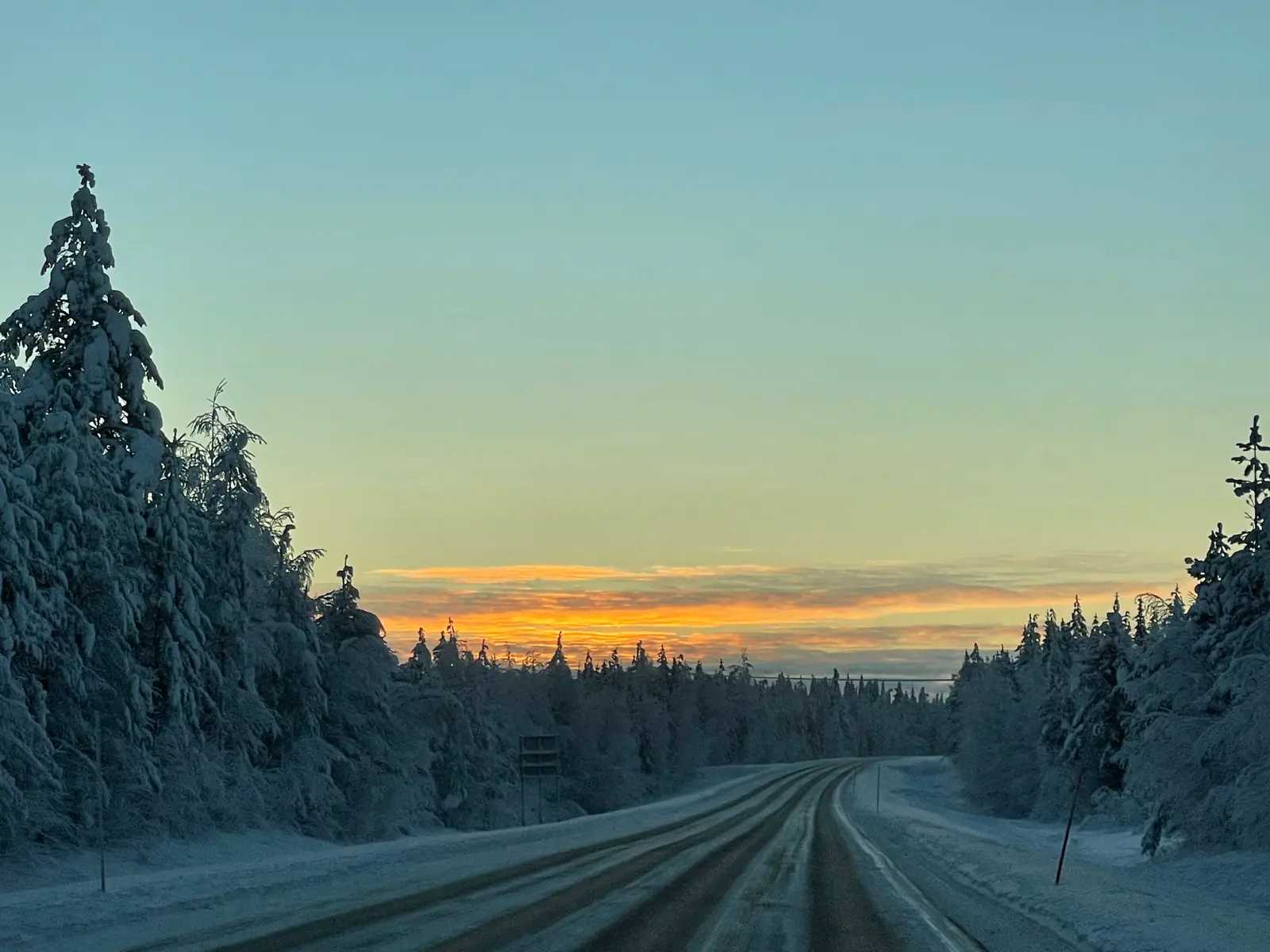
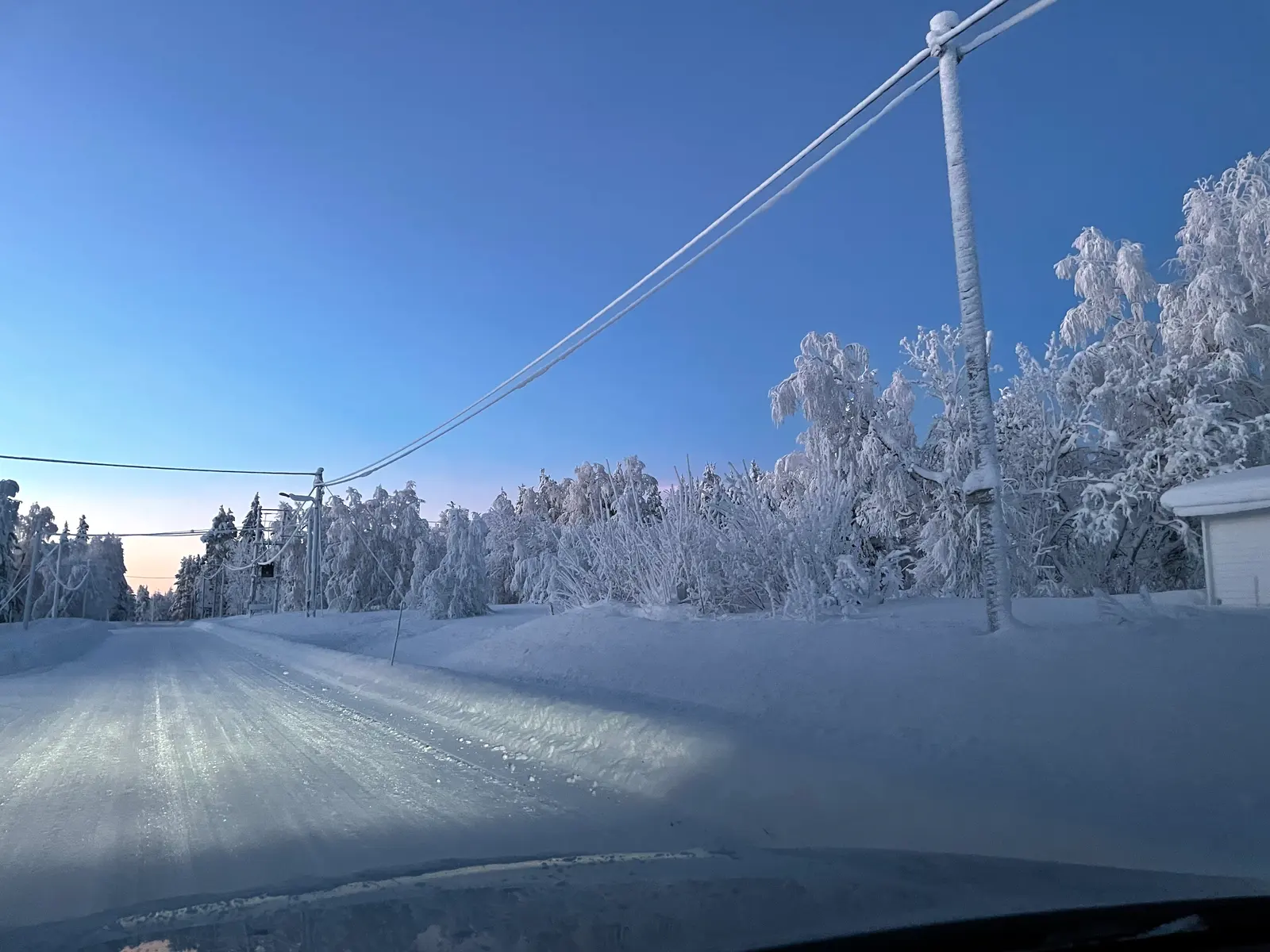
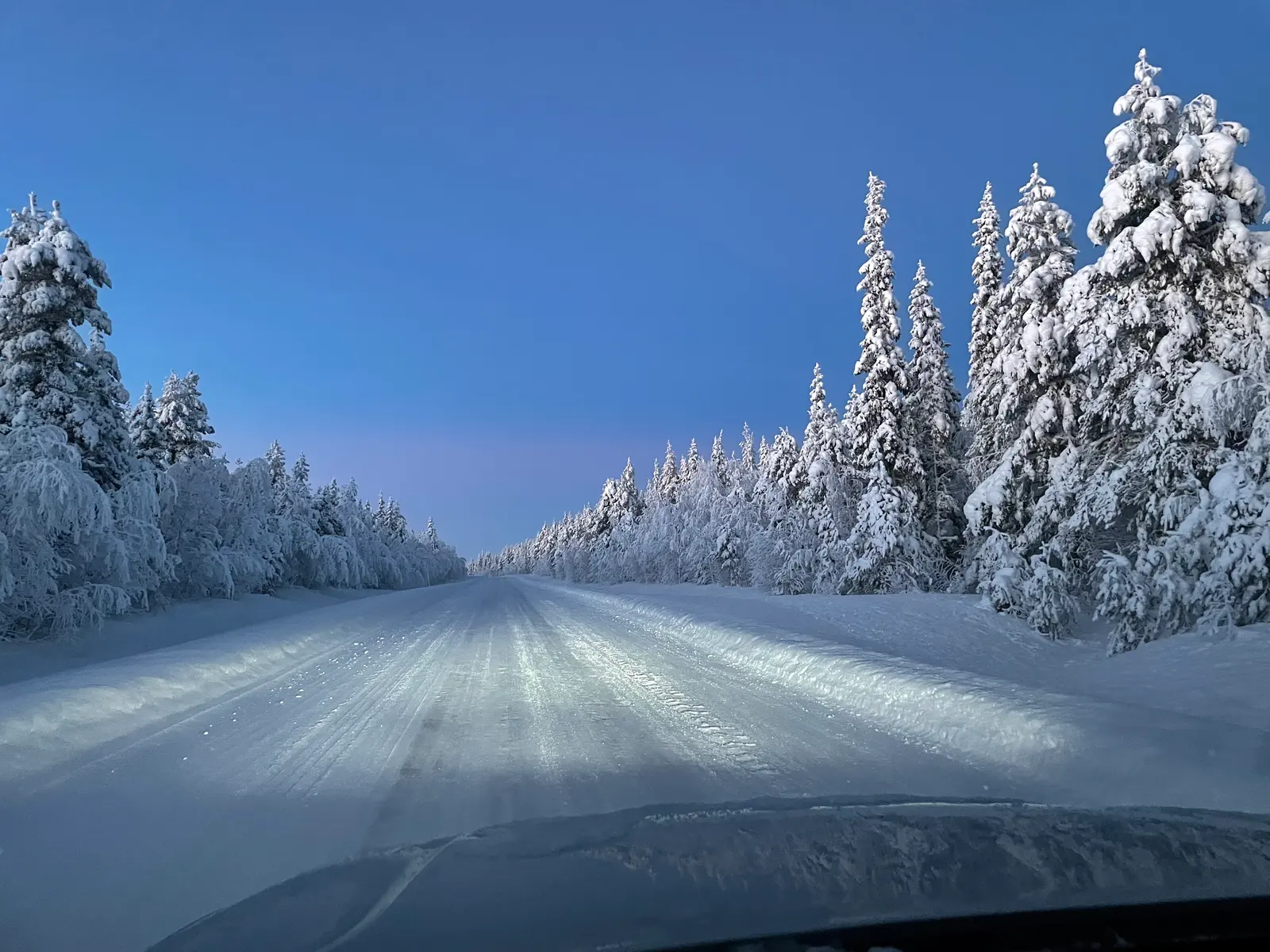
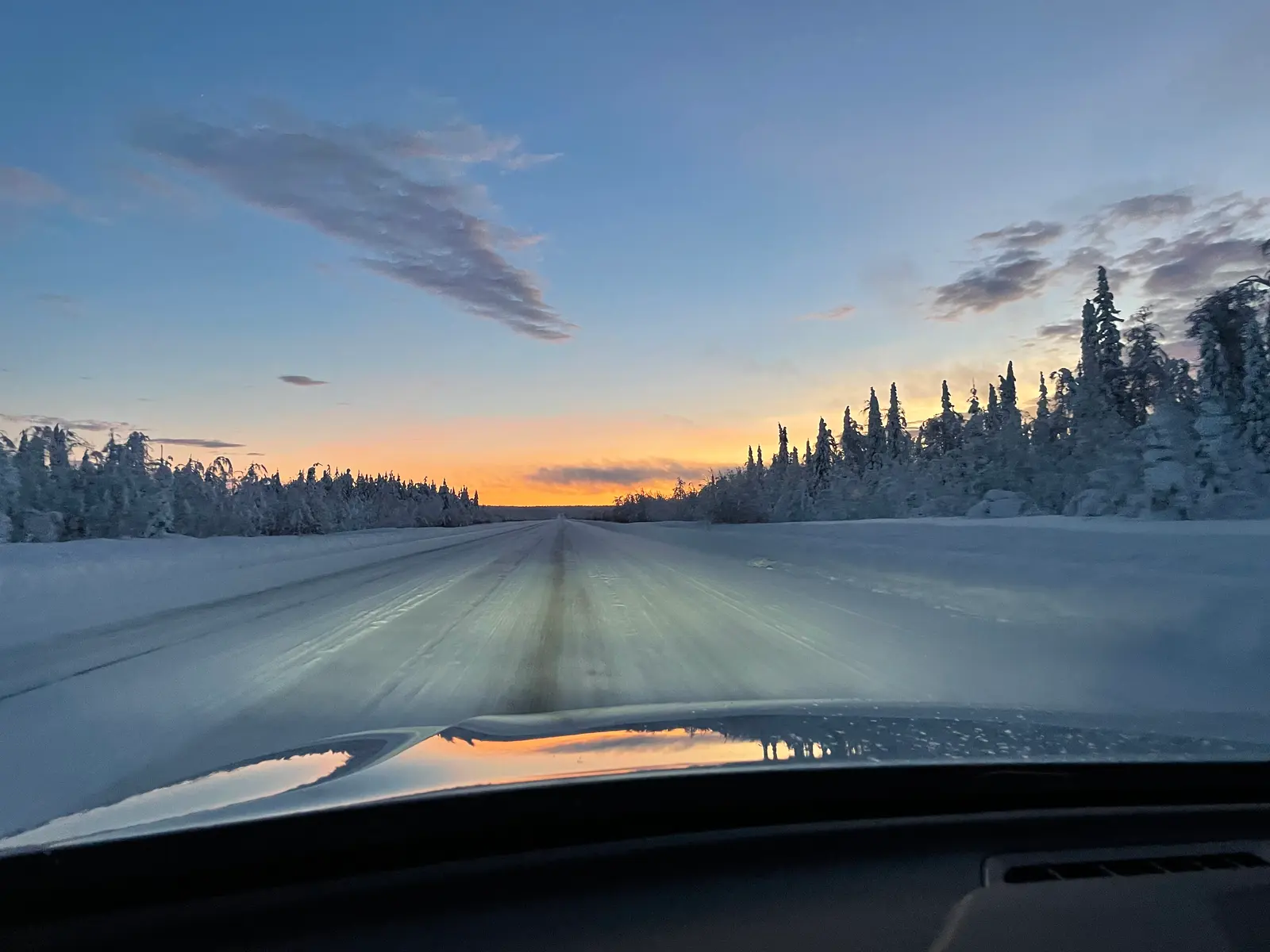
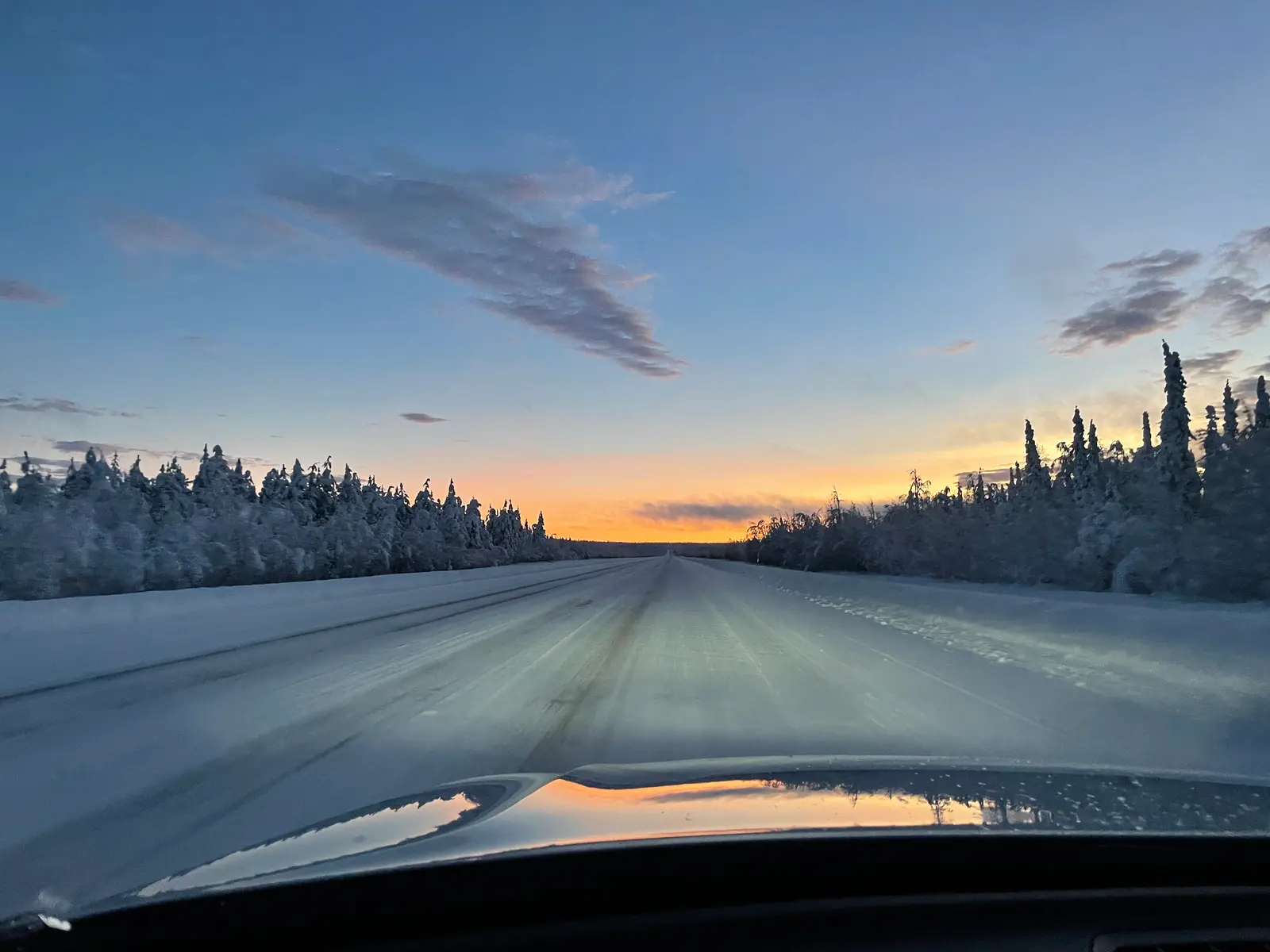
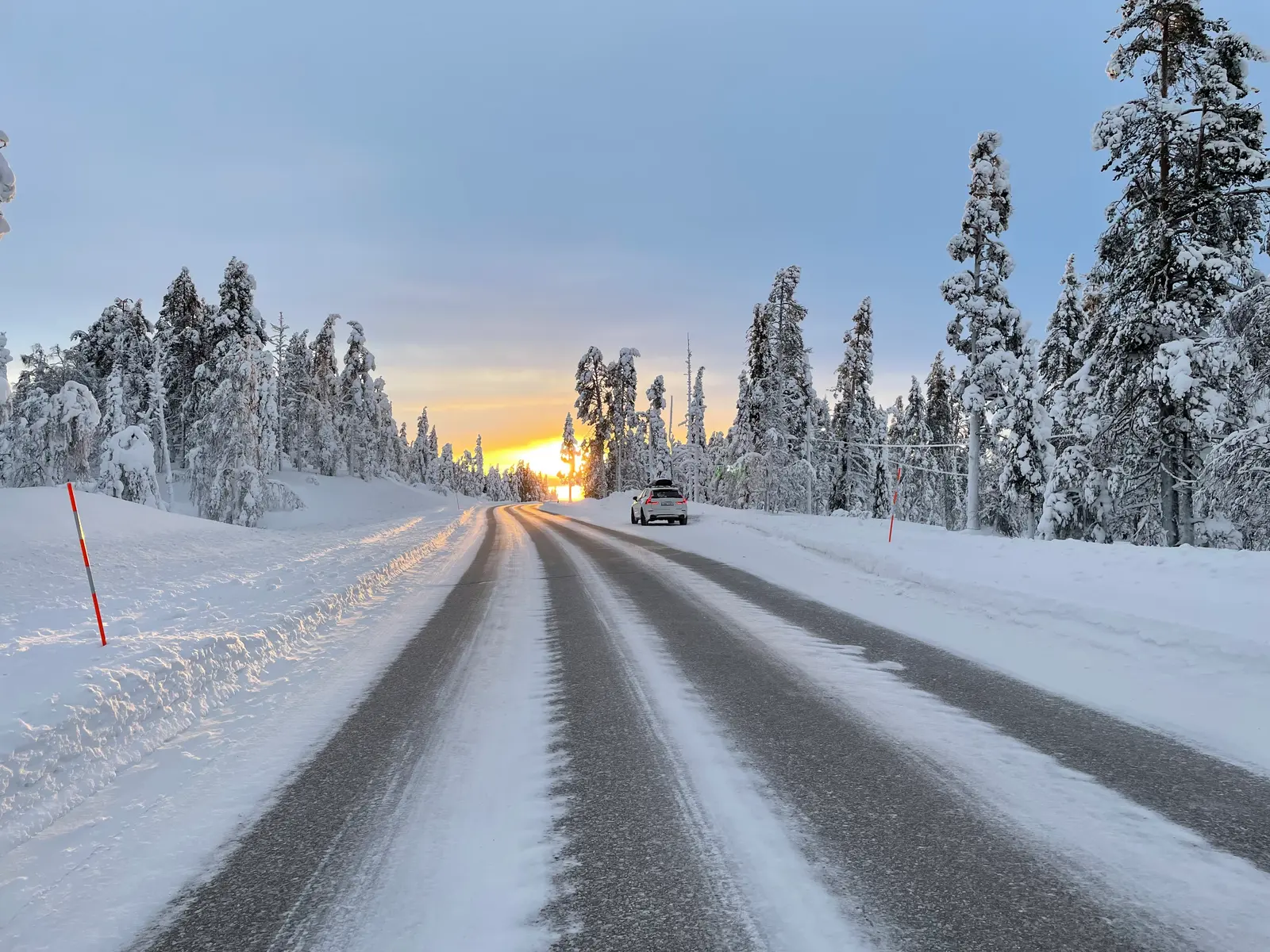
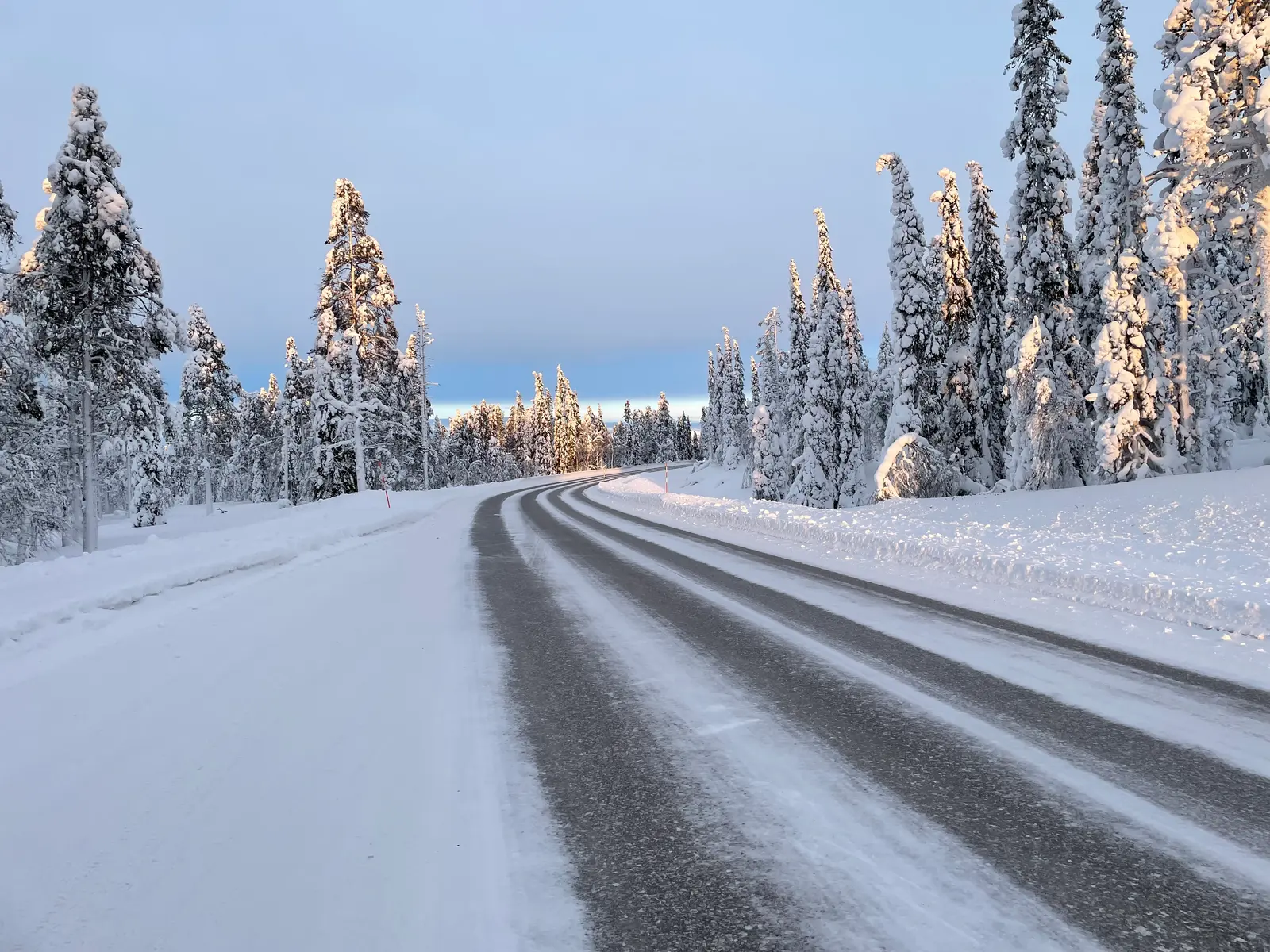
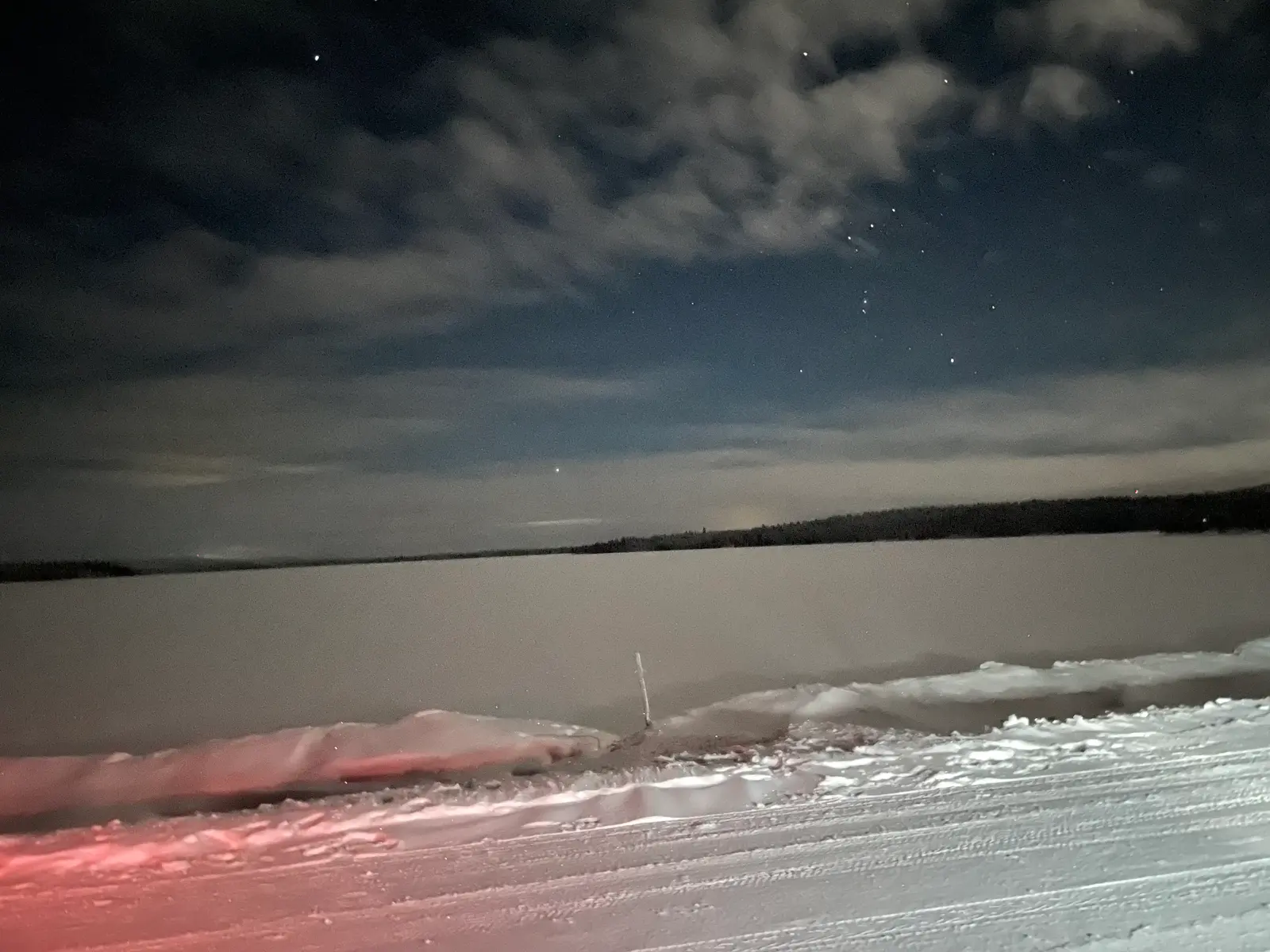
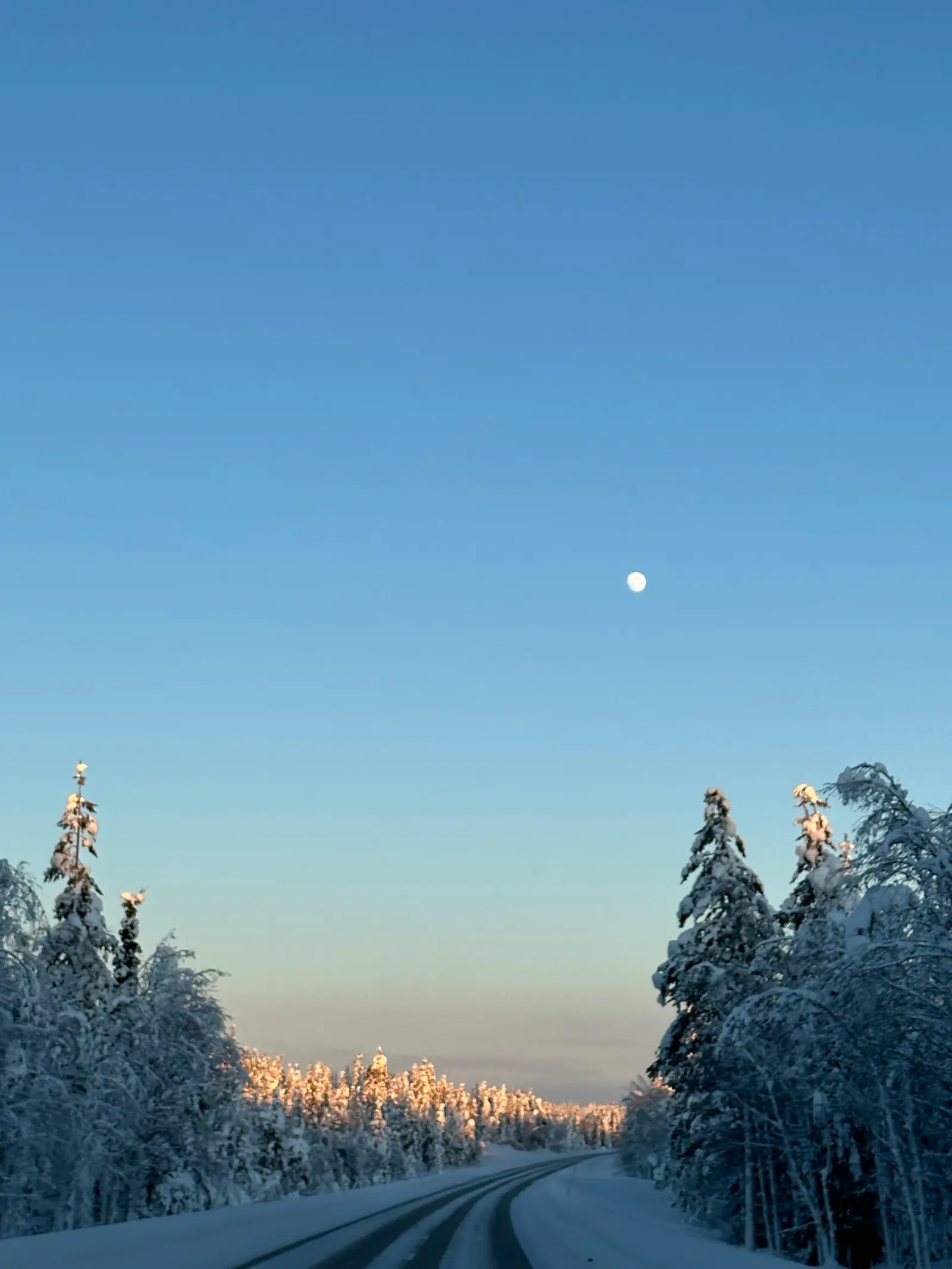
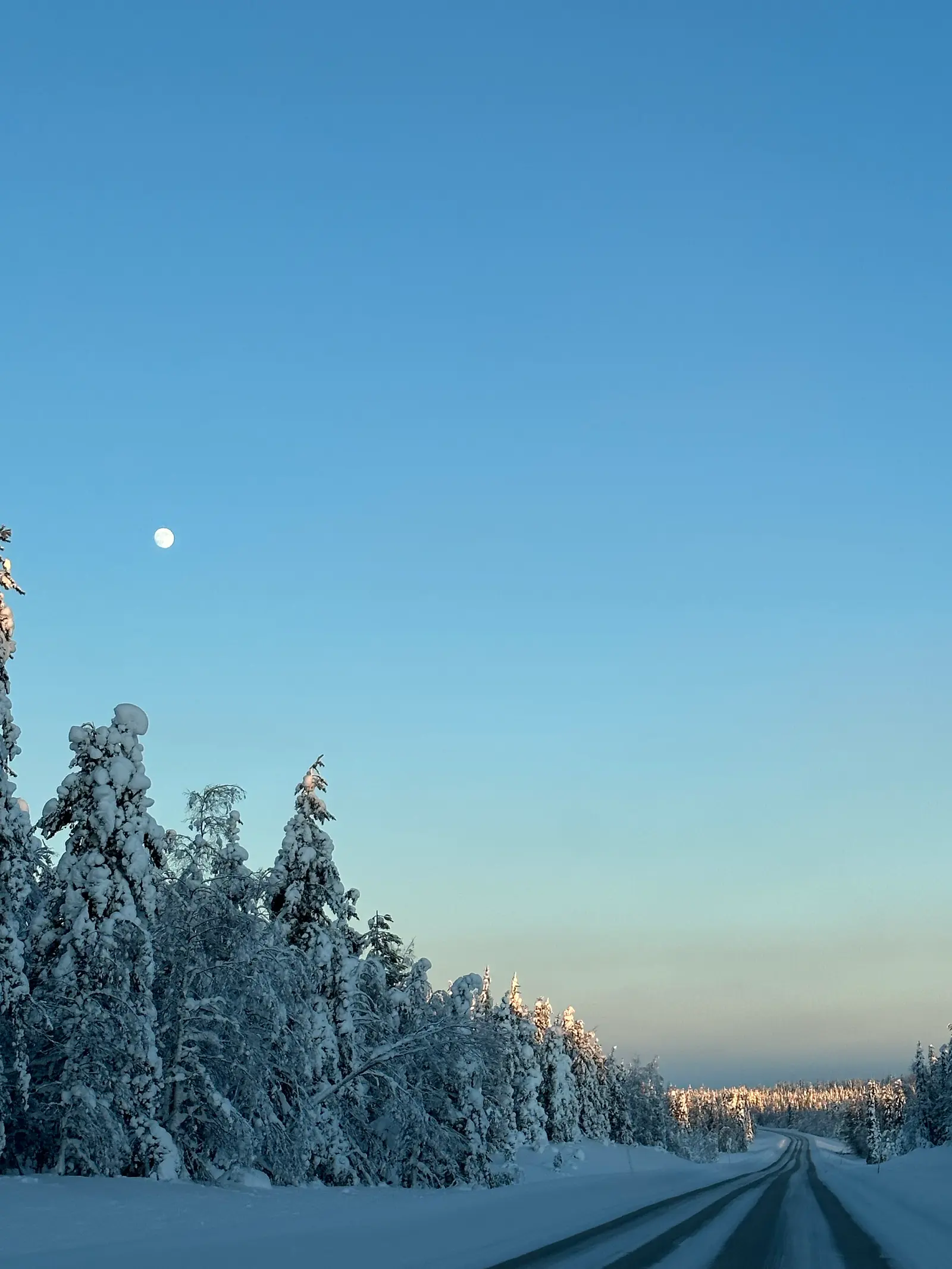
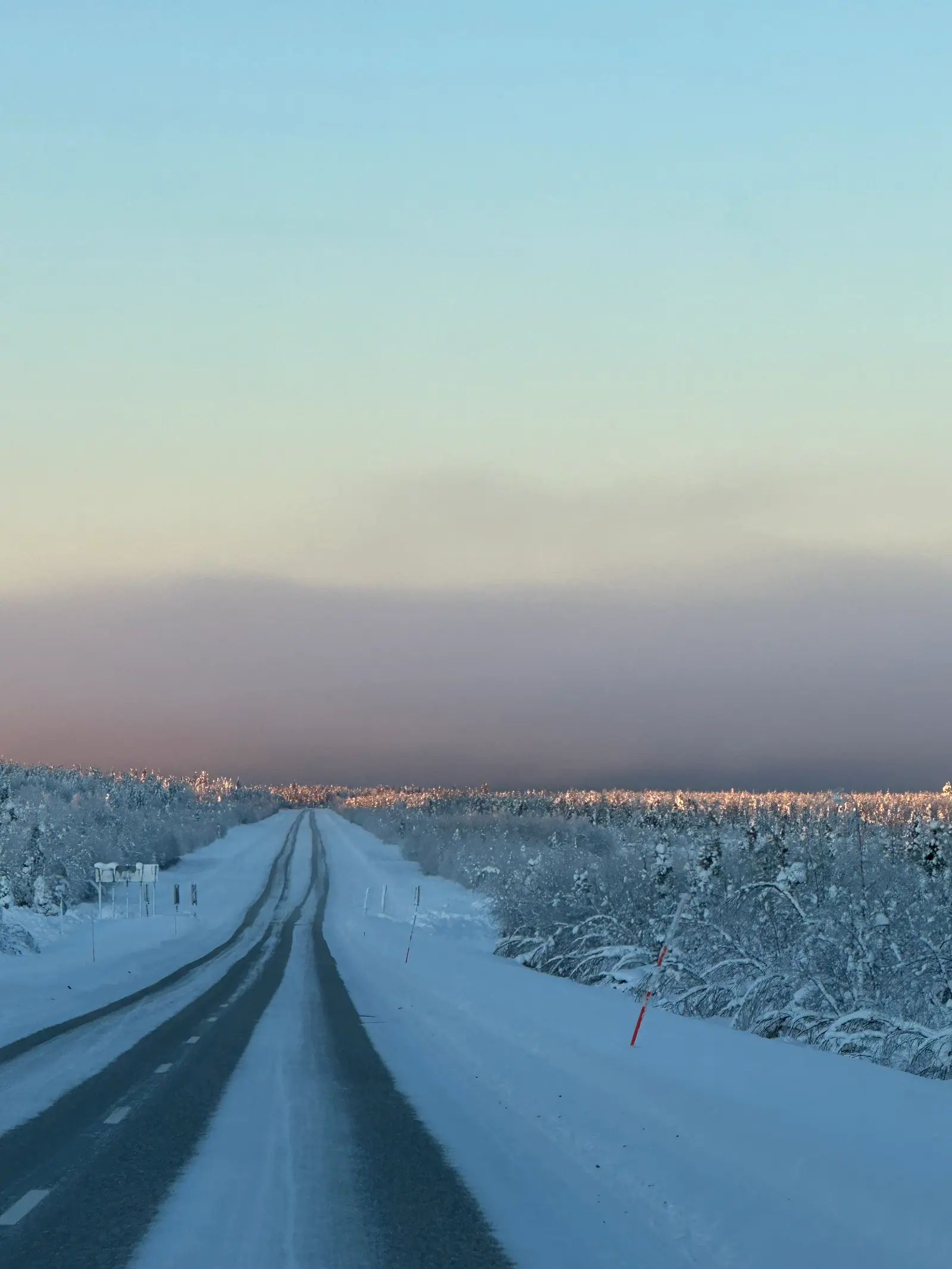
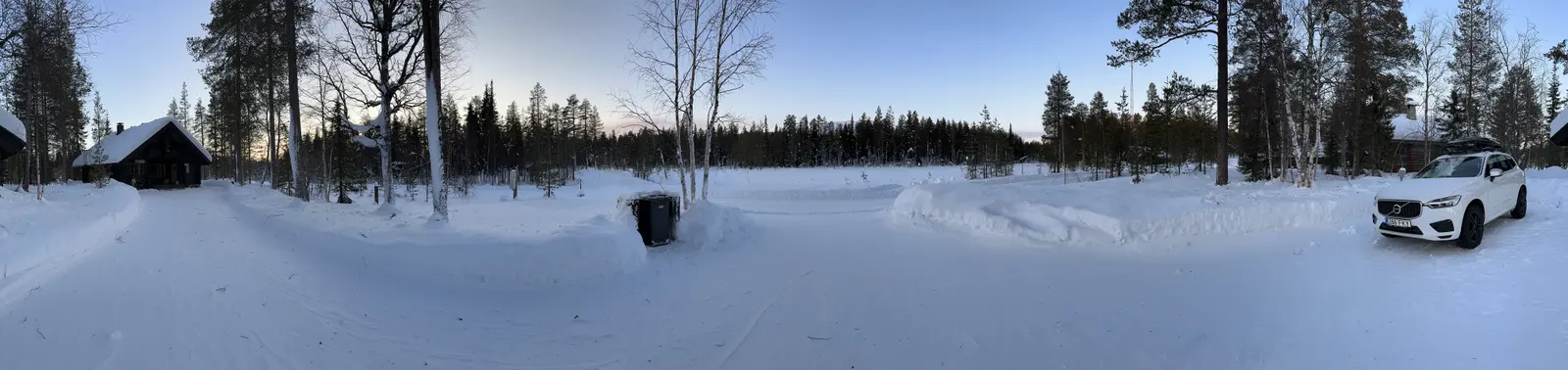
A winter road in Finnish Lapland. The surface may be packed snow or ice rather than bare asphalt. Photograph: Villa Lapland.
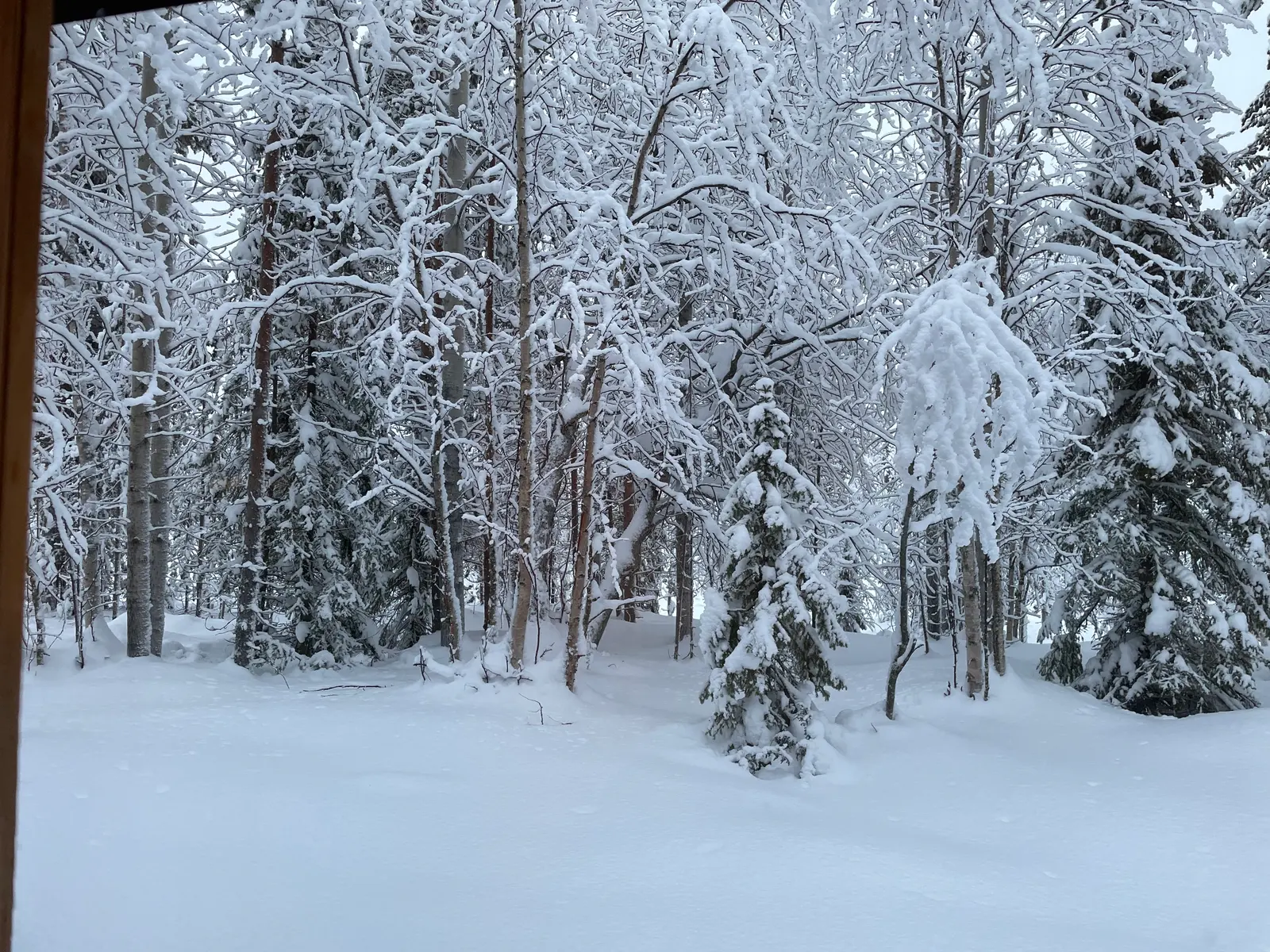
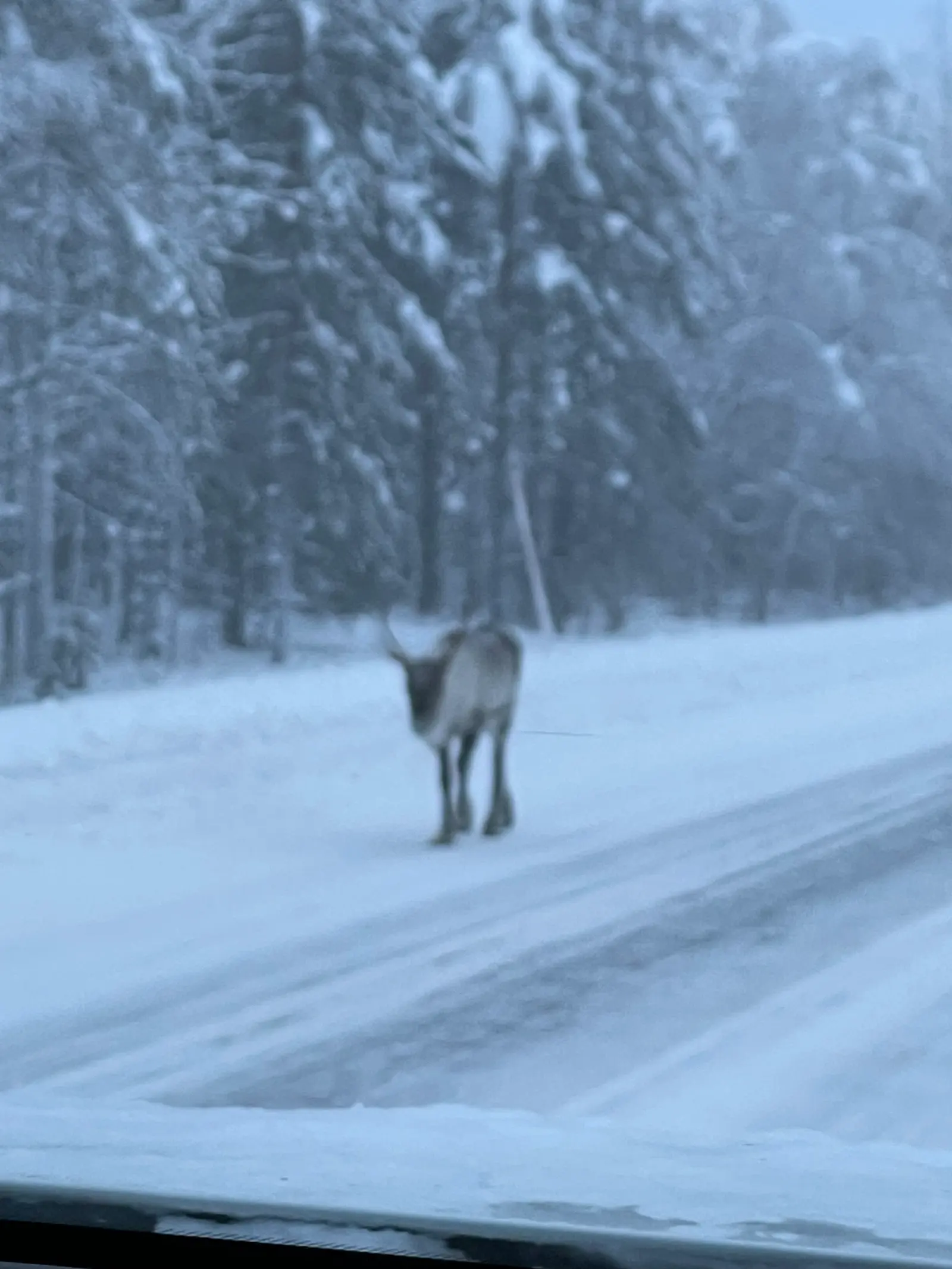
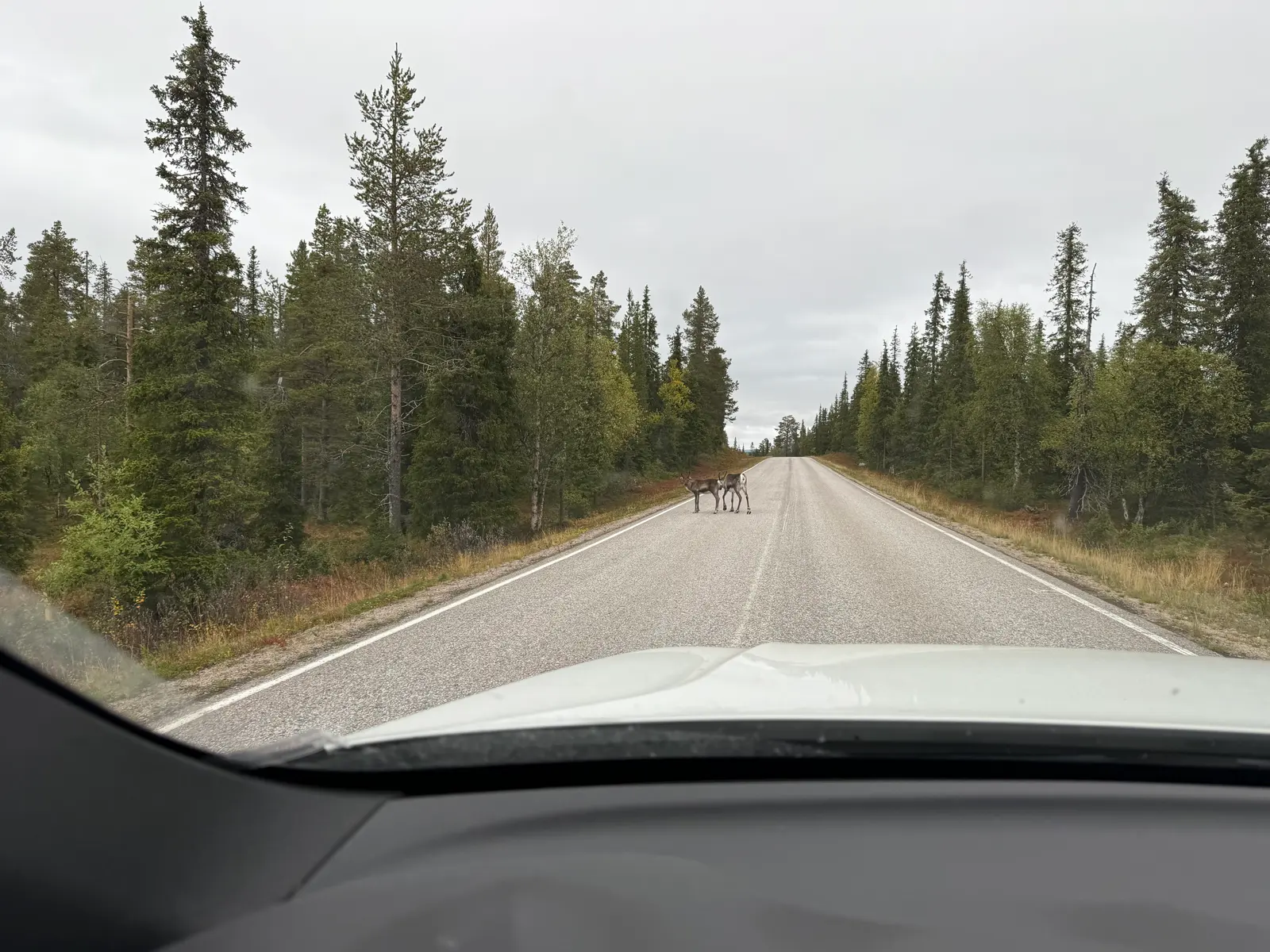
The thing that surprises many first-time visitors is not the cold itself. It is how normal winter conditions are here. A road can look perfectly maintained and still have a continuous layer of compacted snow. You may drive for a long time without seeing another vehicle, then meet a reindeer, a snowplough or a sudden bank of drifting snow.
Winter tyres are essential when conditions require them
In Finland, winter tyres must be used from 1 November to 31 March when weather or road conditions require them. Both studded and suitable non-studded winter tyres are lawful options. Studded tyres can also be used outside this period when conditions justify them. Check the vehicle’s equipment and follow Finnish requirements rather than assuming a particular type is mandatory for every car. Read the road-safety guidance.
Winter tyres help, but they do not create unlimited grip. On ice, braking distances can be dramatically longer than on dry summer asphalt. Accelerate smoothly, brake earlier and leave generous room between vehicles. Read the road and visibility conditions rather than trying to maintain a particular speed. A posted speed limit is a maximum, not a target.
Darkness, twilight and changing visibility
In midwinter, northern Lapland experiences polar night, while places farther south have only limited daylight. That does not mean the landscape is completely black around the clock: twilight and reflective snow can create remarkable colours. But expect to drive in darkness, sometimes on roads without street lighting. On exposed sections, drifting snow may obscure the road edge or reduce visibility abruptly.
Use the roadside snow poles to understand where the road continues, and never assume that the visible track ahead describes a safe route outside the maintained carriageway. If visibility becomes too poor to drive safely, reduce speed appropriately and find a safe place to stop. Do not stop in the roadway or on a blind curve simply because the weather has become dramatic.
Reindeer and other animals
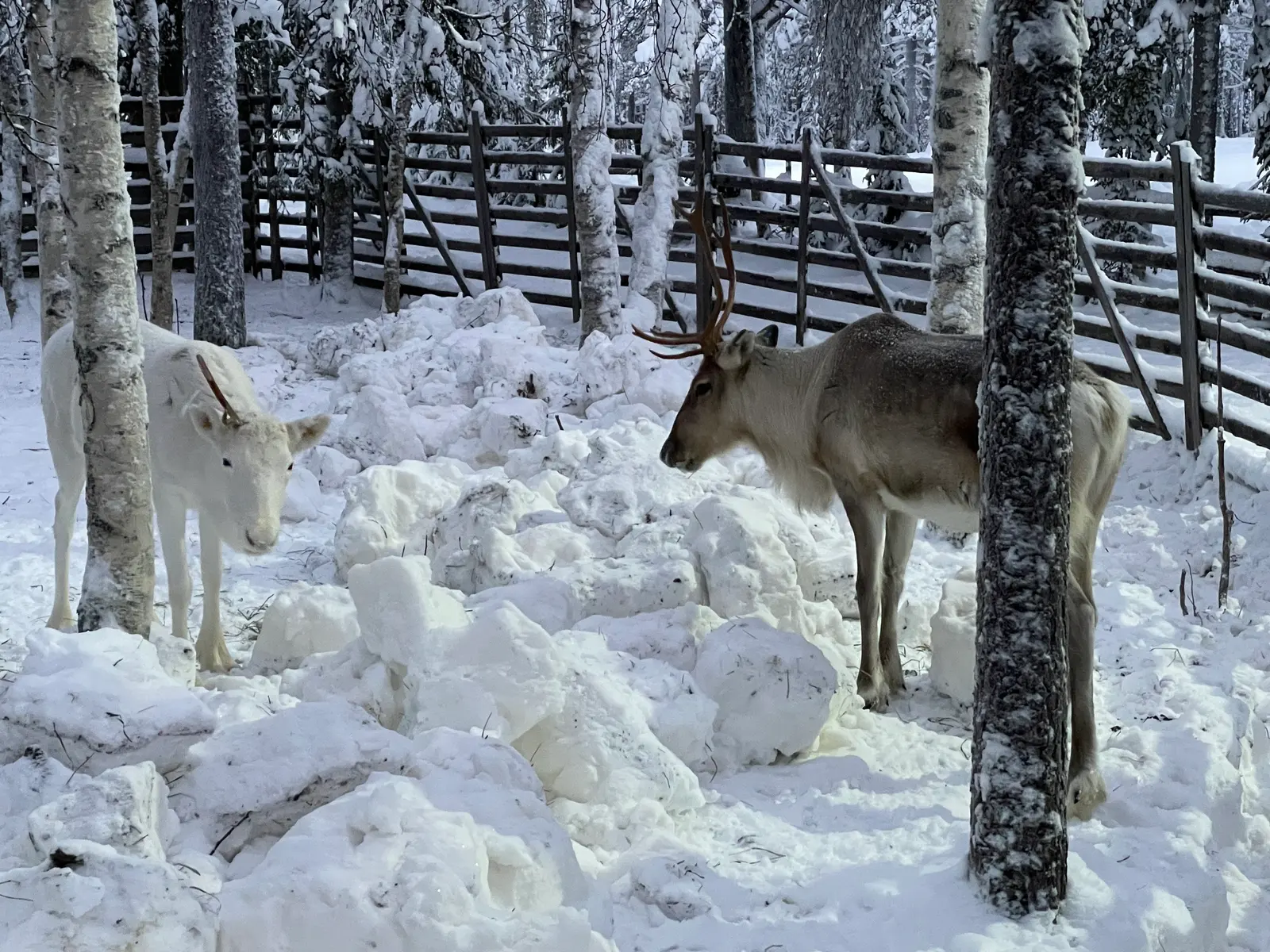
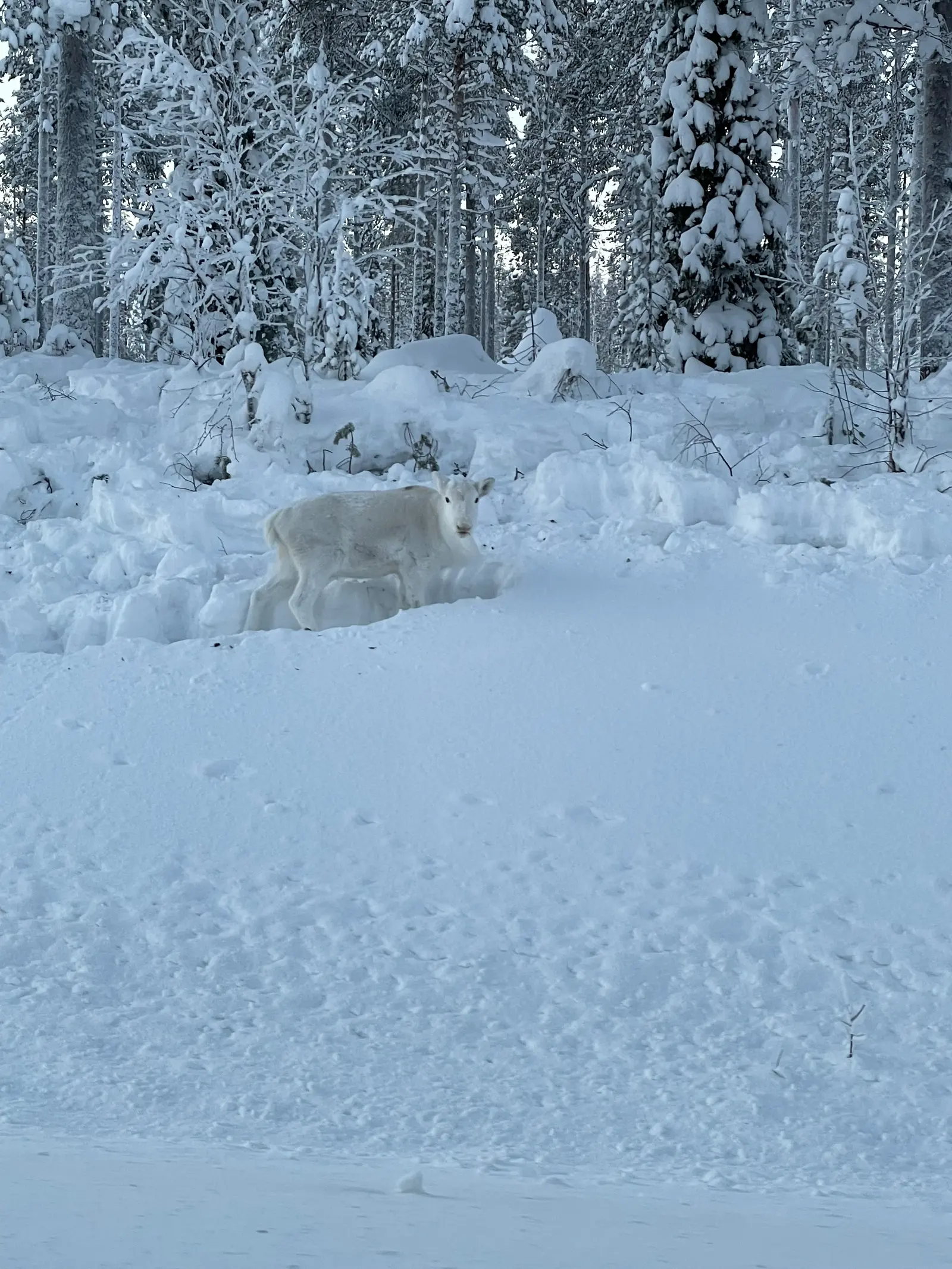
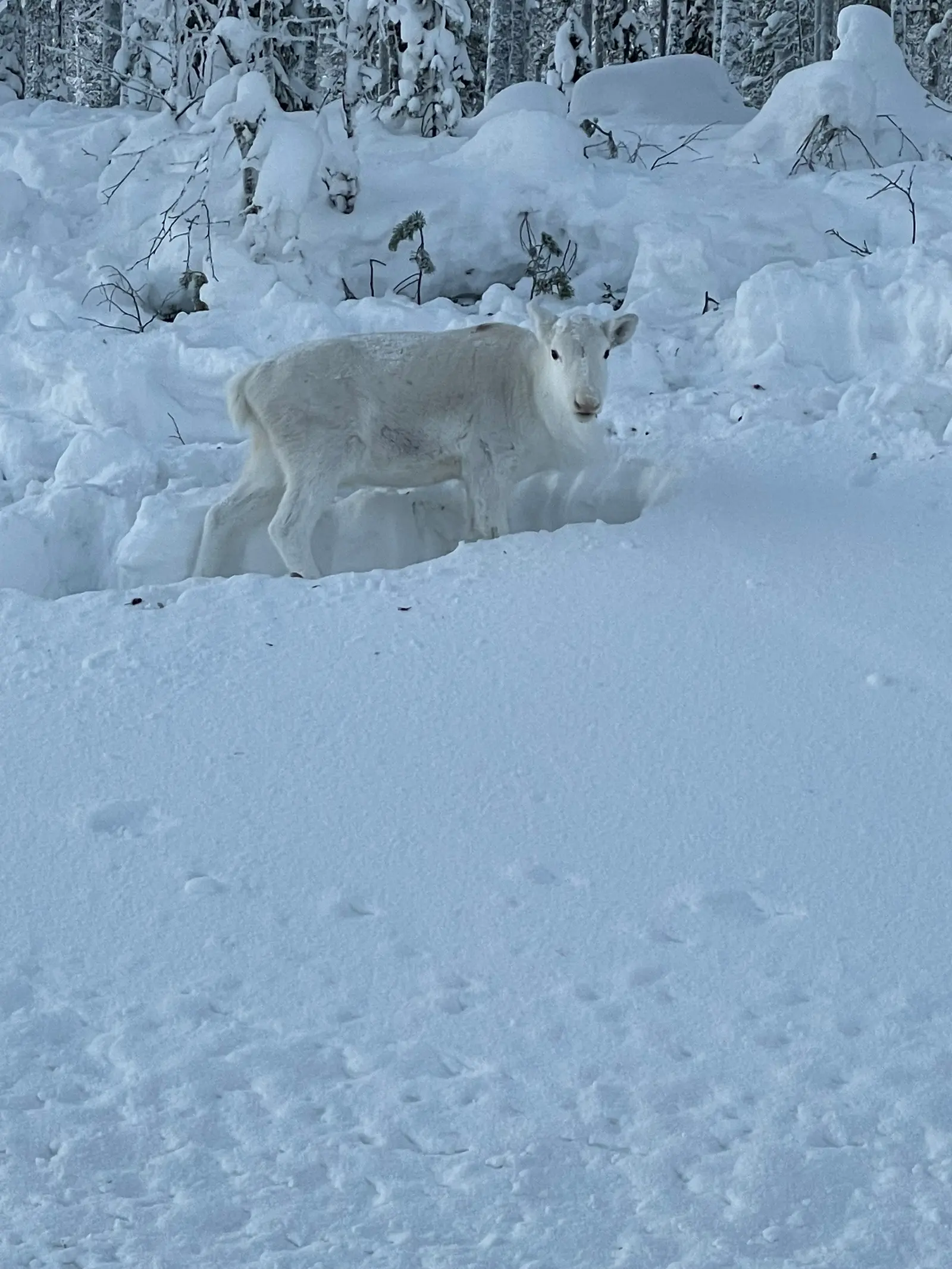
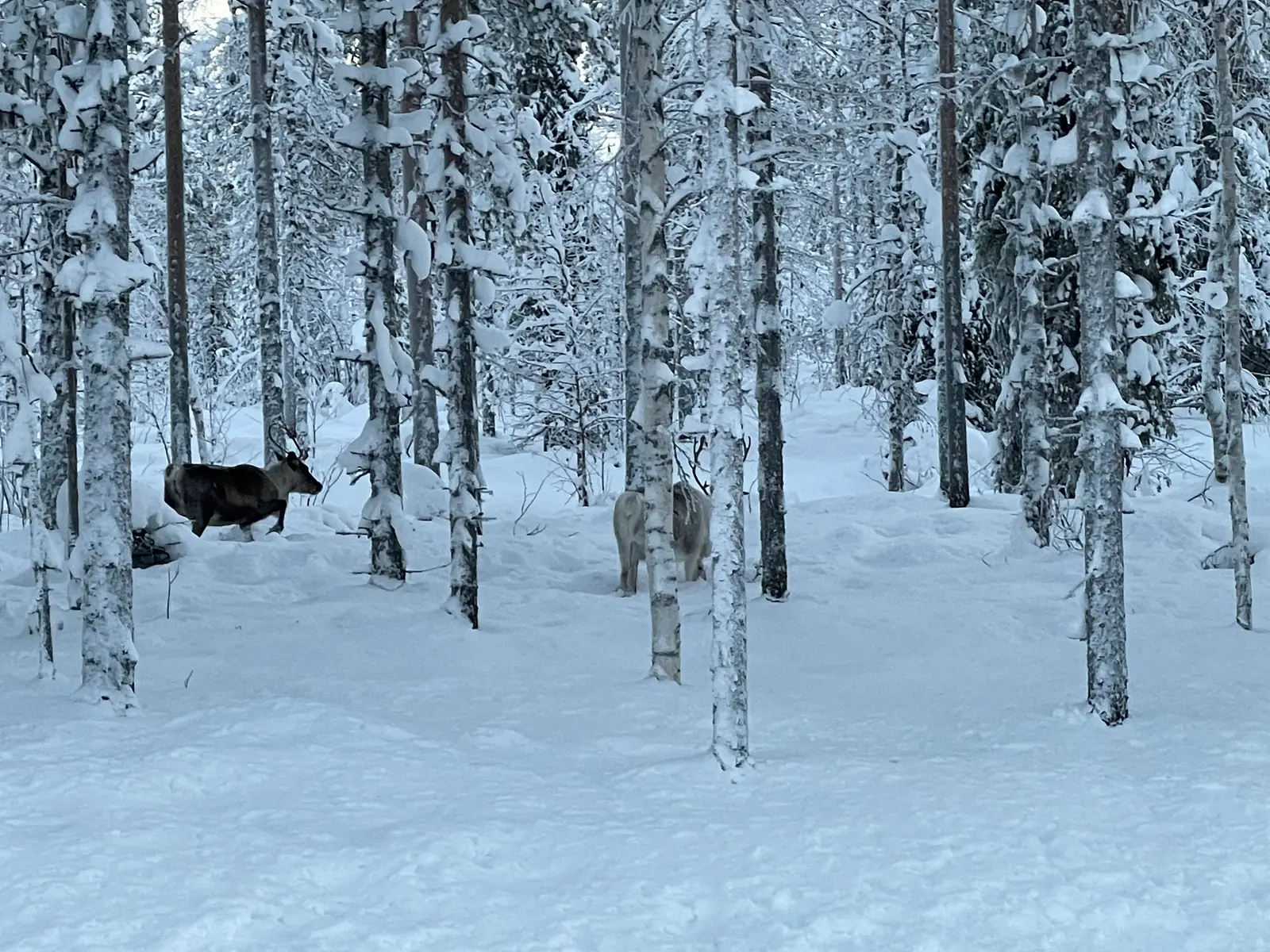
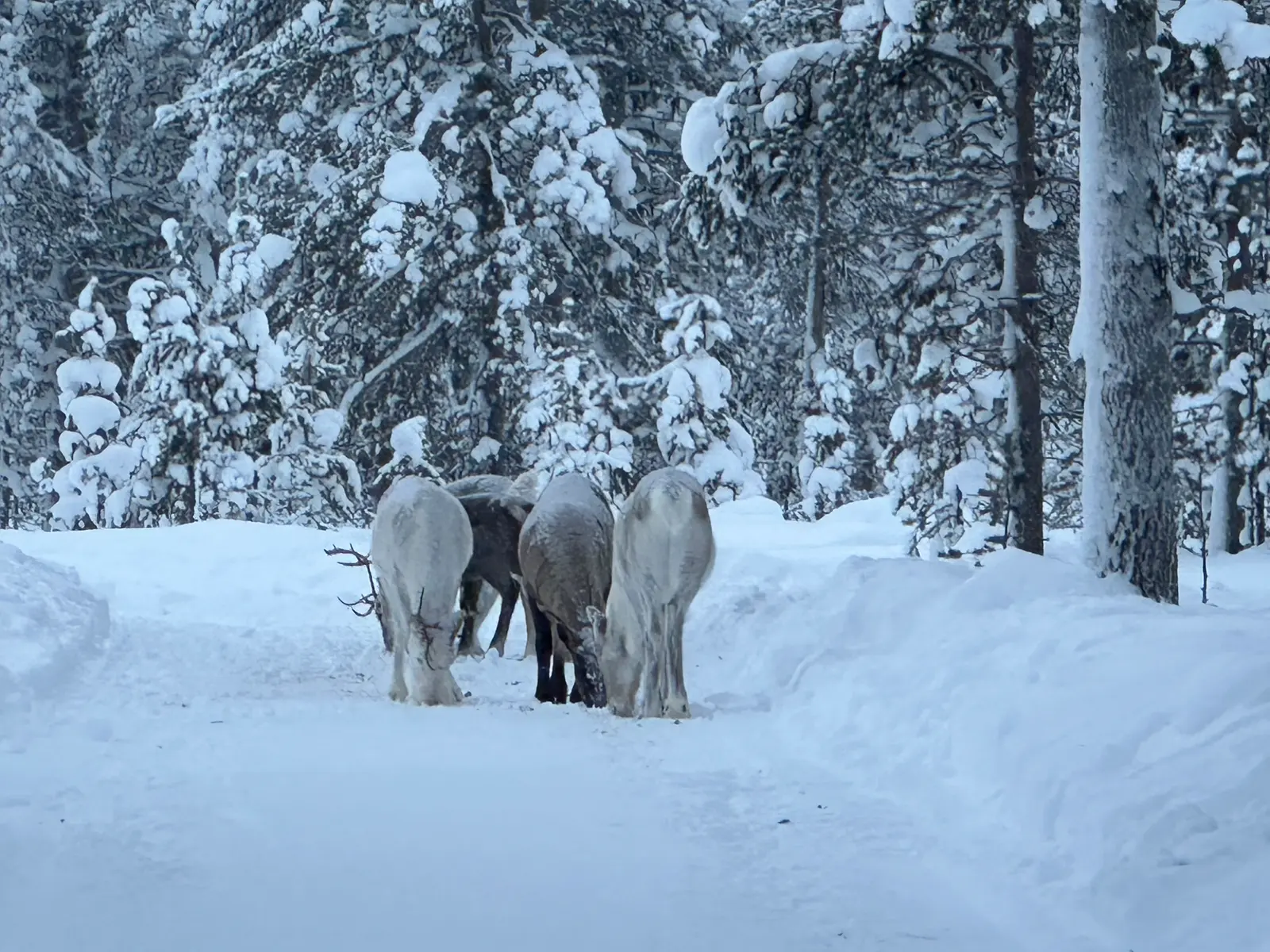
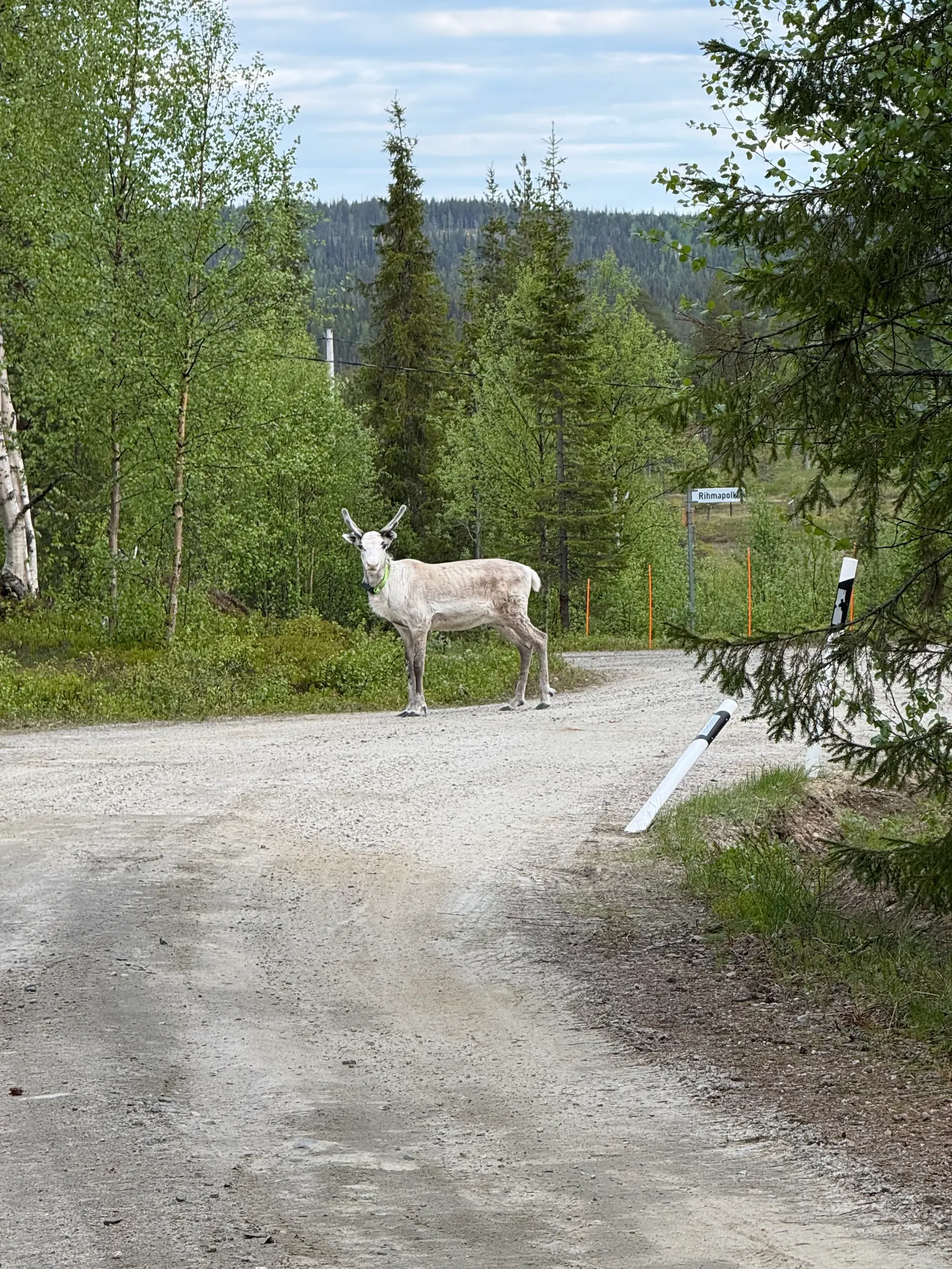
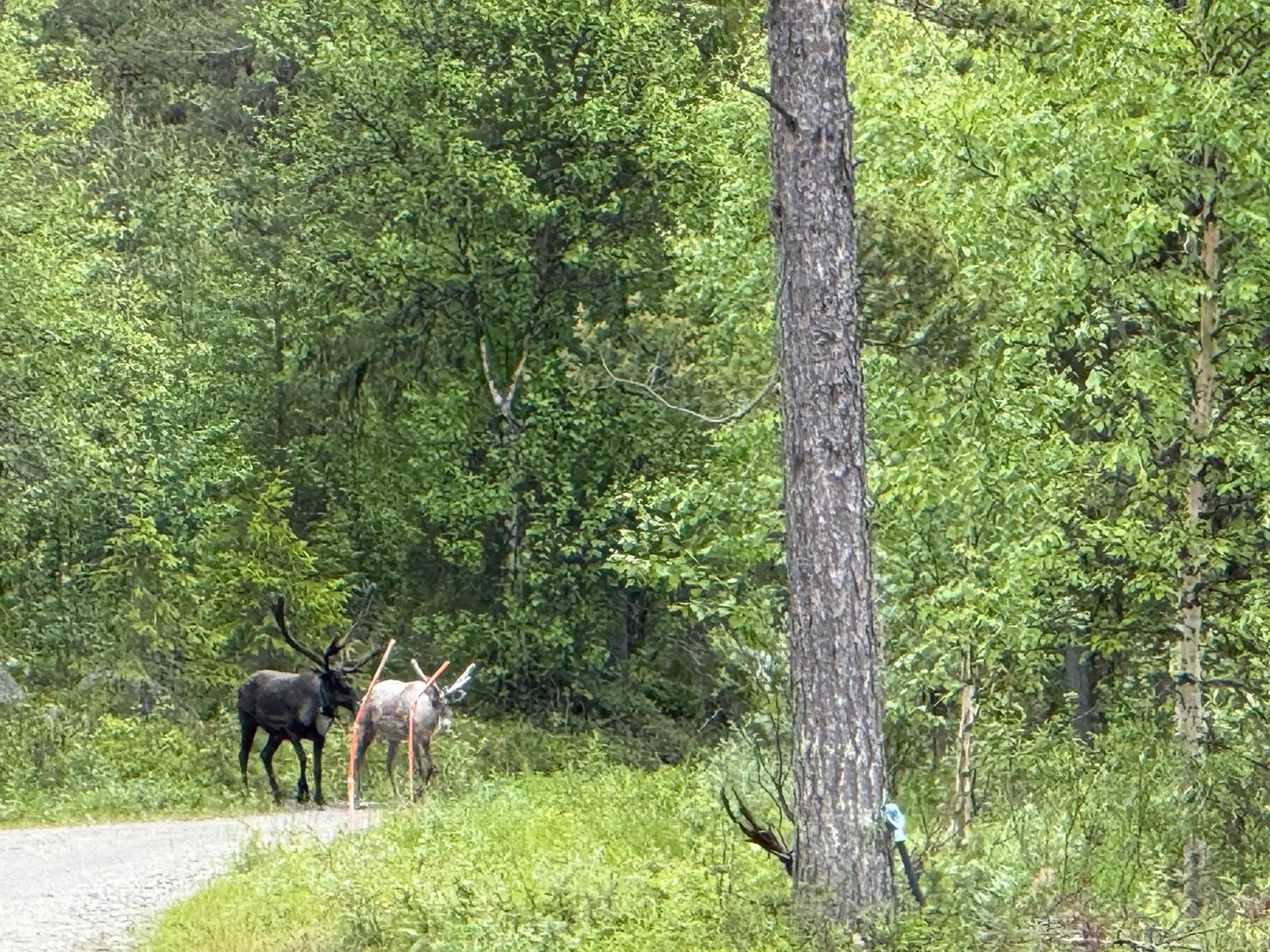
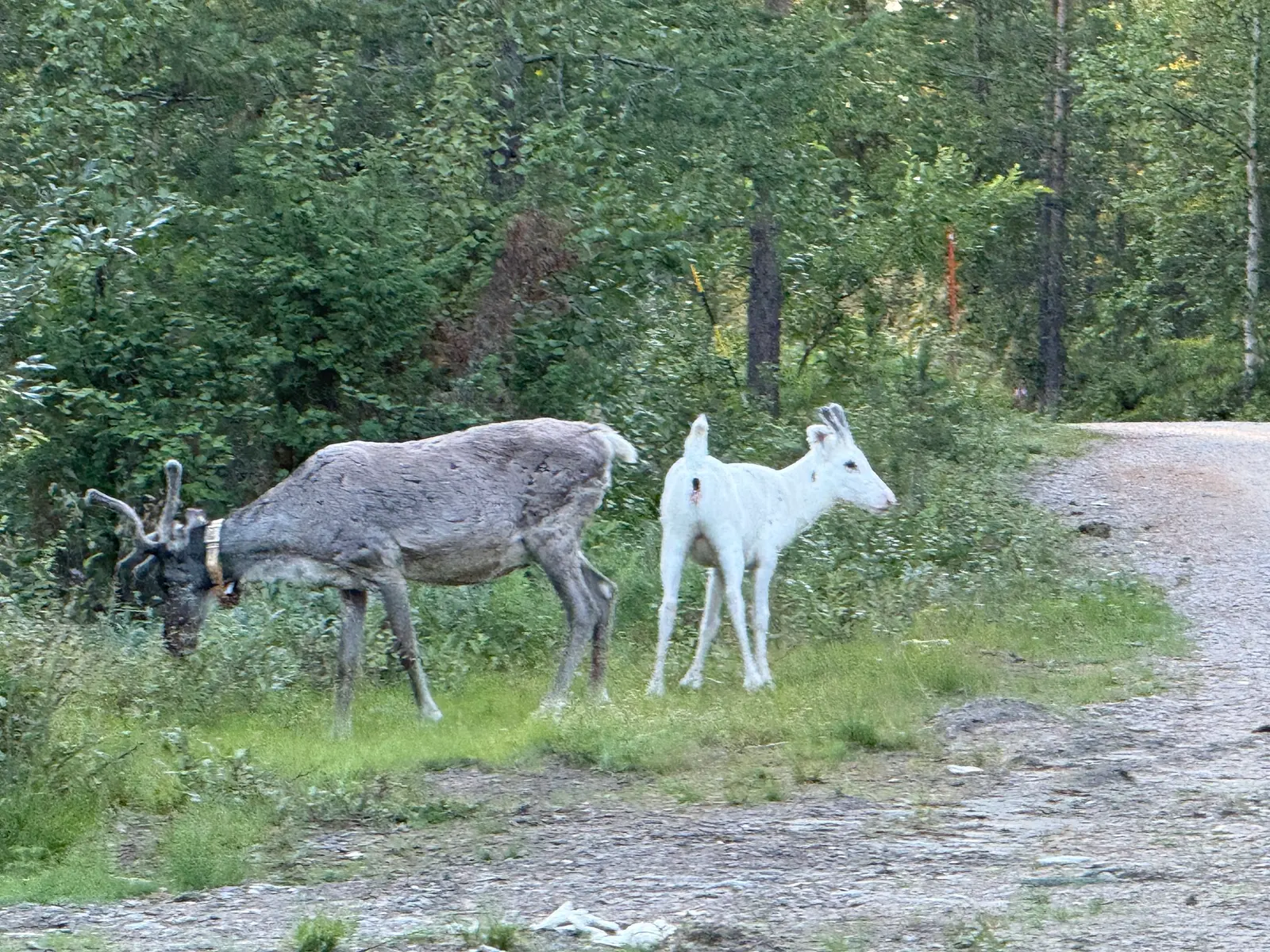
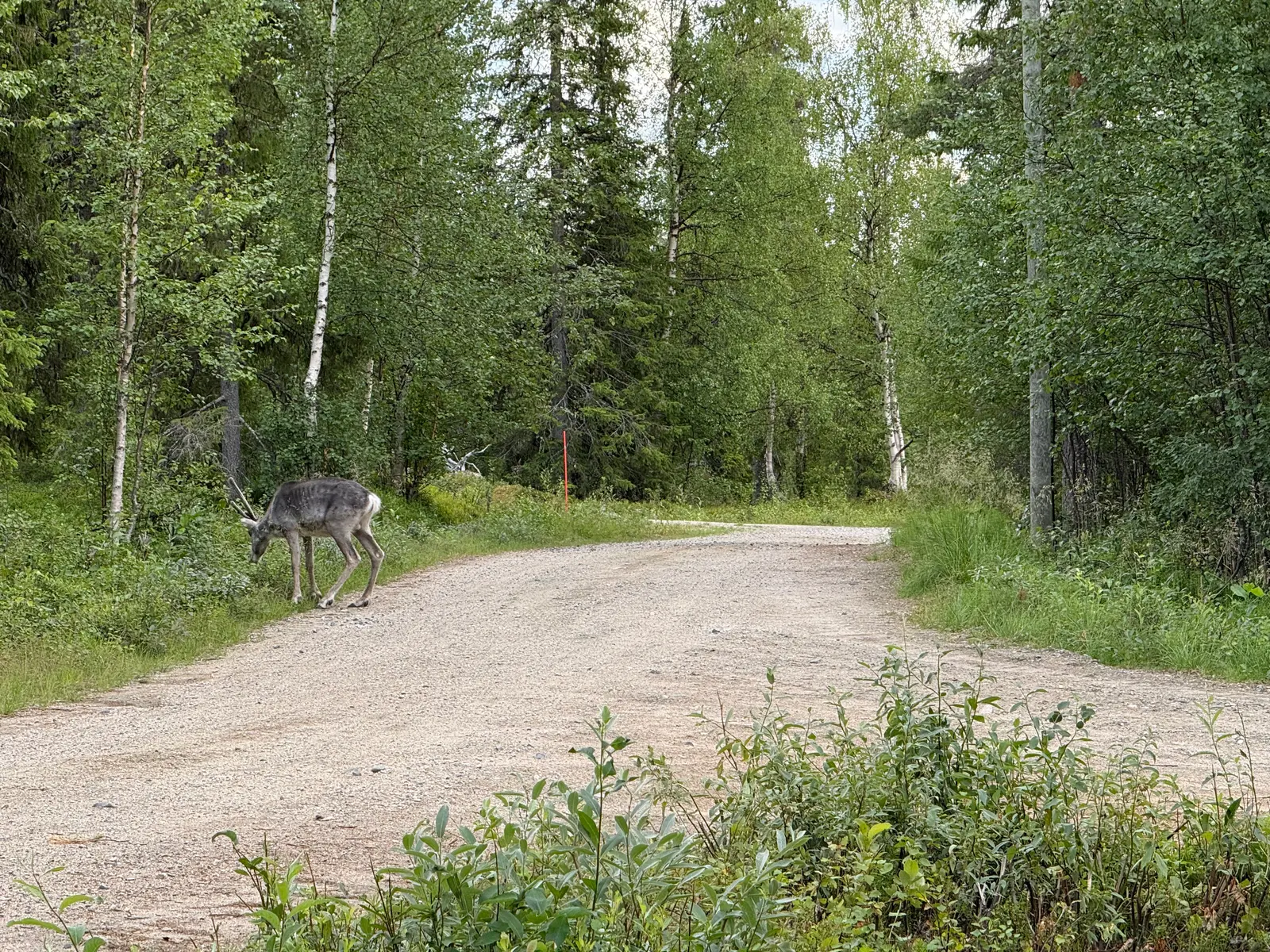
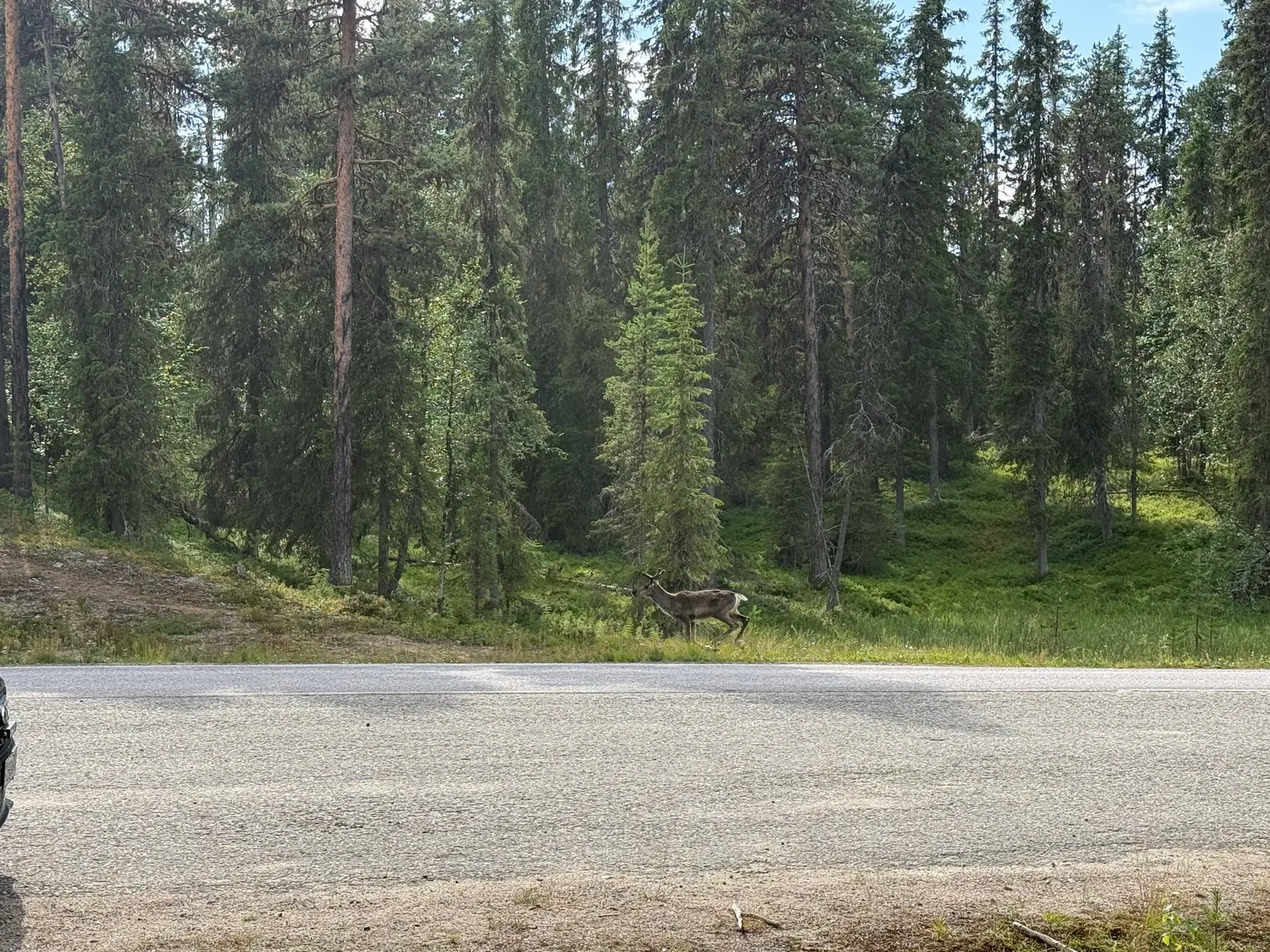
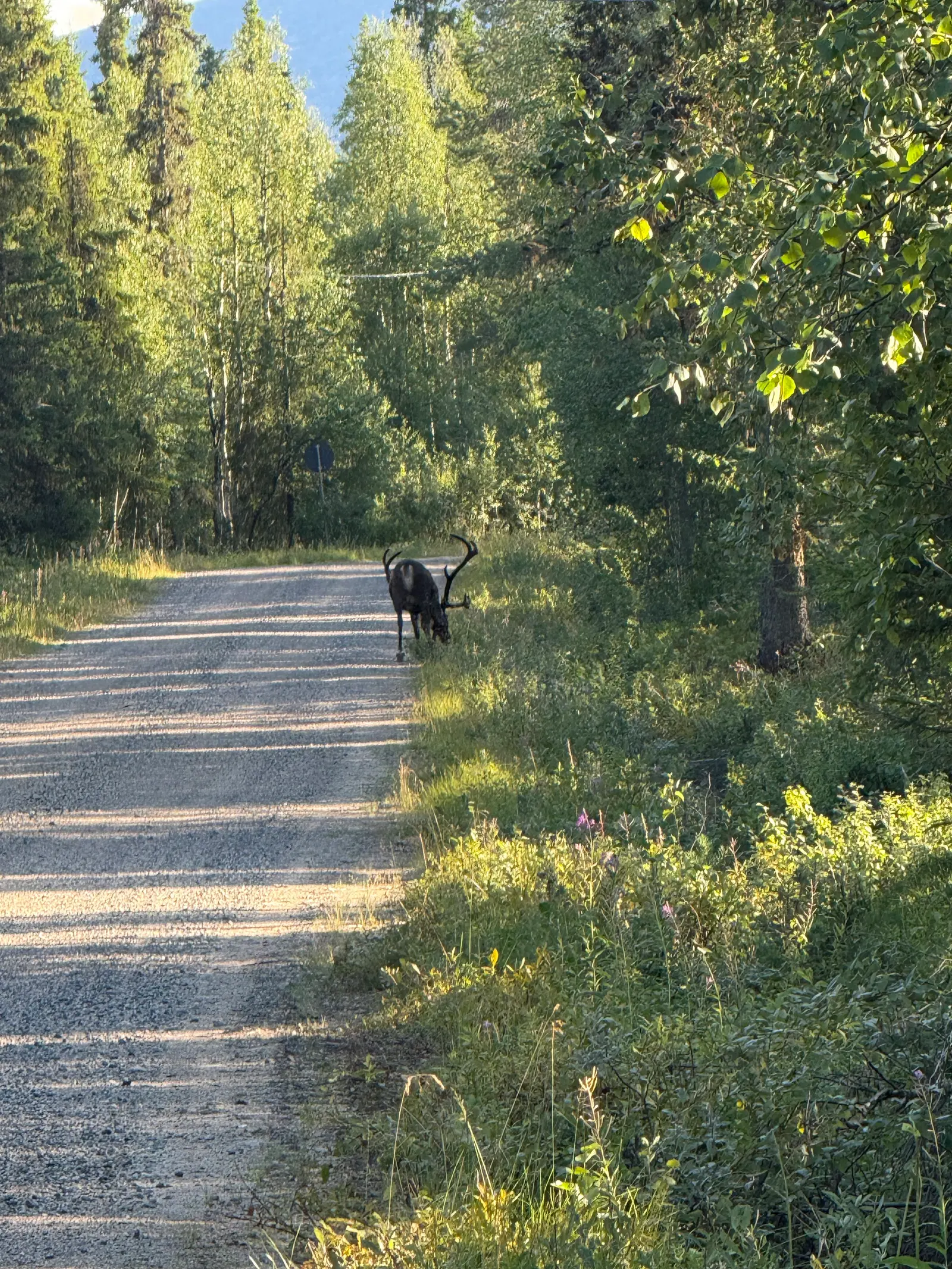
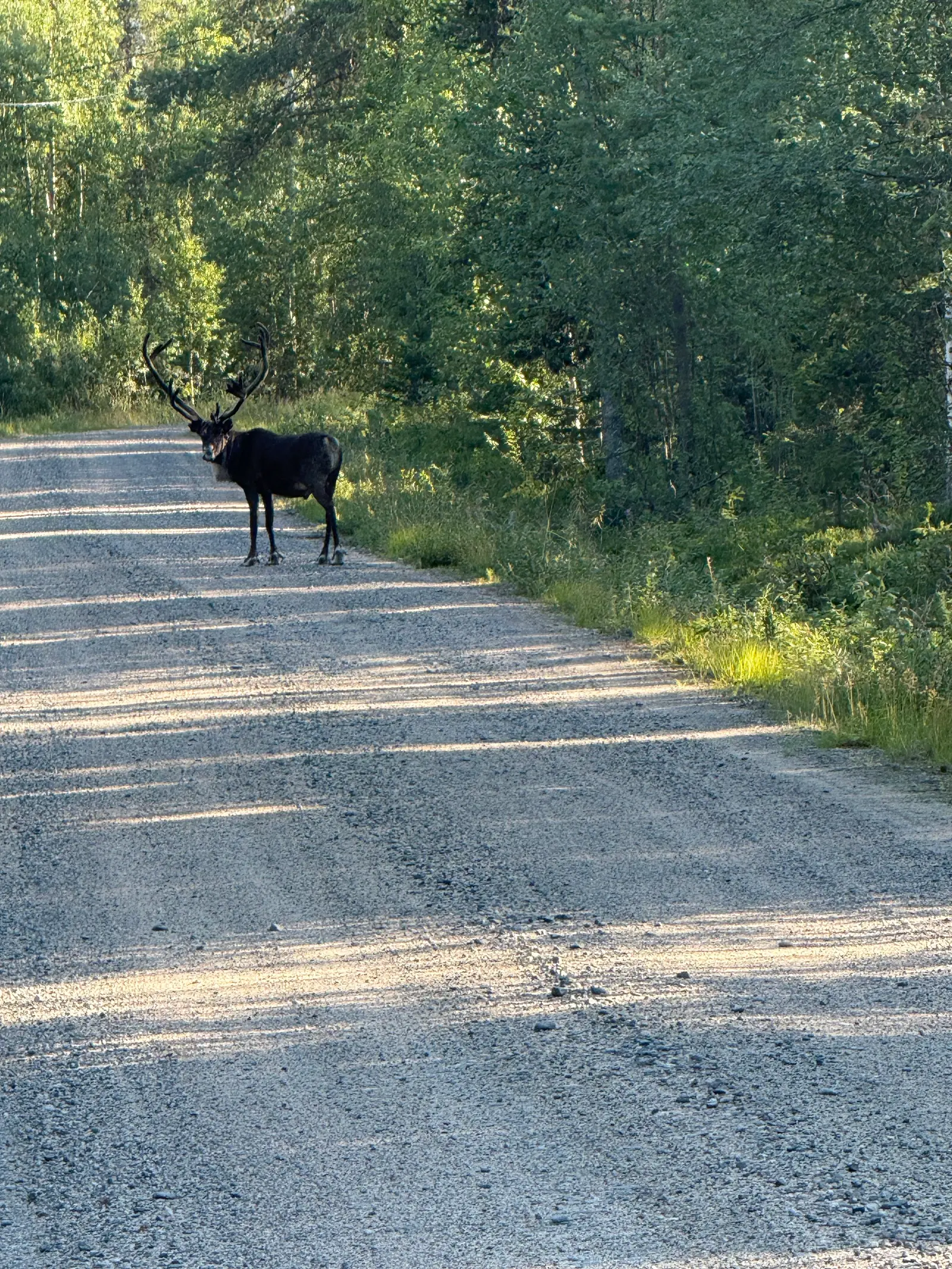
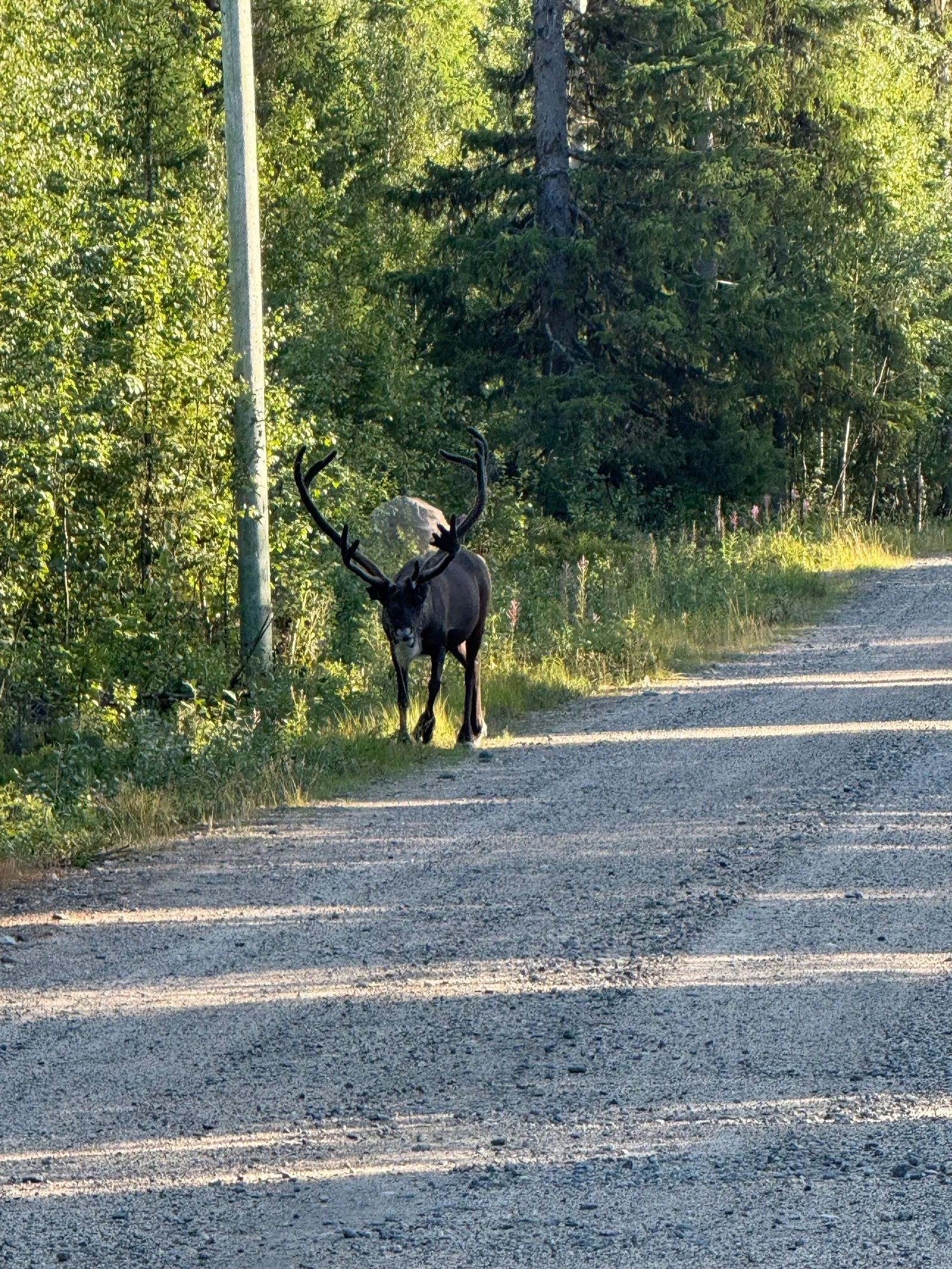
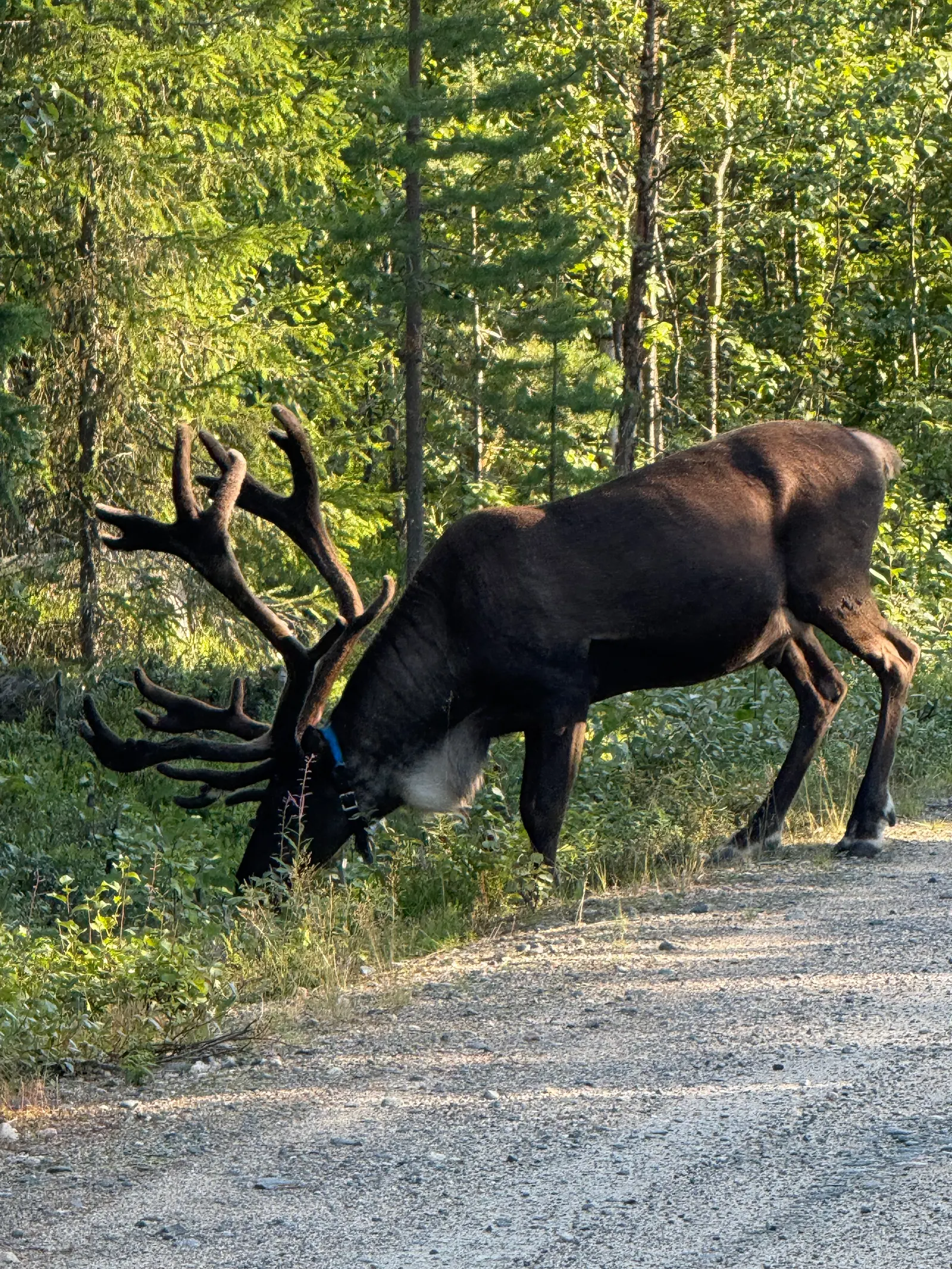
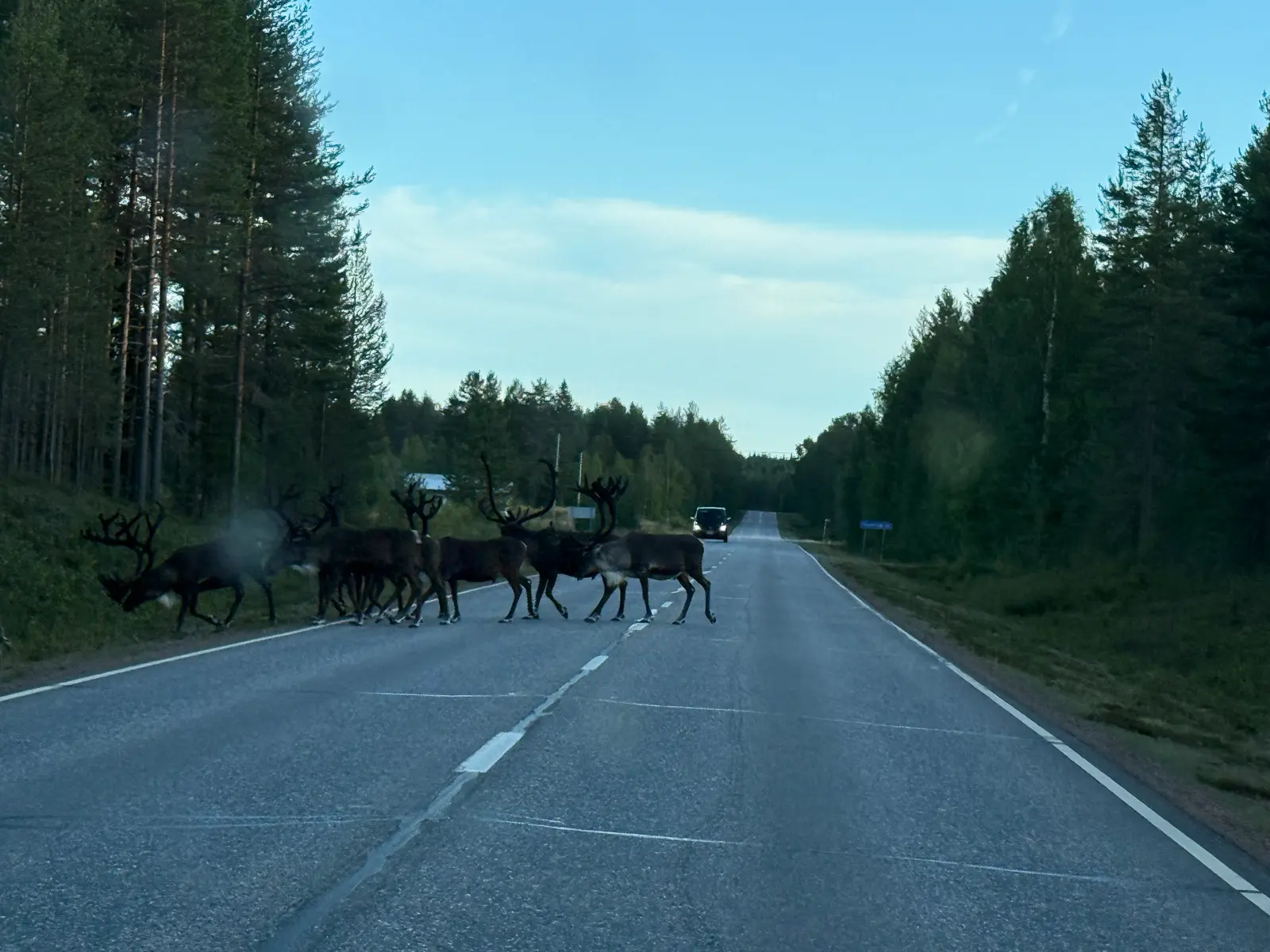
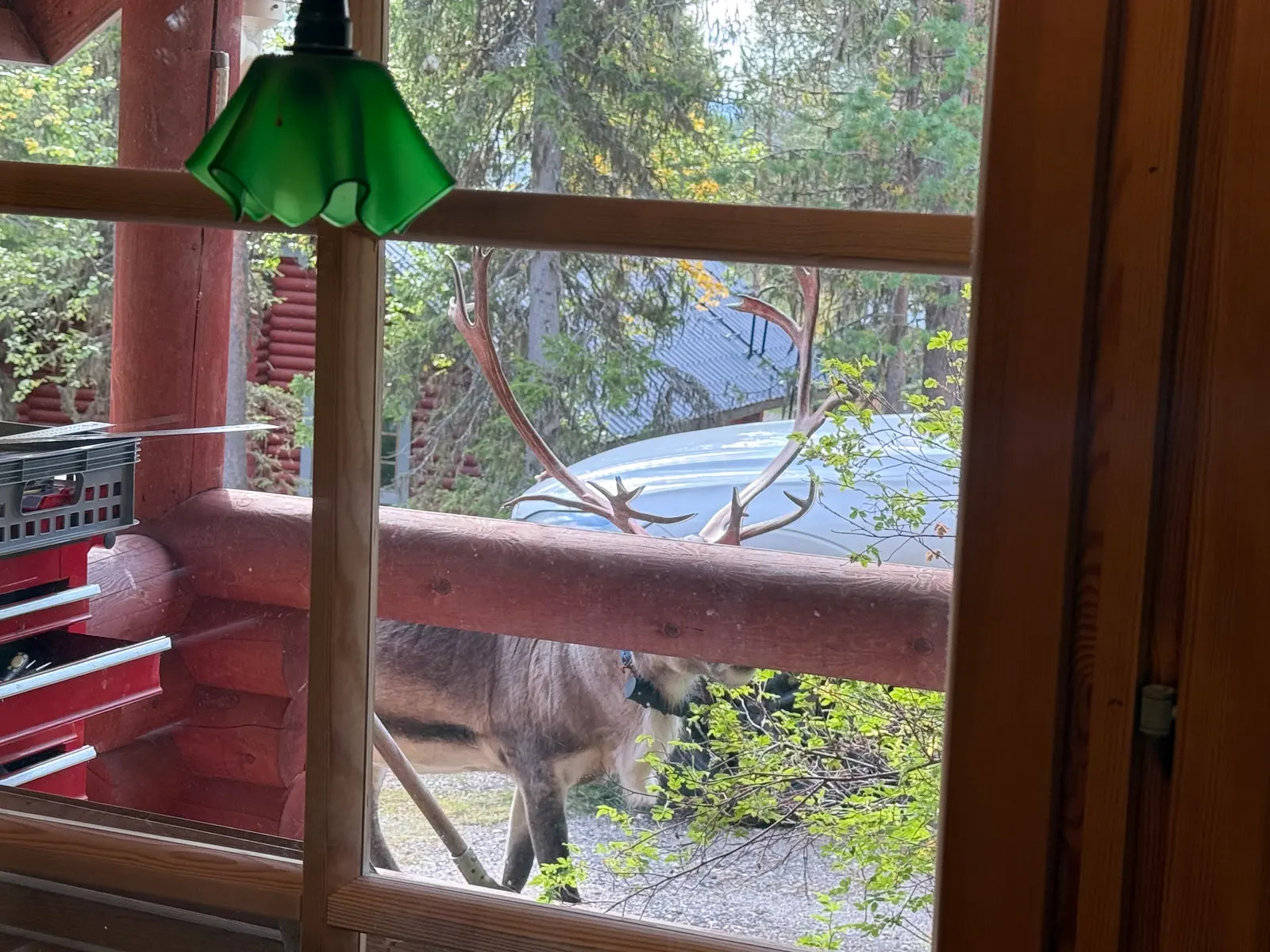
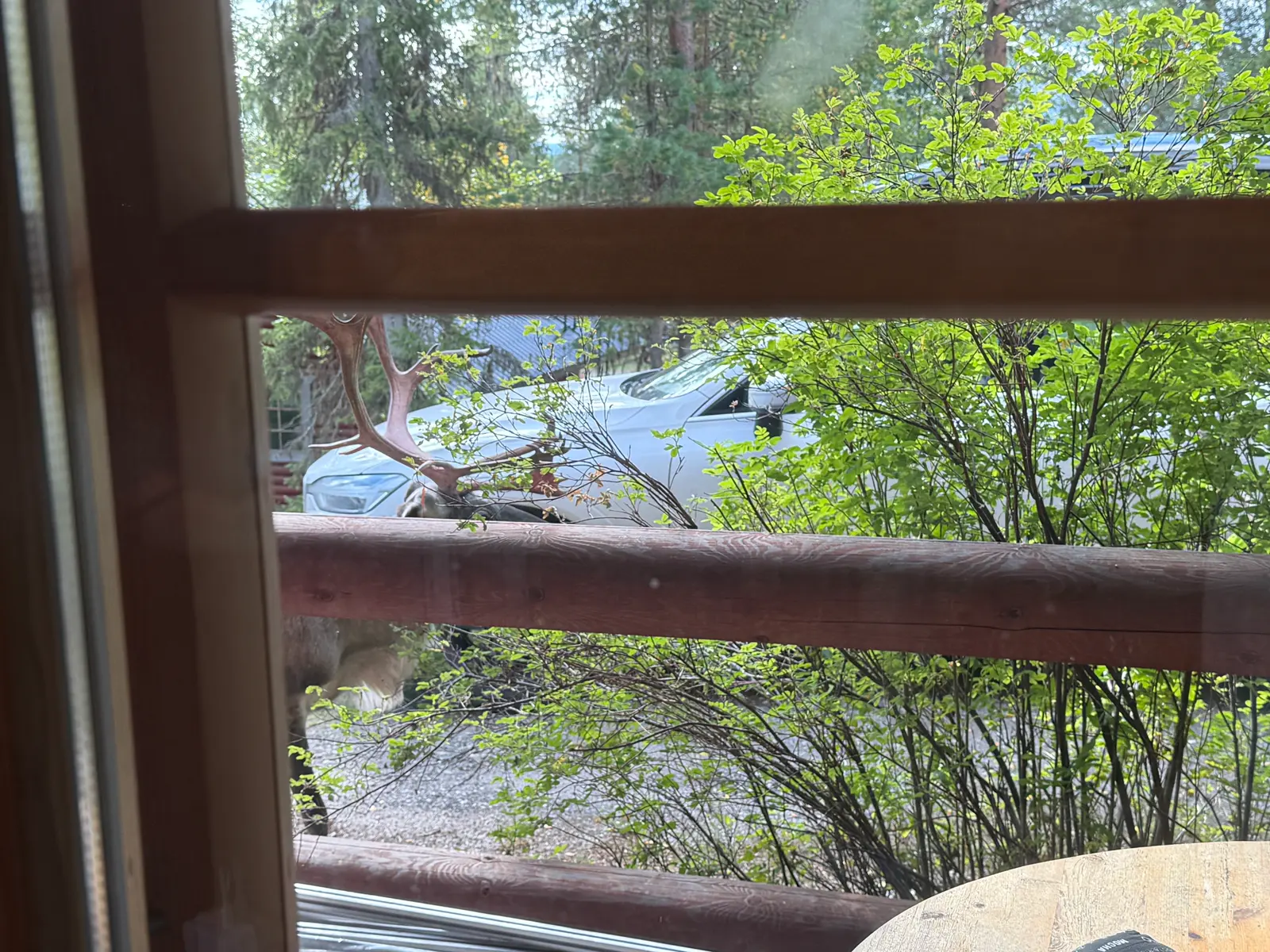
Reindeer can appear almost anywhere in Lapland, including on larger roads. They may stand still in headlights, walk along the cleared surface or cross in groups. When you see one, slow down and watch for more. Never attempt a risky manoeuvre around an animal, particularly on a narrow icy road.
If you collide with a reindeer, stop somewhere safe, warn other road users and report the incident to the appropriate emergency or police authorities using the locally applicable procedure; in an emergency call 112. Do not approach an injured animal or put yourself in the way of traffic. Notify the rental company and follow its accident-reporting instructions as well.
Never stop in the road for the northern lights

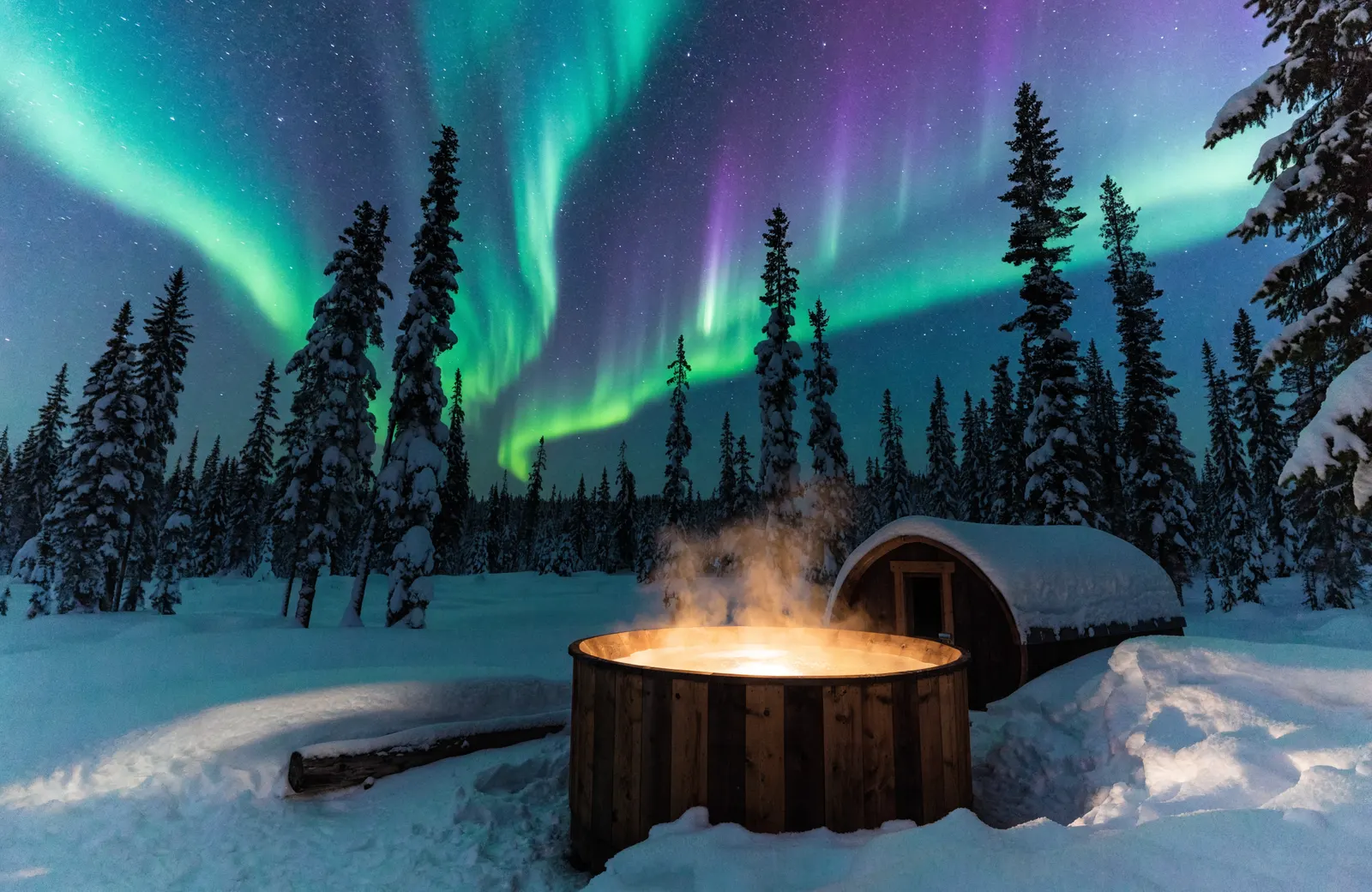
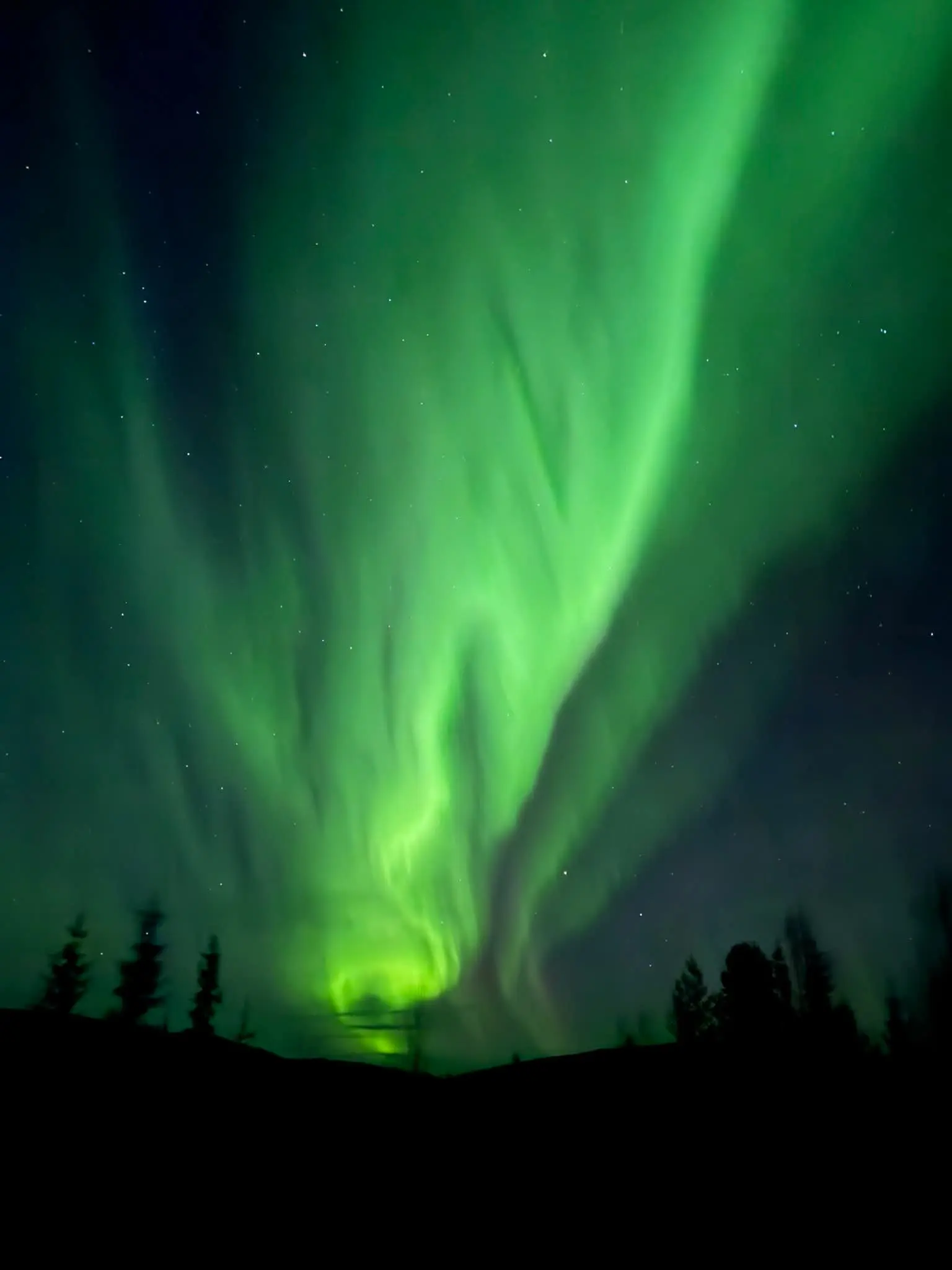
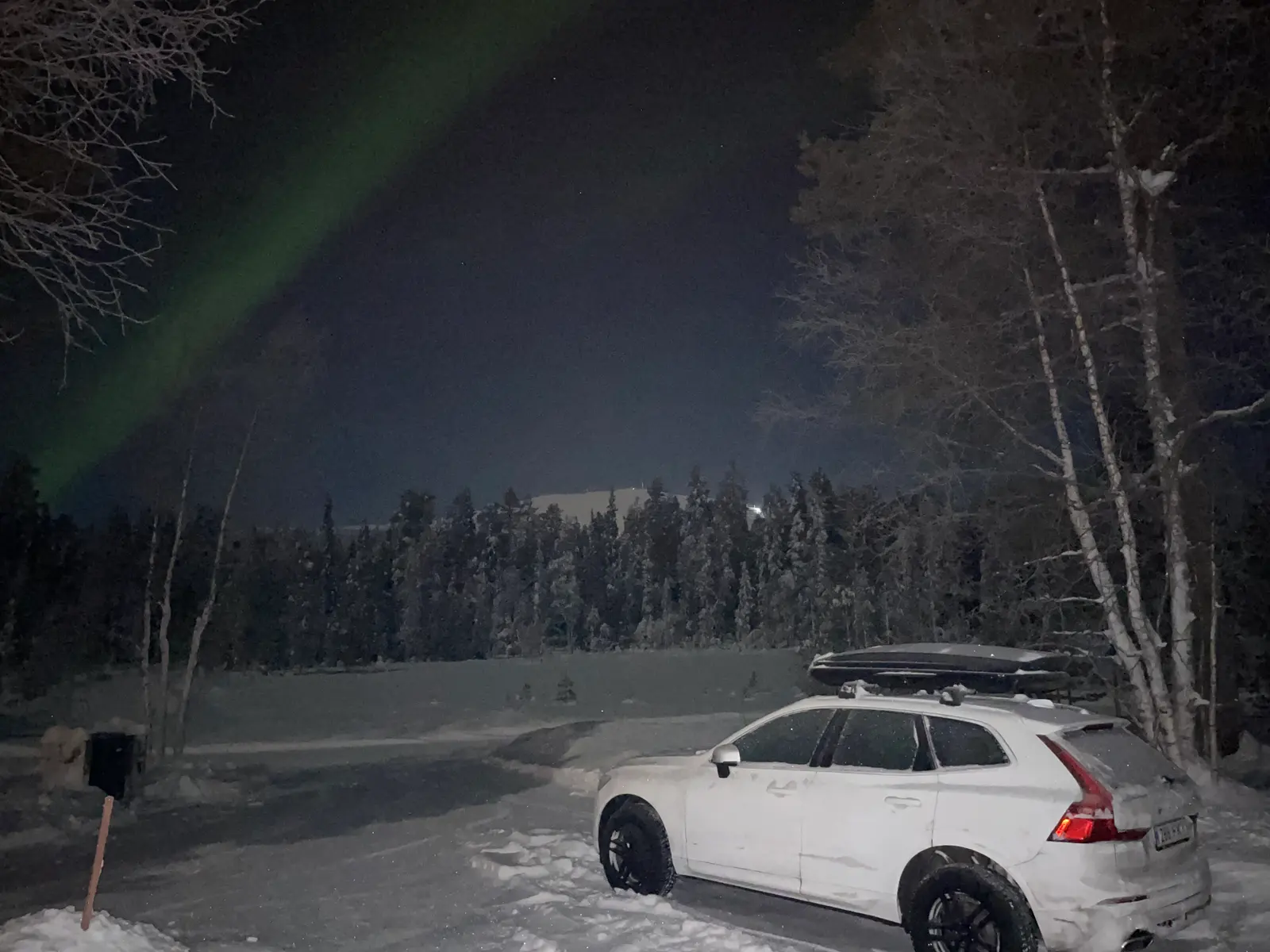
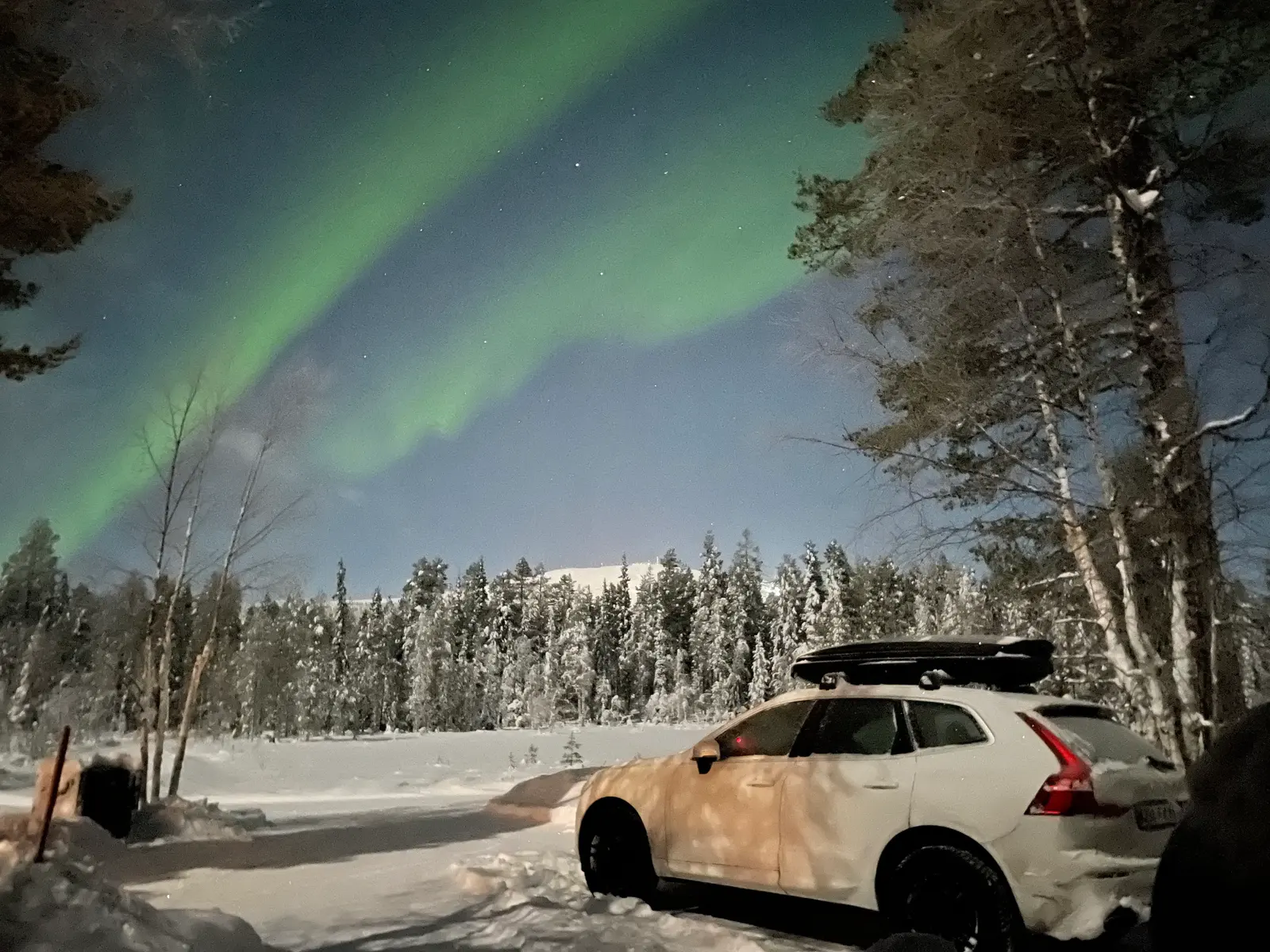
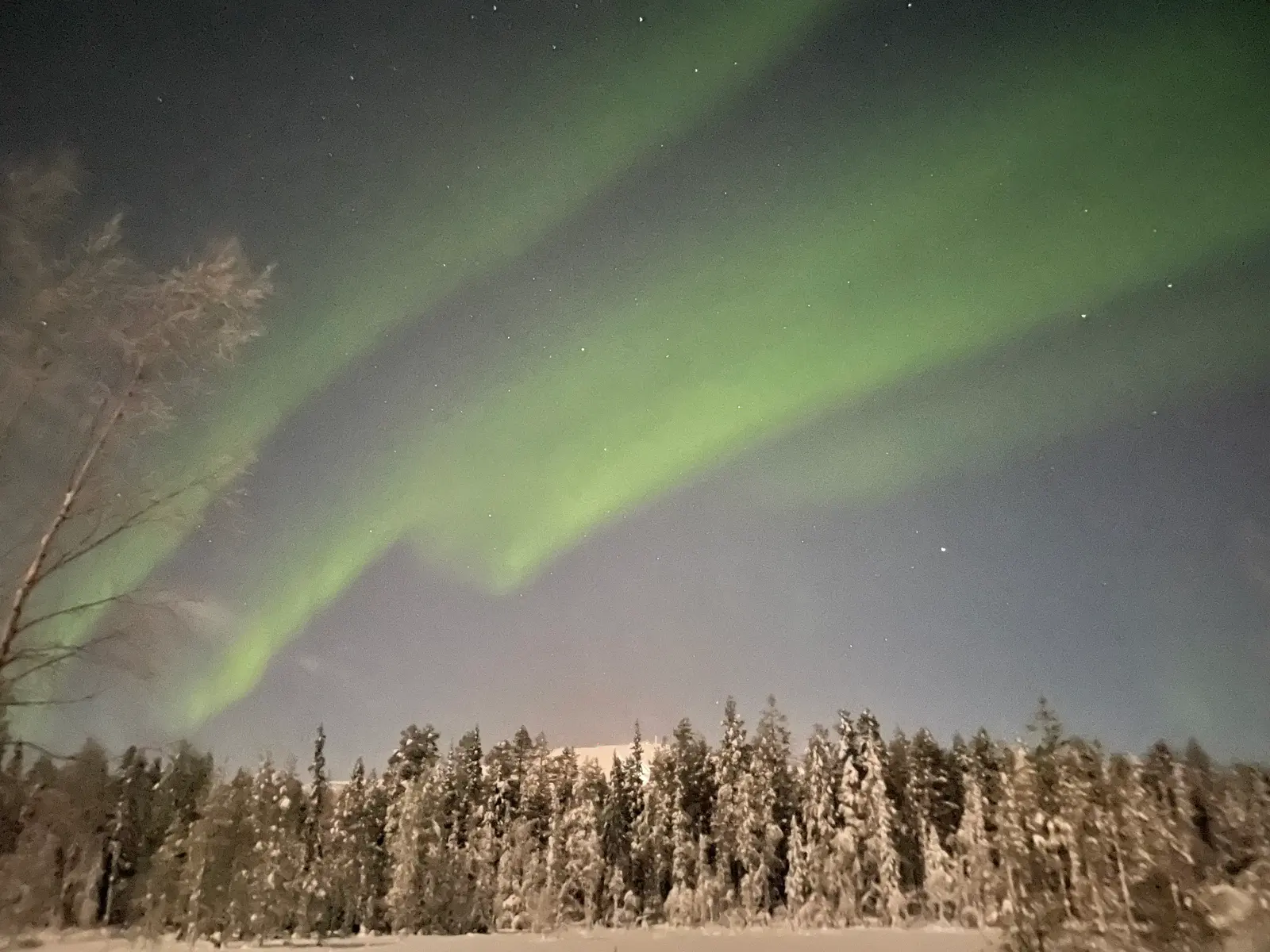
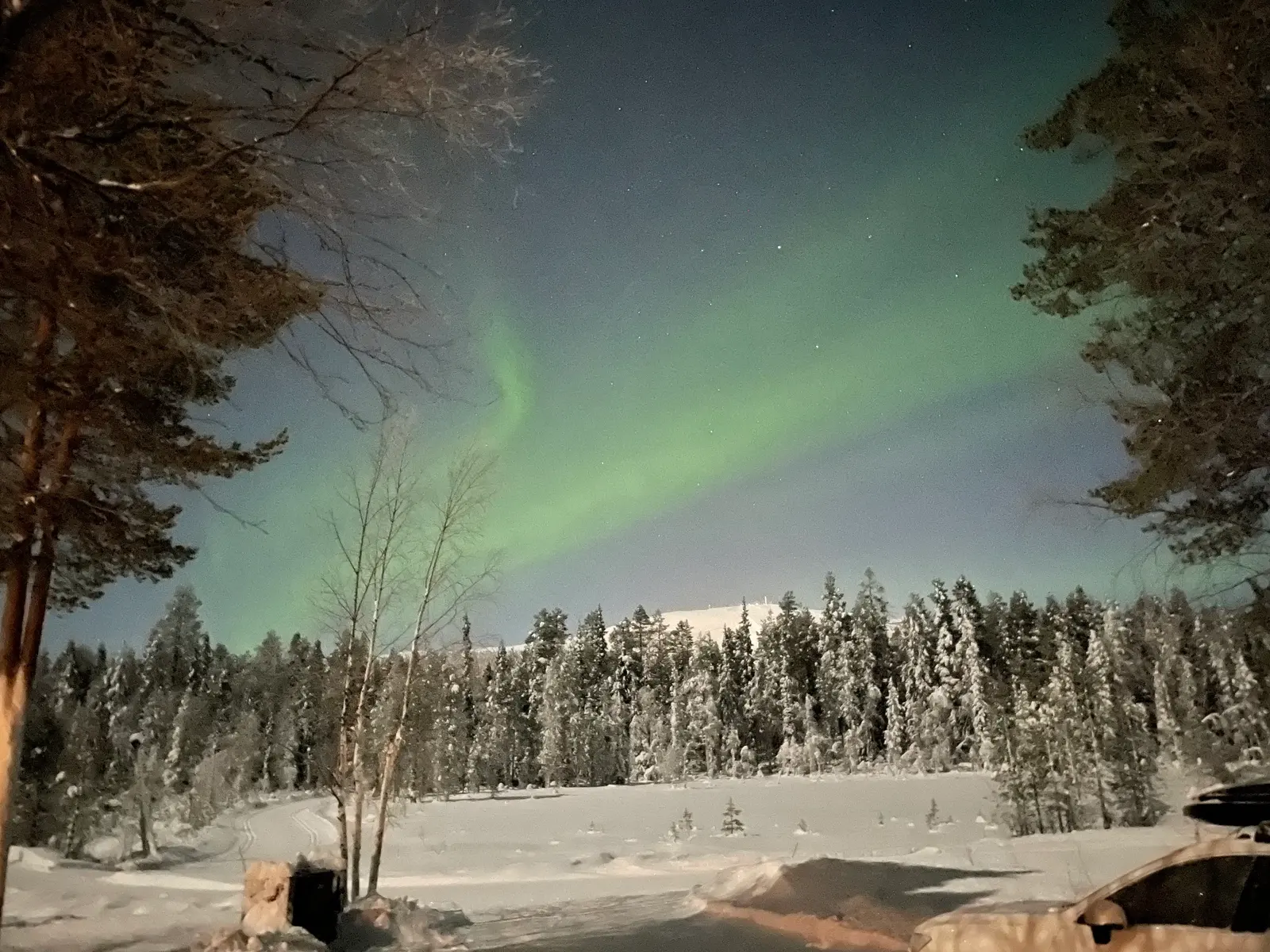
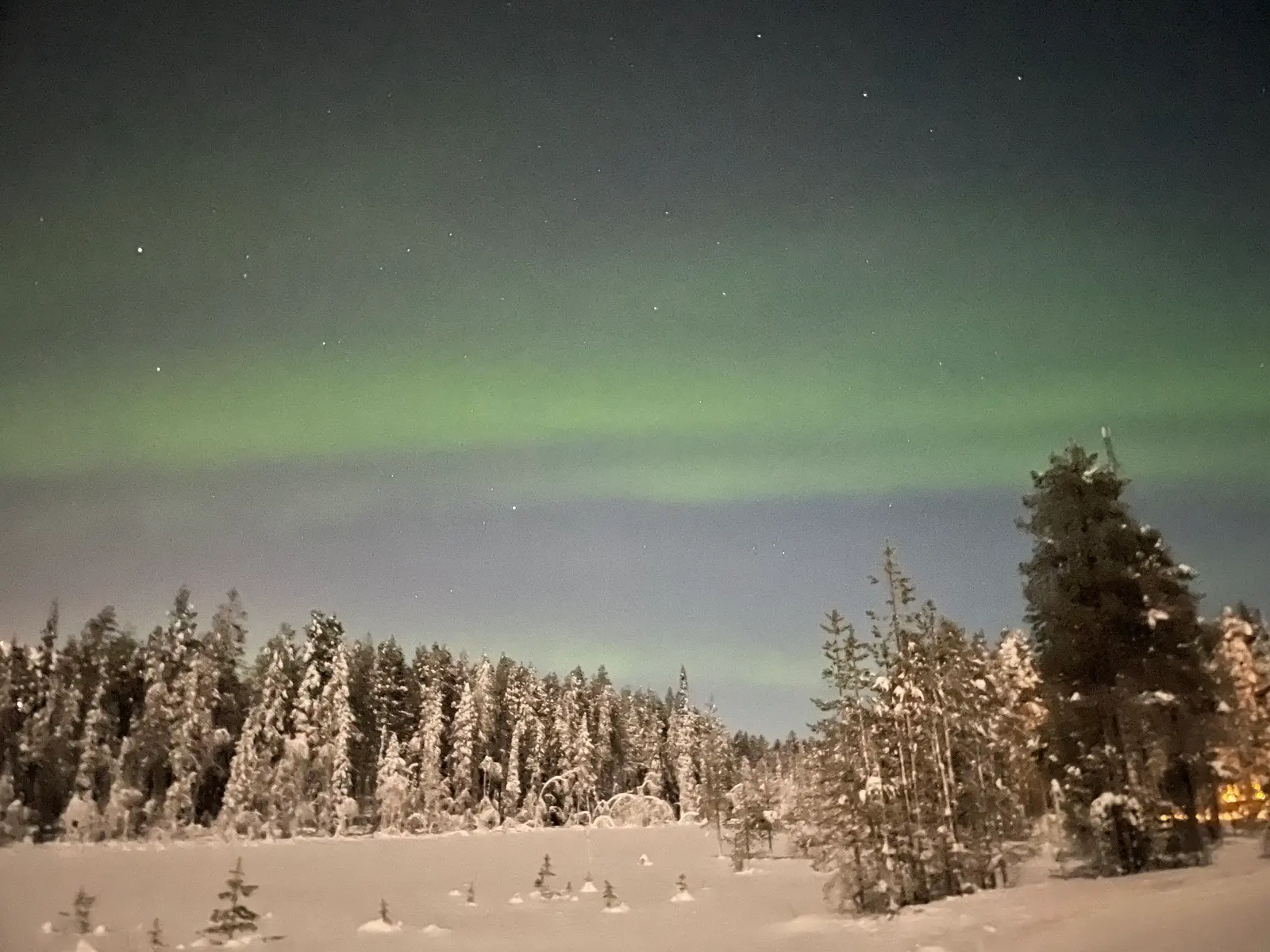
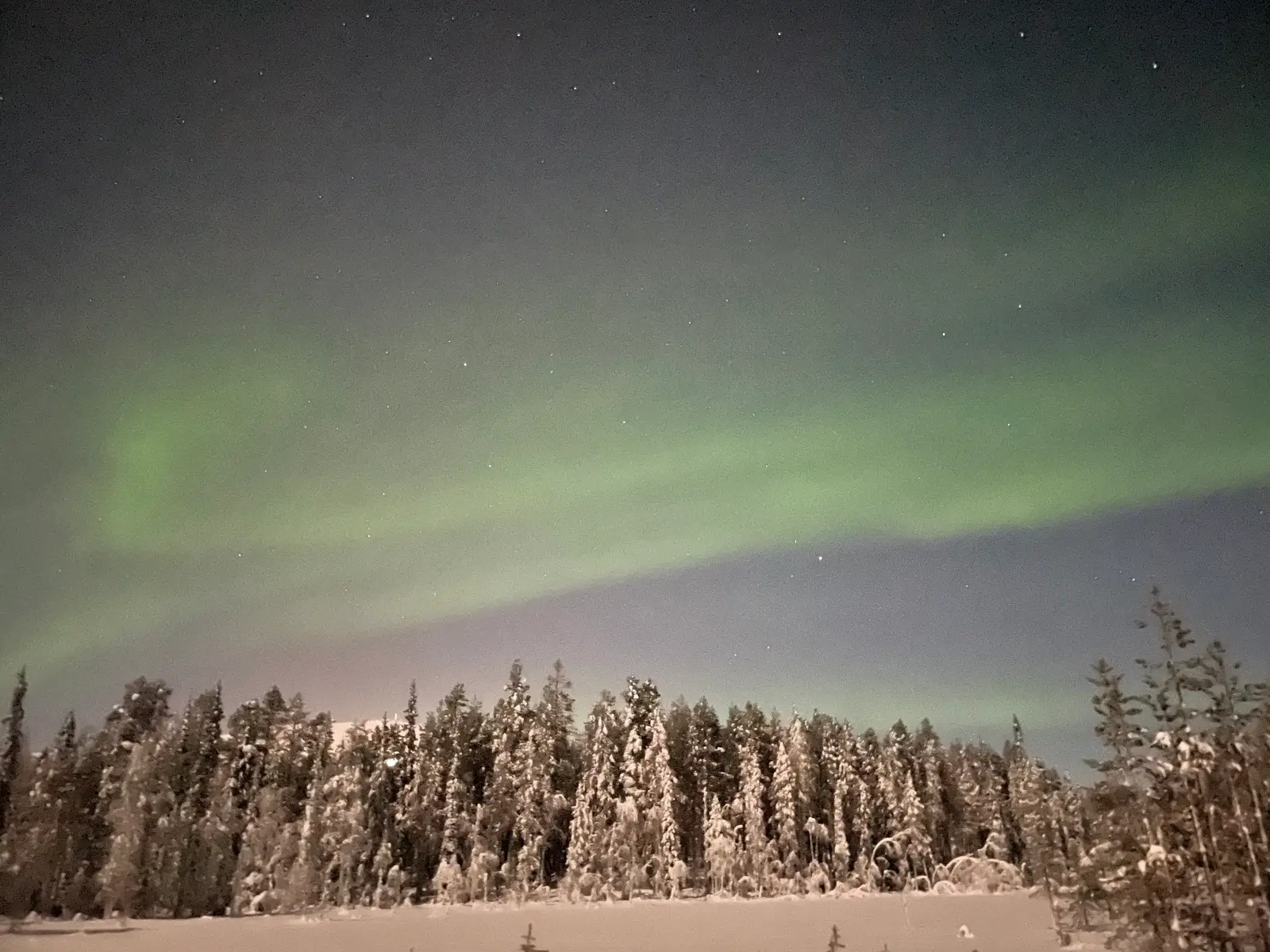
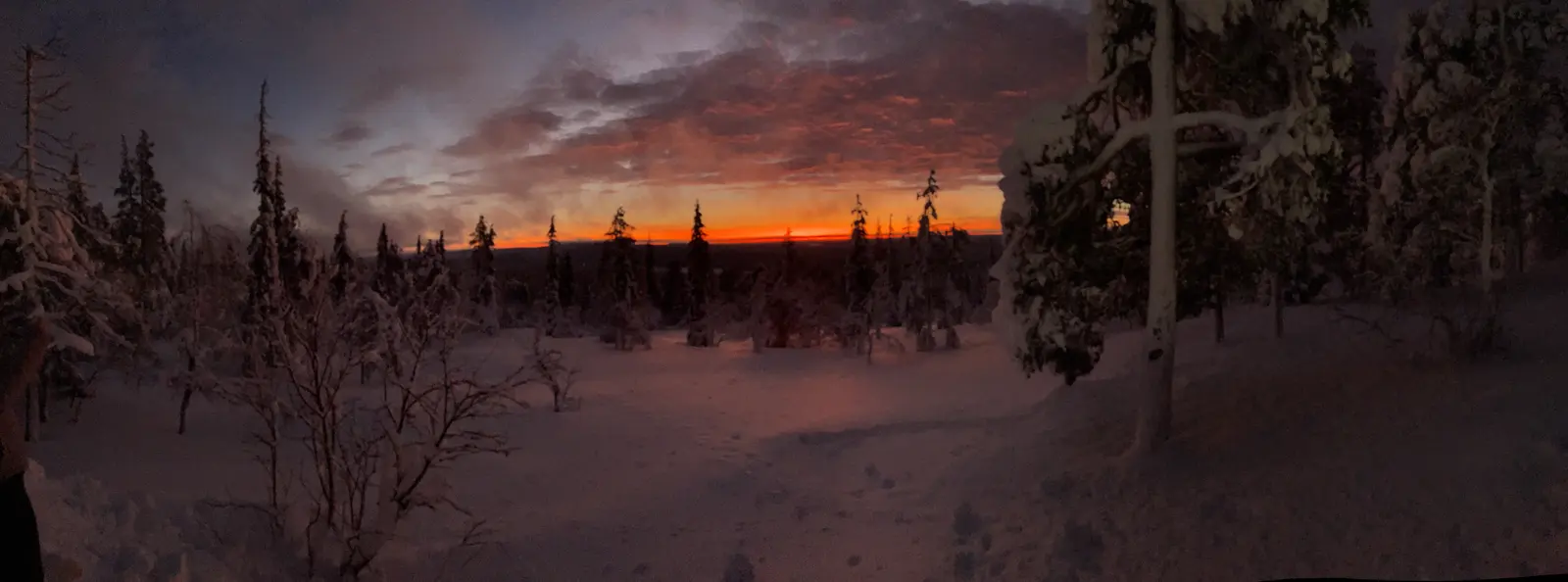
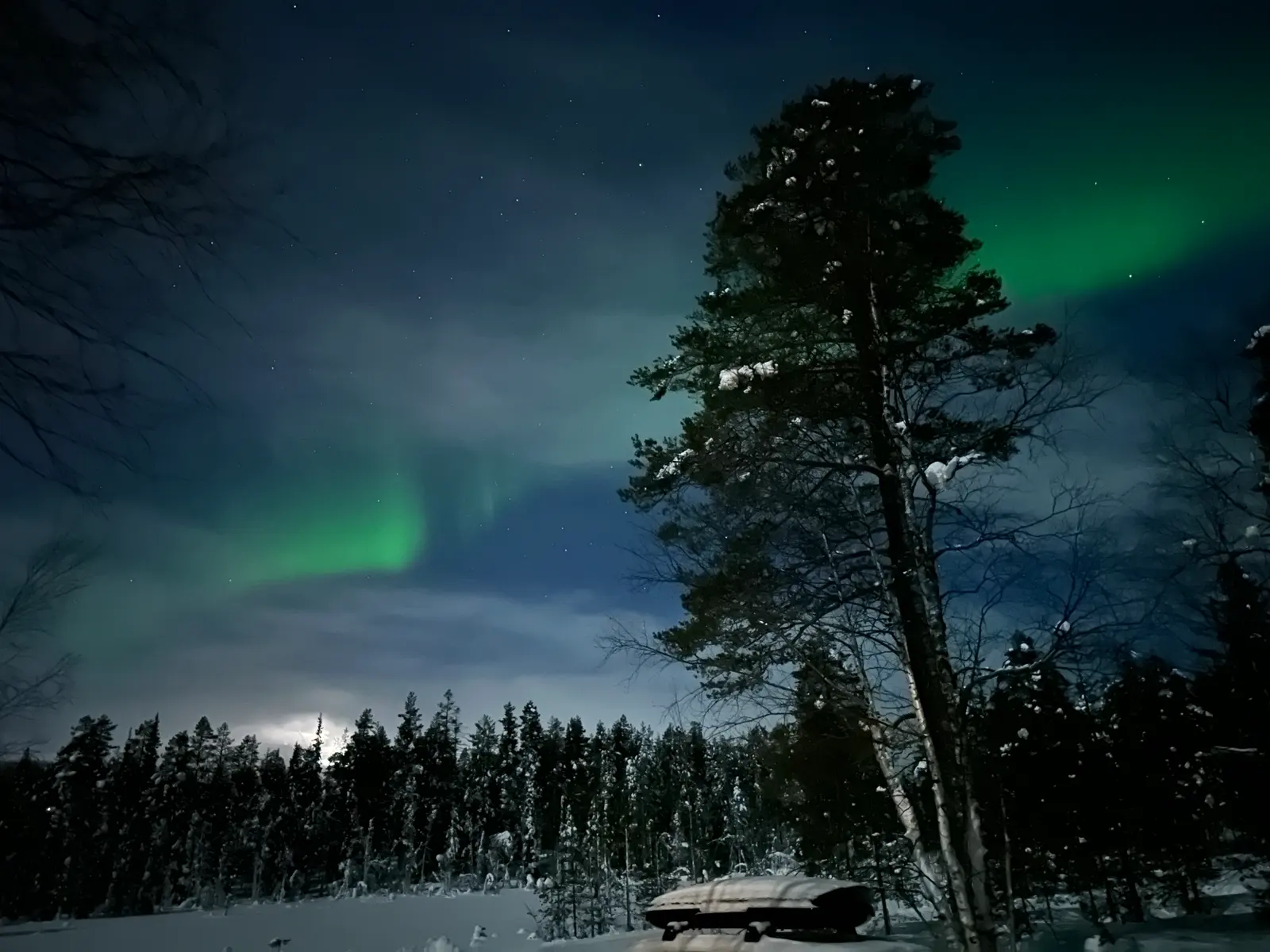
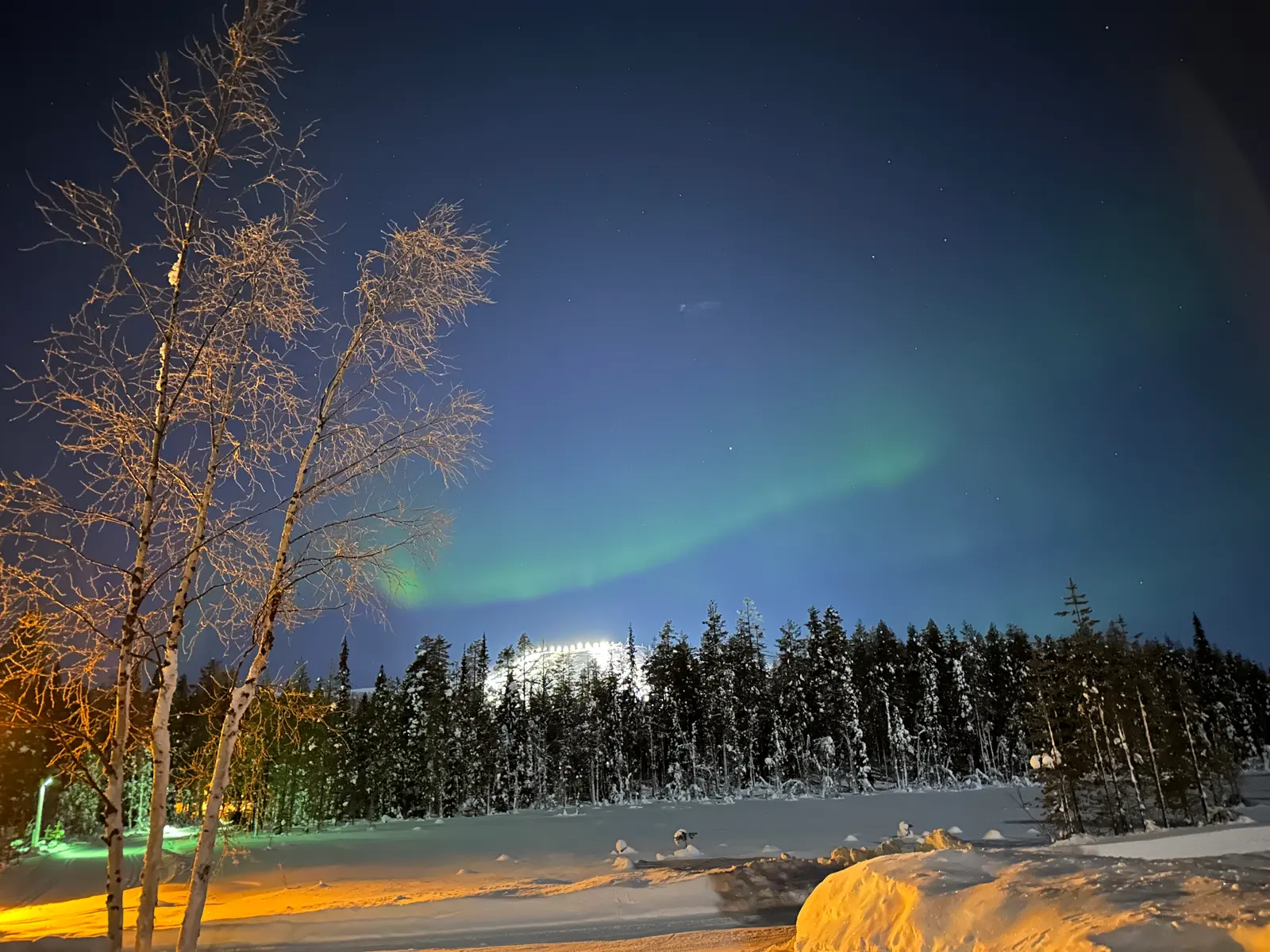
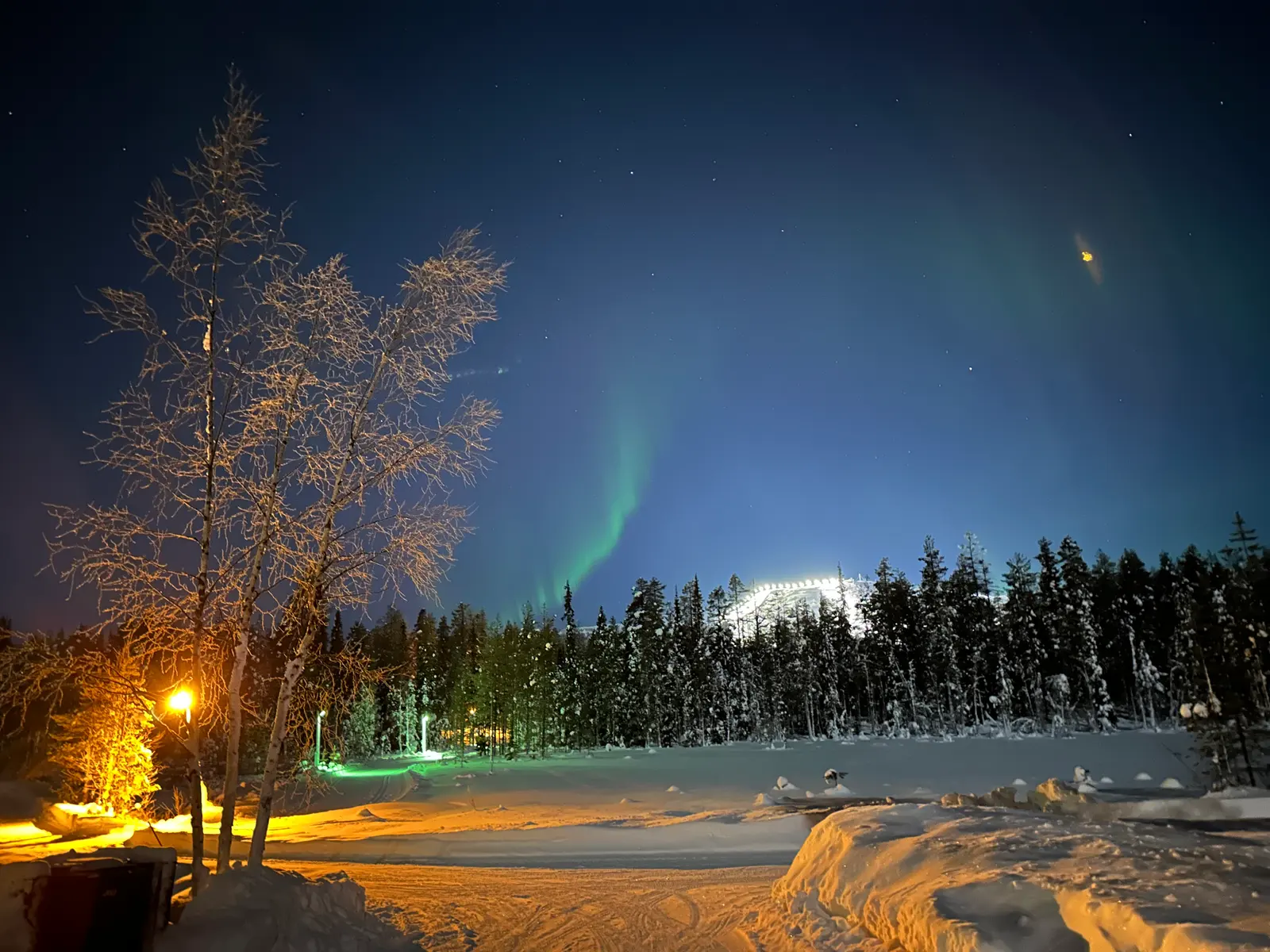
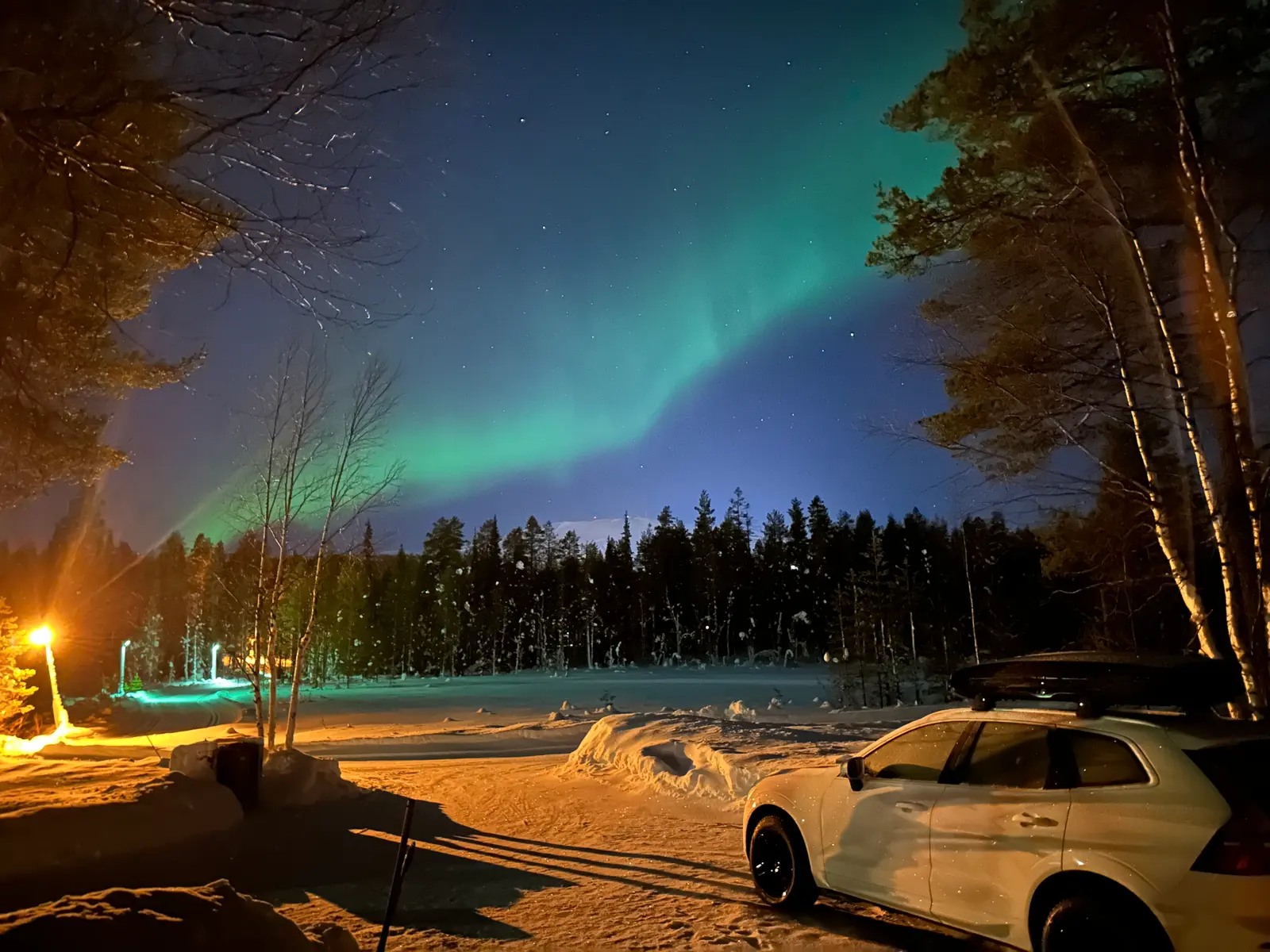
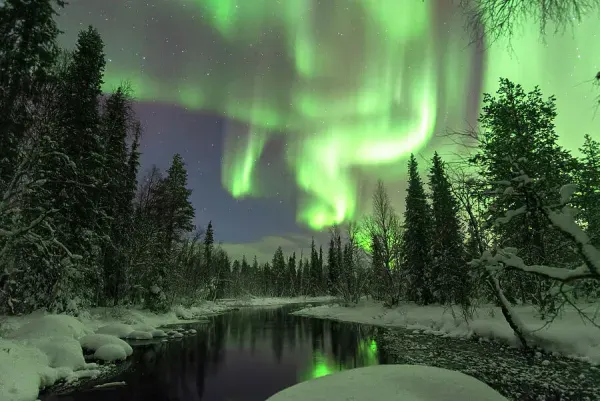
The aurora is beautiful — but the roadside is not a viewing platform. Photograph: Villa Lapland.
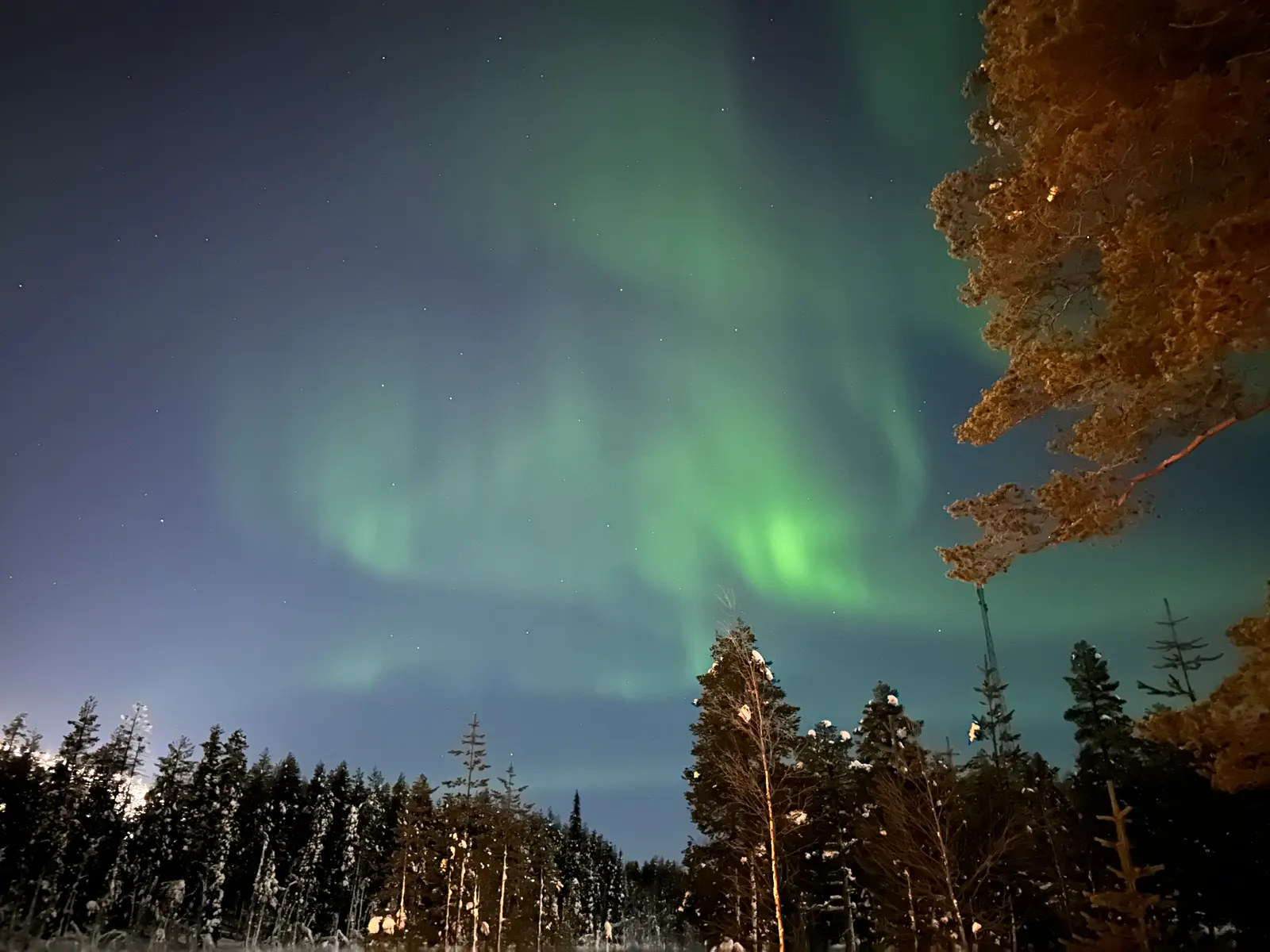
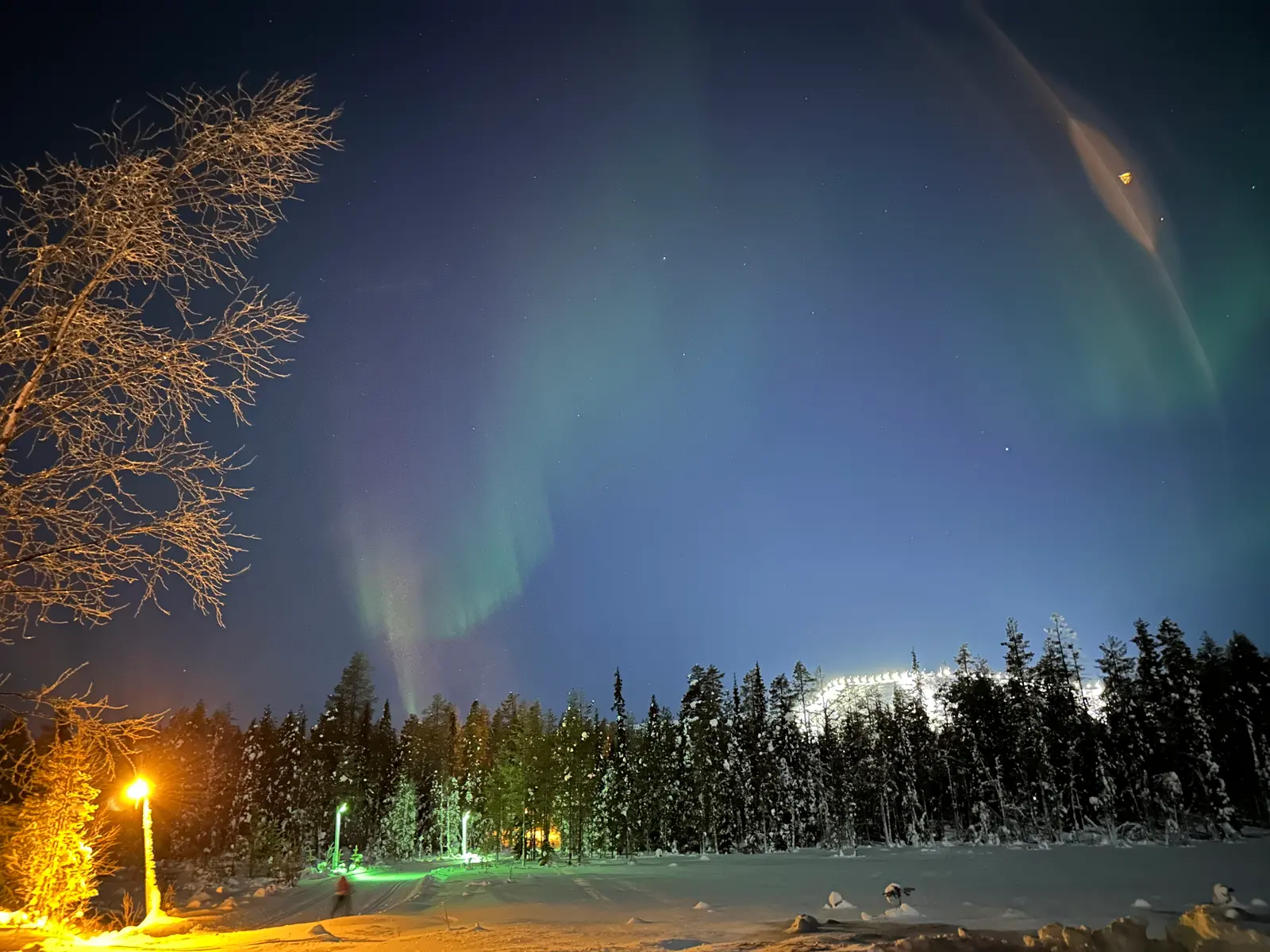
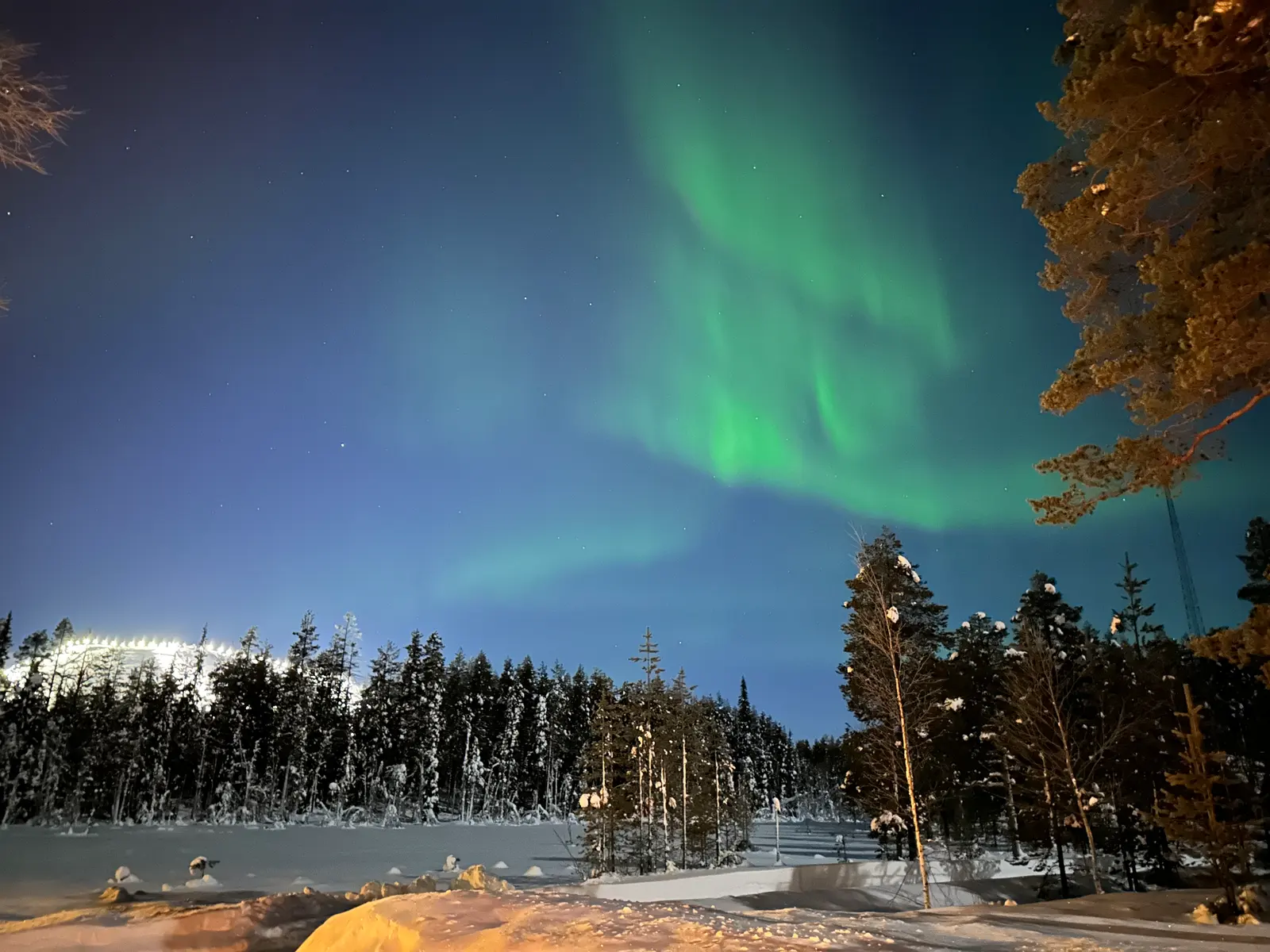
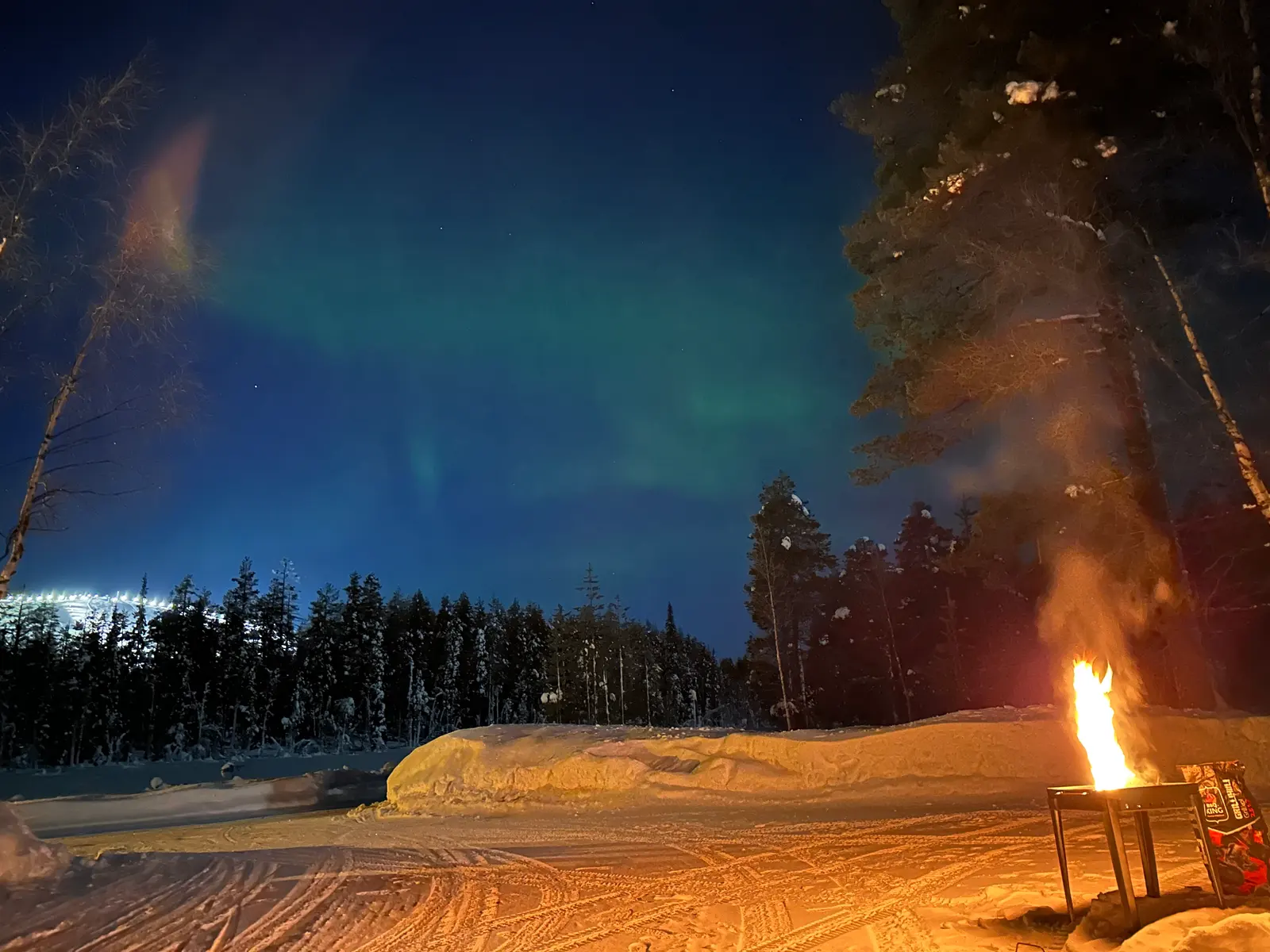
The aurora can appear unexpectedly, and the temptation to stop immediately is understandable. Resist it. Never park in a traffic lane, a curve, an access to emergency services or somewhere that restricts sightlines. Use an actual, safely accessible parking area. After stopping, keep the roadside clear and avoid dazzling other visitors with headlights. You may not need to drive far at all: a dark location away from bright town lights is already a good starting point.
Cold starts, fuel and electricity
Temperatures can fall far below freezing. A modern vehicle in good condition is designed to cope with winter, but a weak battery, unsuitable washer fluid or poor planning can cause trouble. Ask how your rental car should be preheated, if it has that facility. An engine-block heater socket is not the same thing as an electric-vehicle charging point — never confuse the two.
Start journeys with adequate fuel or charge, especially when travelling through remote areas. Electric vehicles are increasingly practical, but cold weather can reduce range and charging performance. Plan charging stops using current station information, allow a reserve and verify charging equipment and access at your accommodation.
Check the road conditions before leaving
Use Fintraffic’s road condition map for traffic disruptions, camera views and winter road information. For official weather and traffic-weather warnings, consult the Finnish Meteorological Institute. These sources are much more useful than relying on a navigation app’s estimated summer-speed journey time.
7. Across the North: Regions and Their Different Rhythms
Rovaniemi: best for a car-free city-based holiday
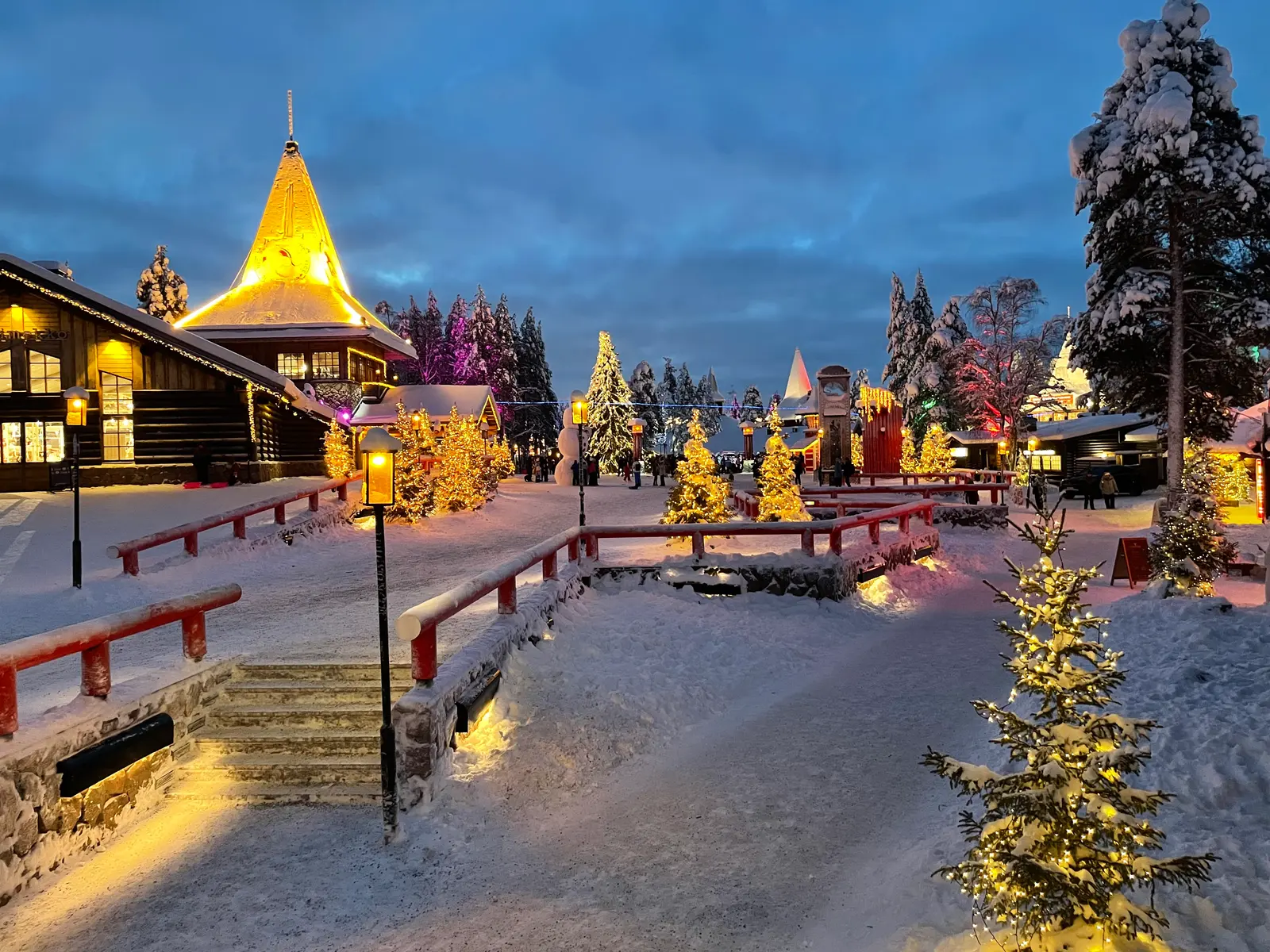
Rovaniemi is a natural base for international visitors who want restaurants, shops, Santa Claus Village and organised experiences. Stay centrally and you can combine walking with local transport and taxis. The most important step is to check the address of your accommodation: a wilderness cabin advertised as “Rovaniemi” may be a significant distance from the actual city centre.
Levi: resort convenience, independent excursions optional
Levi is one of the easiest places to plan a resort-based holiday. Kittilä Airport is nearby, winter resort services are concentrated around the main village, and seasonal local transport helps skiers. A car is optional for a straightforward resort week but particularly useful if you want to visit the Pallas fells, Muonio, remote viewpoints or accommodation outside the centre.
Ylläs and Äkäslompolo: the right village matters
Ylläs is not one compact town. It includes villages on different sides of the fell, such as Äkäslompolo and Ylläsjärvi. Services, lifts, trail access and local transport depend on which side you stay. Kolari station and Kittilä Airport are useful starting points, but compare actual onward connections. A car adds freedom for reaching quieter trailheads and villages.
Inari, Ivalo and Saariselkä: northern distances
The Ivalo airport region is particularly useful for northern Lapland. Saariselkä has resort infrastructure, Inari offers a smaller village atmosphere, and Ivalo is an important service centre. Distances between these locations and the surrounding wilderness areas mean that day trips often require careful planning. For central stays, a shuttle and guided excursions may be enough; independent nature exploration is simpler with a vehicle.
Muonio, Pallas and Raattama: for travellers seeking quiet
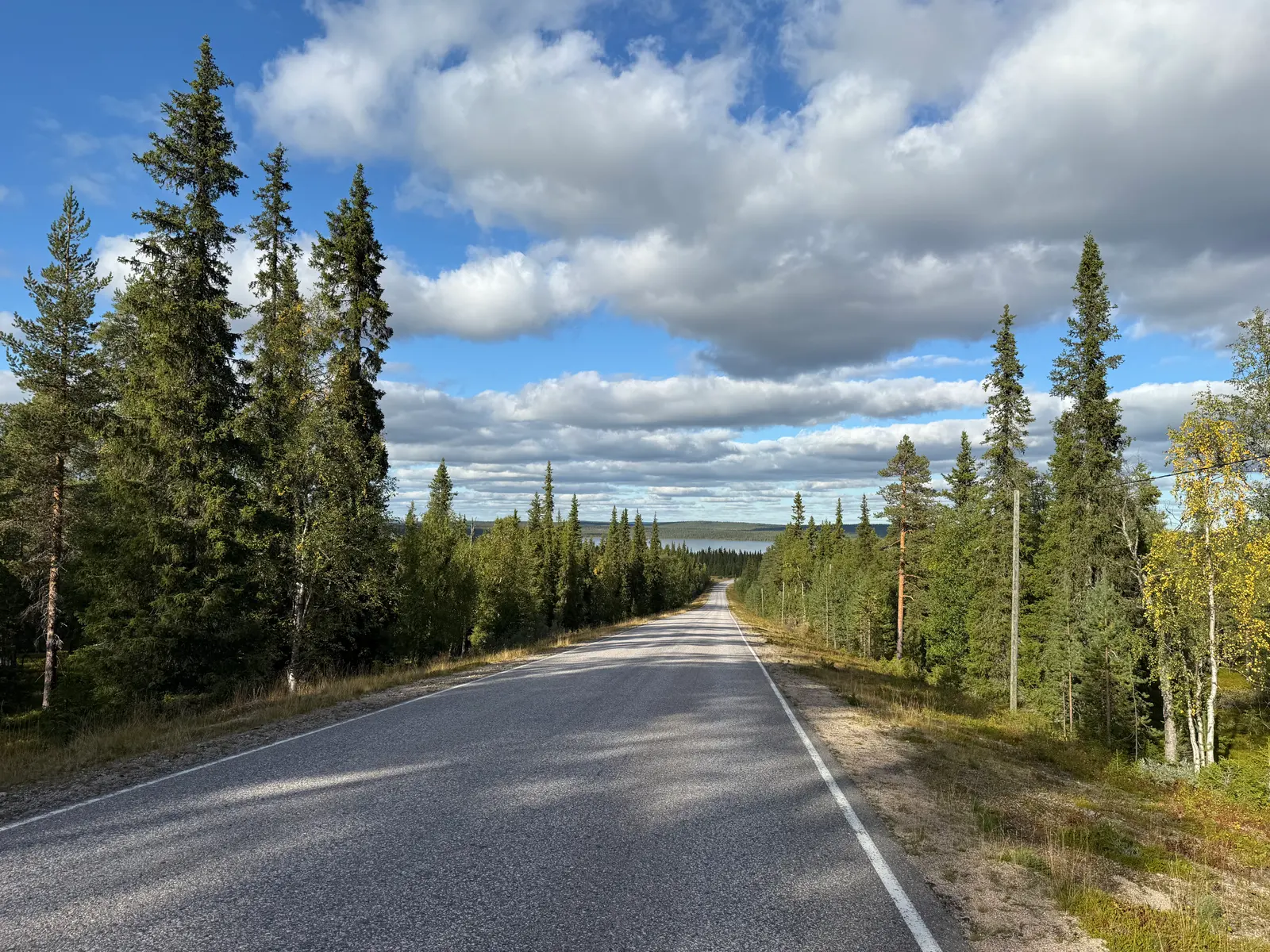
The western fell country has a different rhythm from a major ski resort. Here, the appeal is room to breathe: forests, wide skies, a dramatic fell landscape and small villages. Muonio provides useful services, while Pallas–Yllästunturi National Park offers exceptional opportunities for outdoor experiences. Access to individual trailheads, parking areas and seasonal routes should always be checked in advance. The wider northern landscape is also part of Sápmi, the traditional homeland of the Sámi people. We invite visitors to approach its living cultures and the land itself with curiosity and respect, rather than treating either as a backdrop for a holiday.
Raattama, where Villa Lapland is located, is a good example of why transport matters. The peaceful location is part of the experience, not a disadvantage to be hidden. It is exactly why guests may choose to stay here. But it also means that a spontaneous supermarket run or evening at a restaurant is not the same as stepping out of a city-centre hotel. A car is our normal recommendation for guests who want to explore independently.

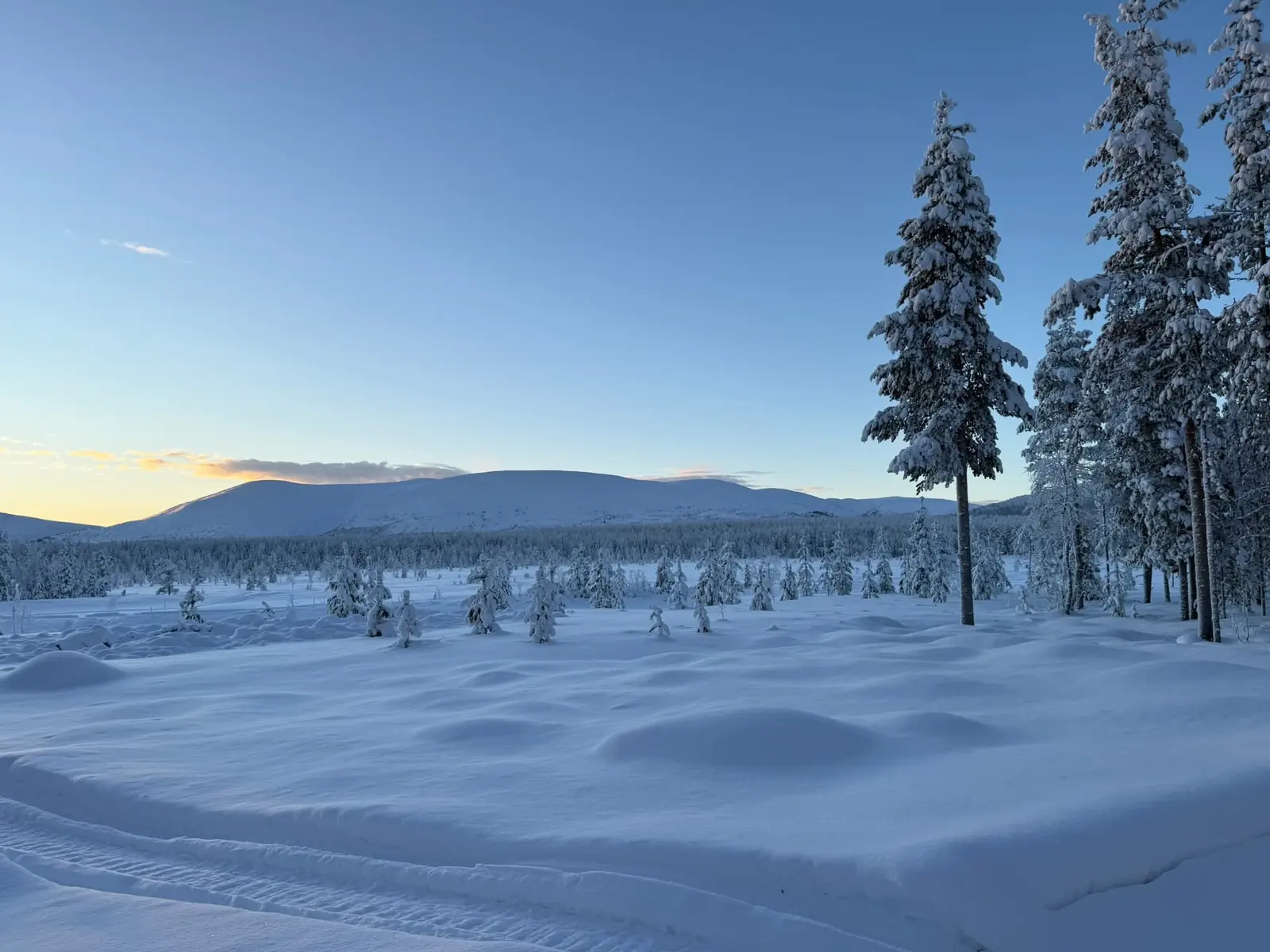
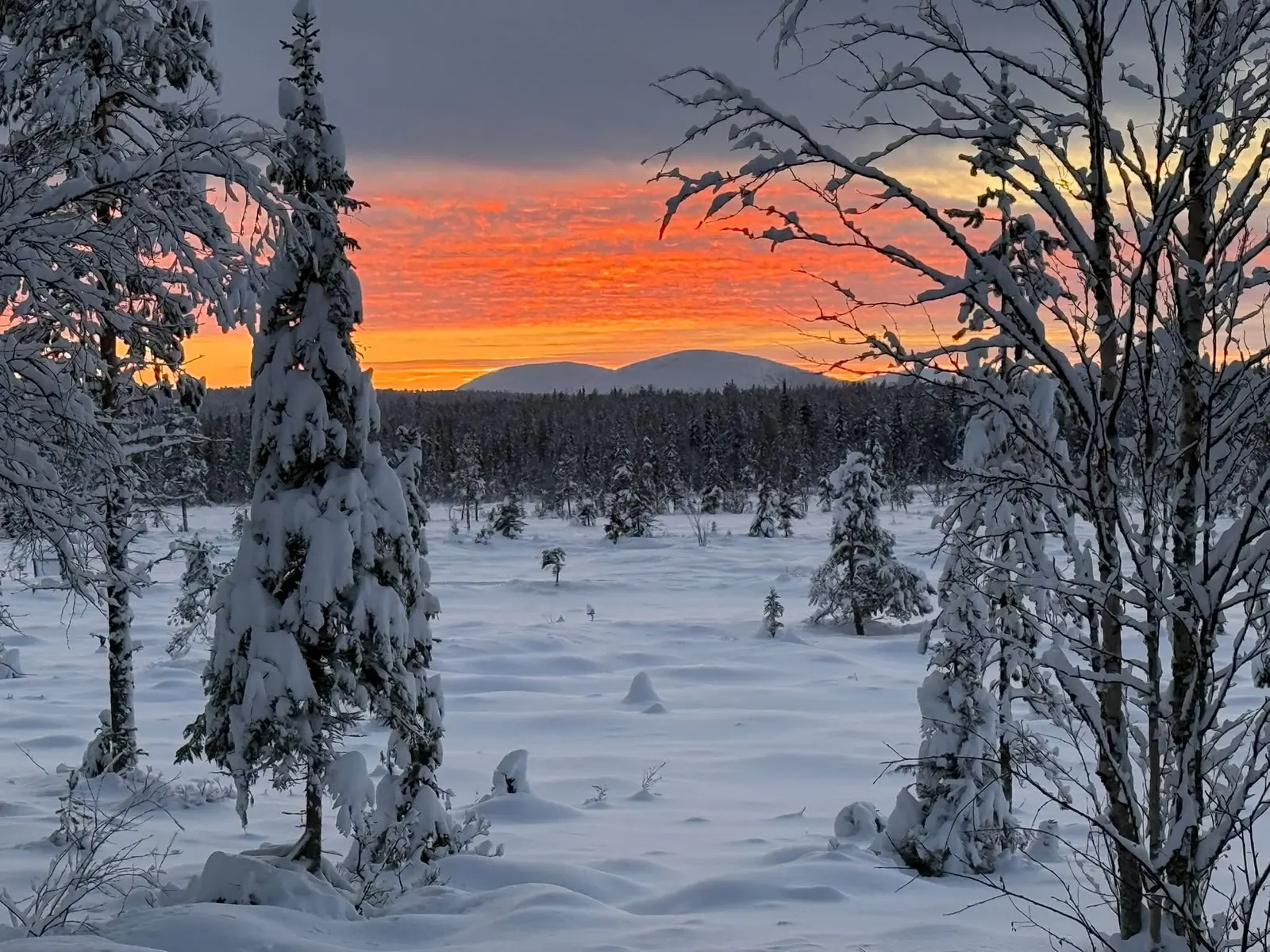
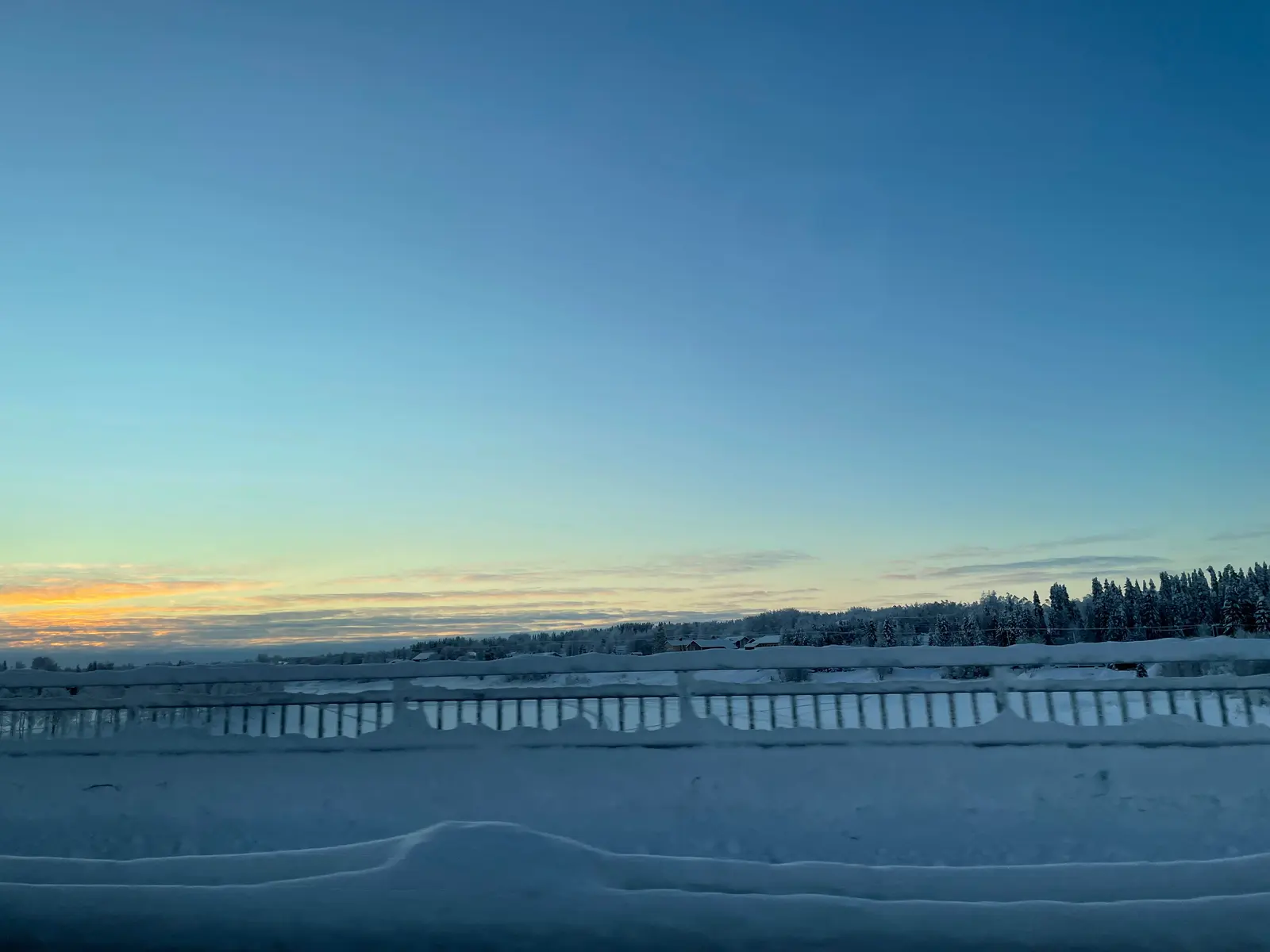
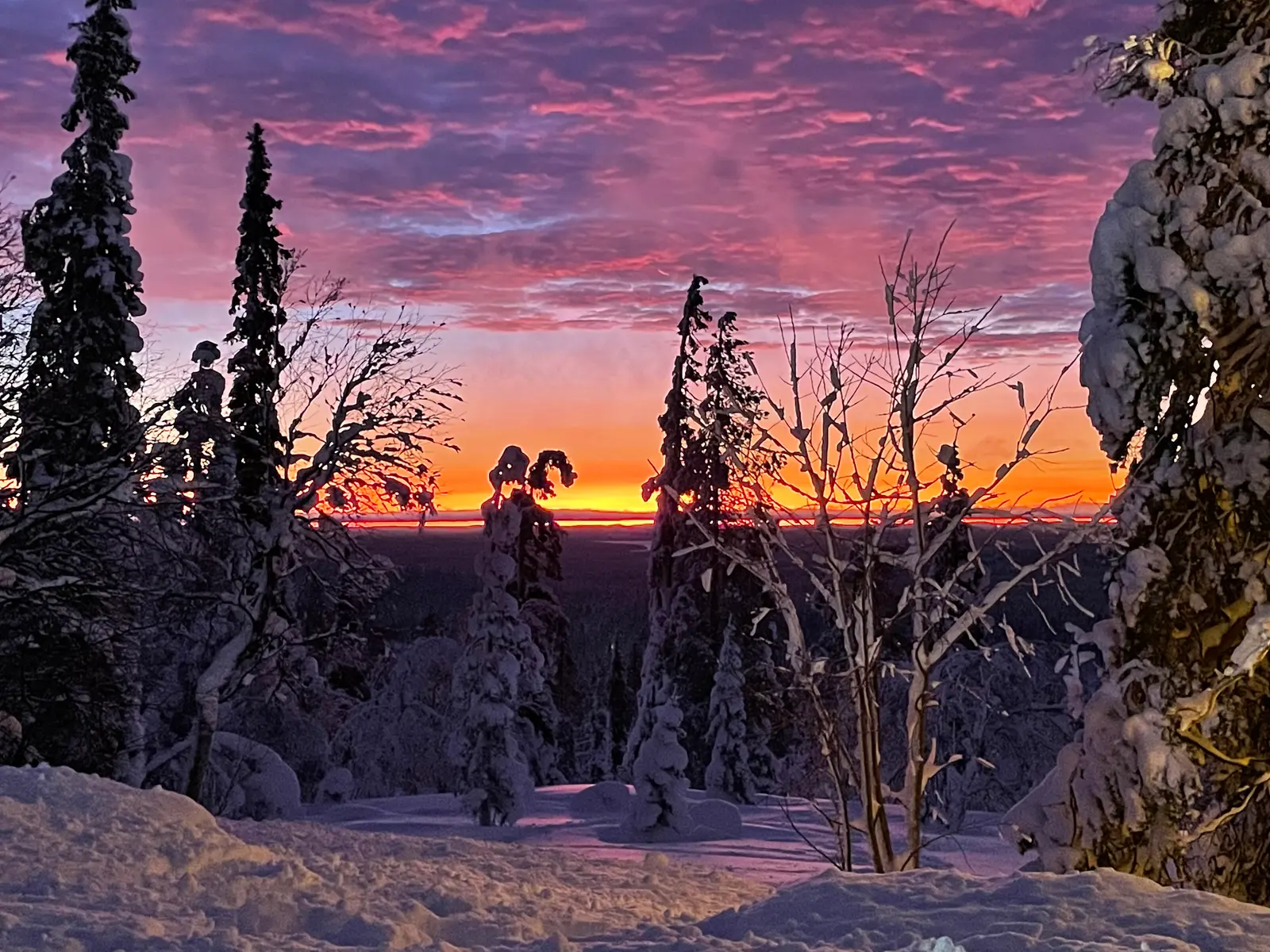
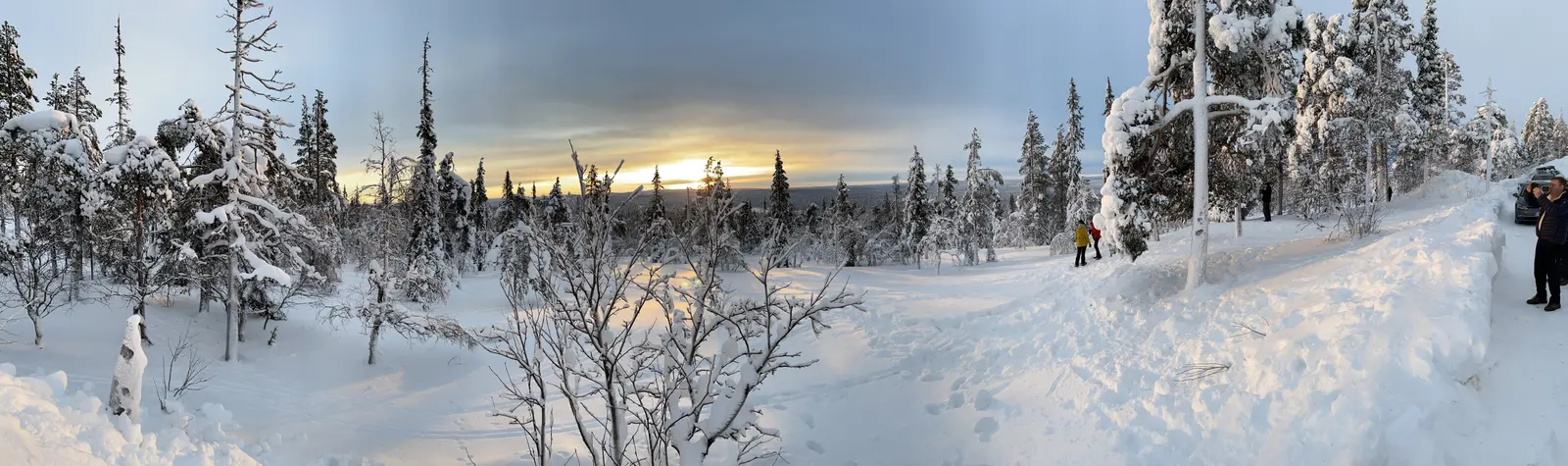
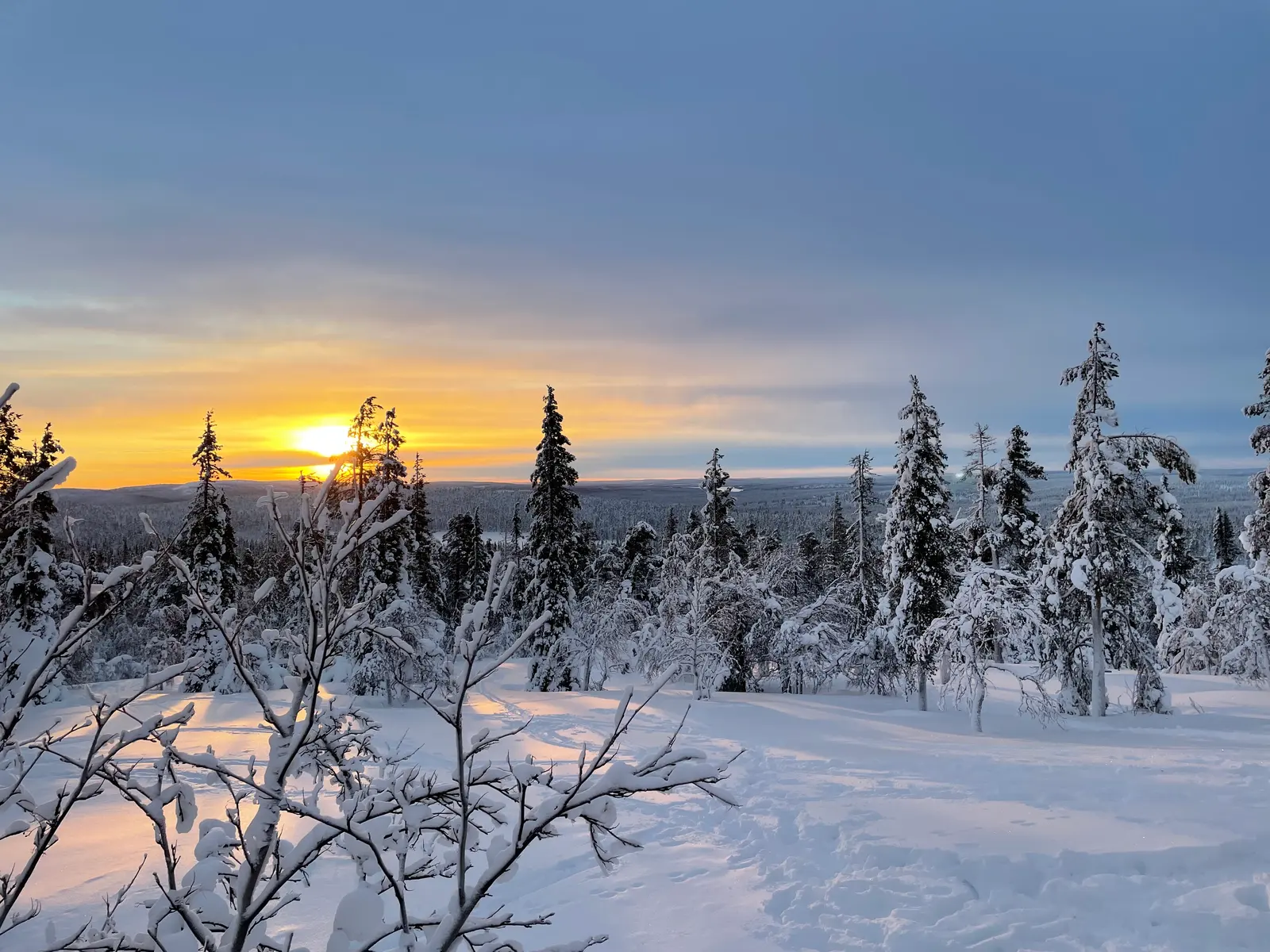
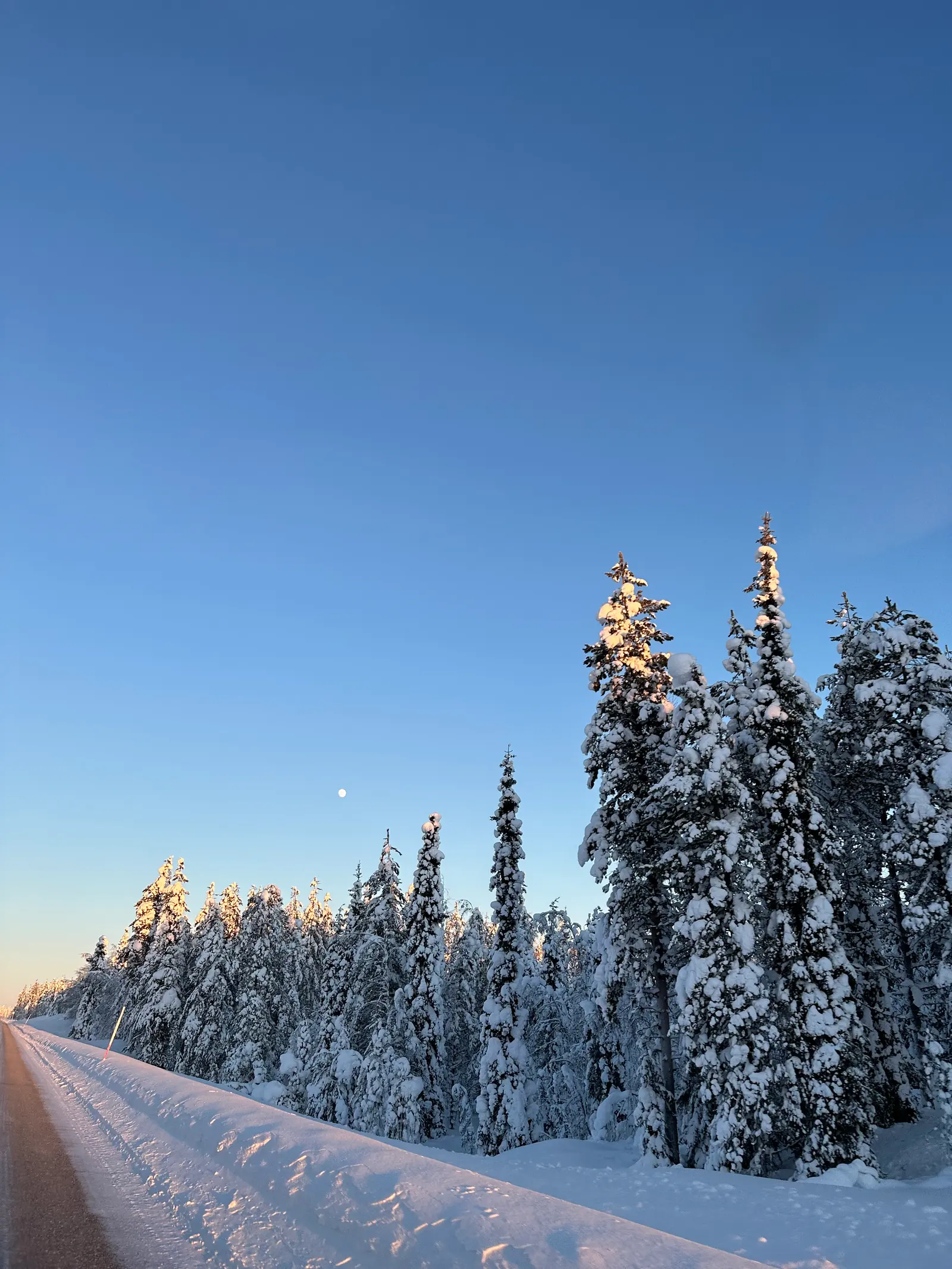
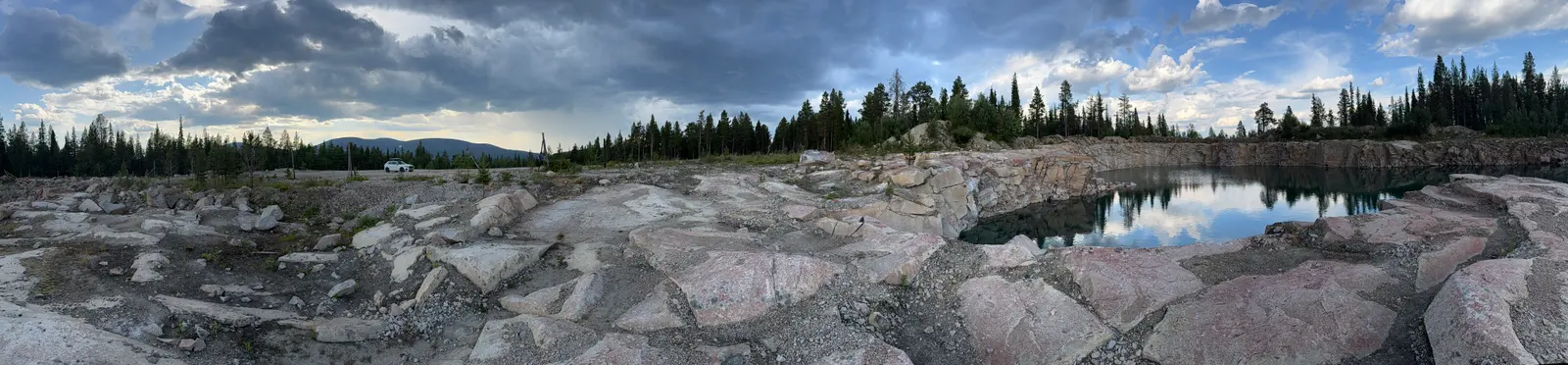
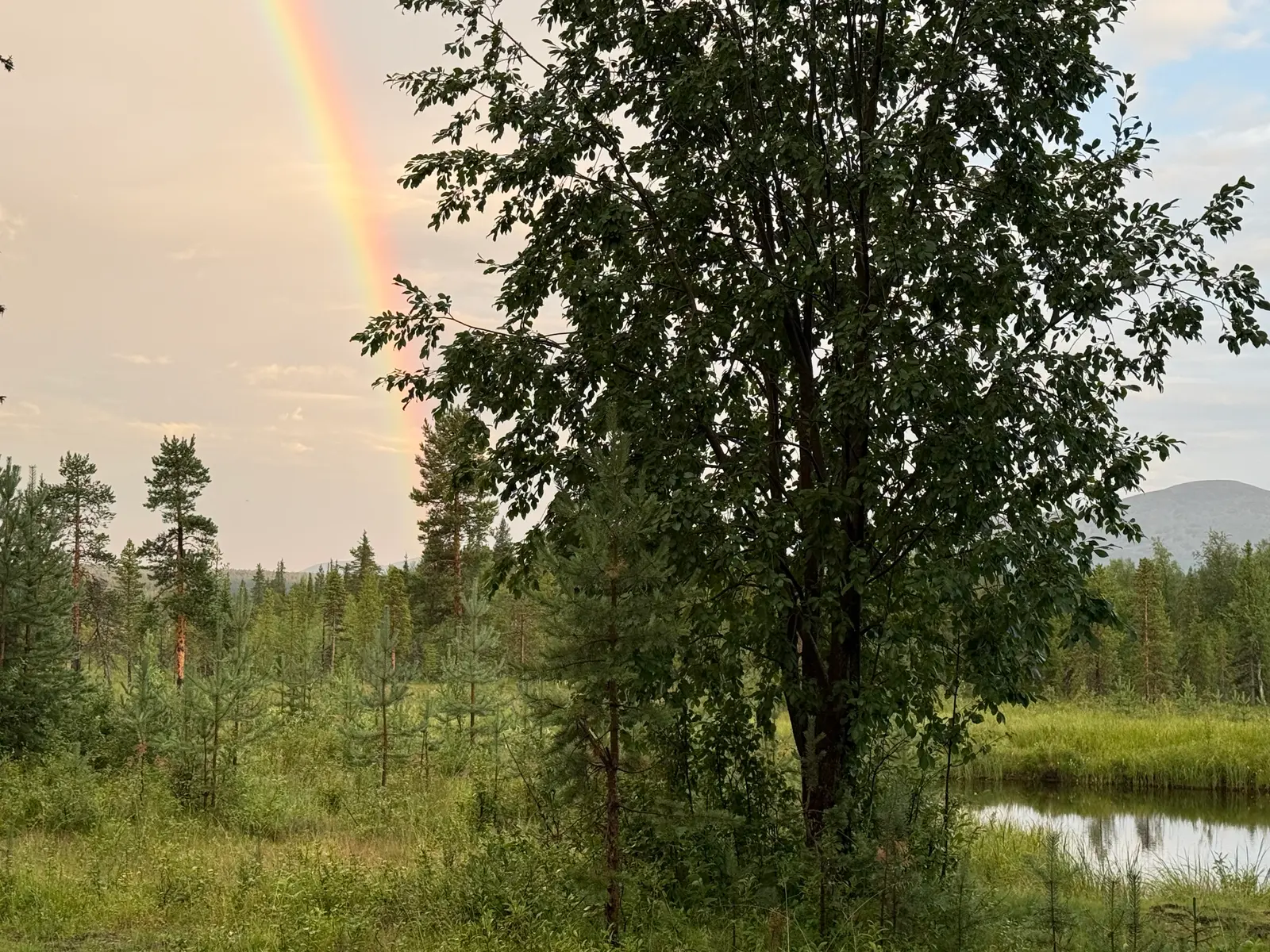
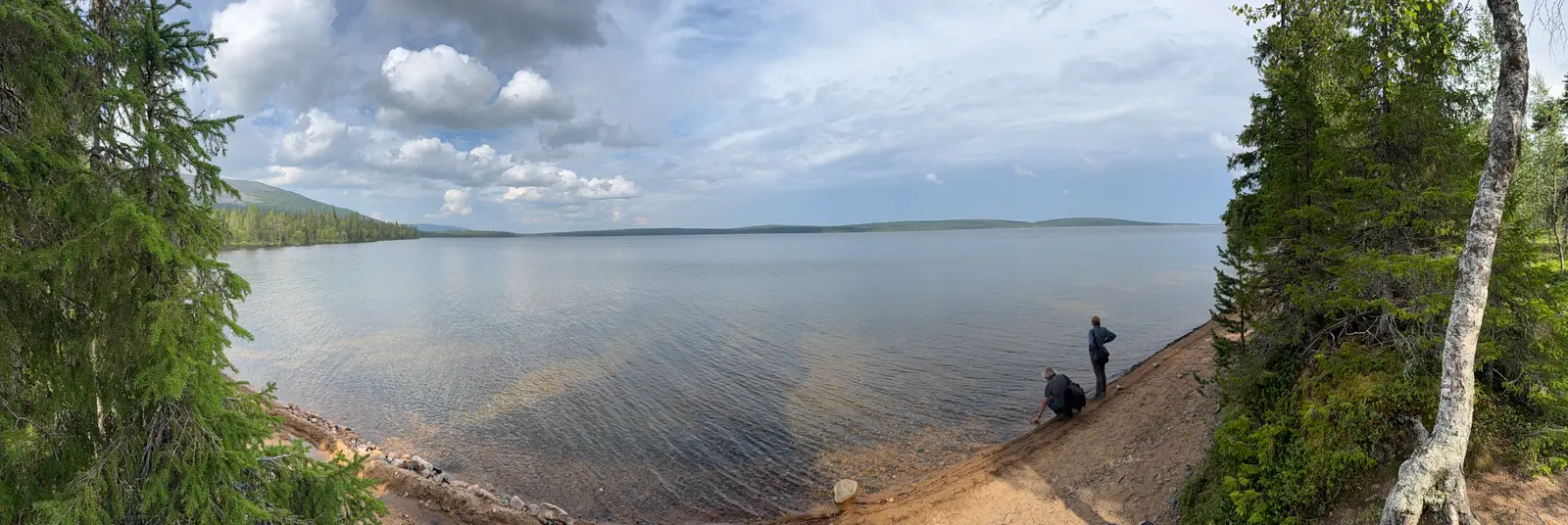
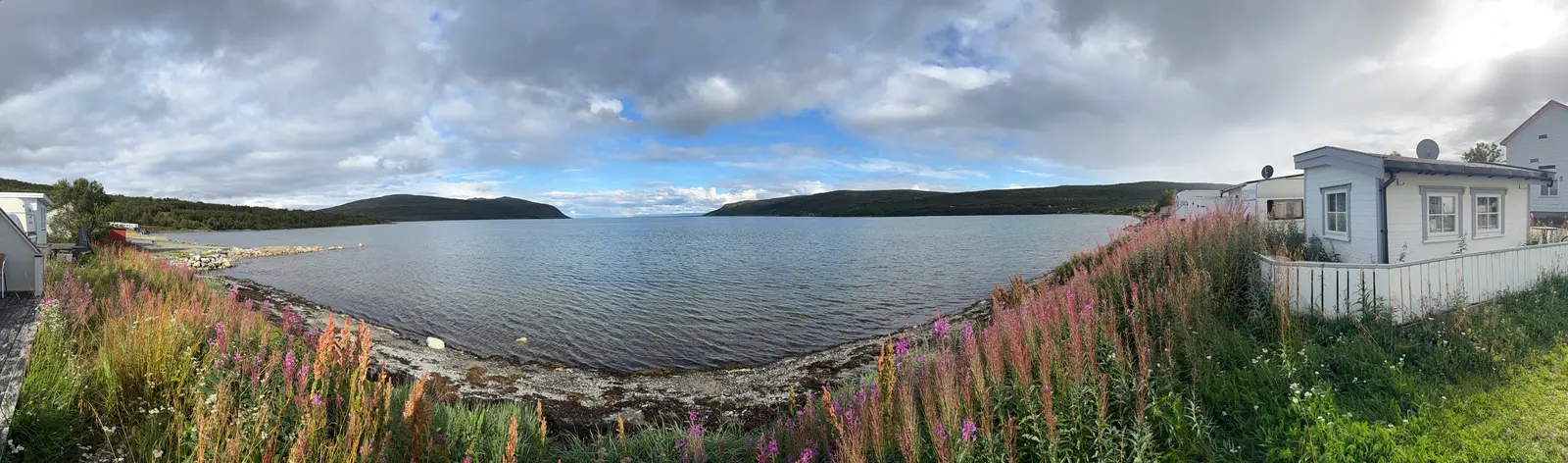
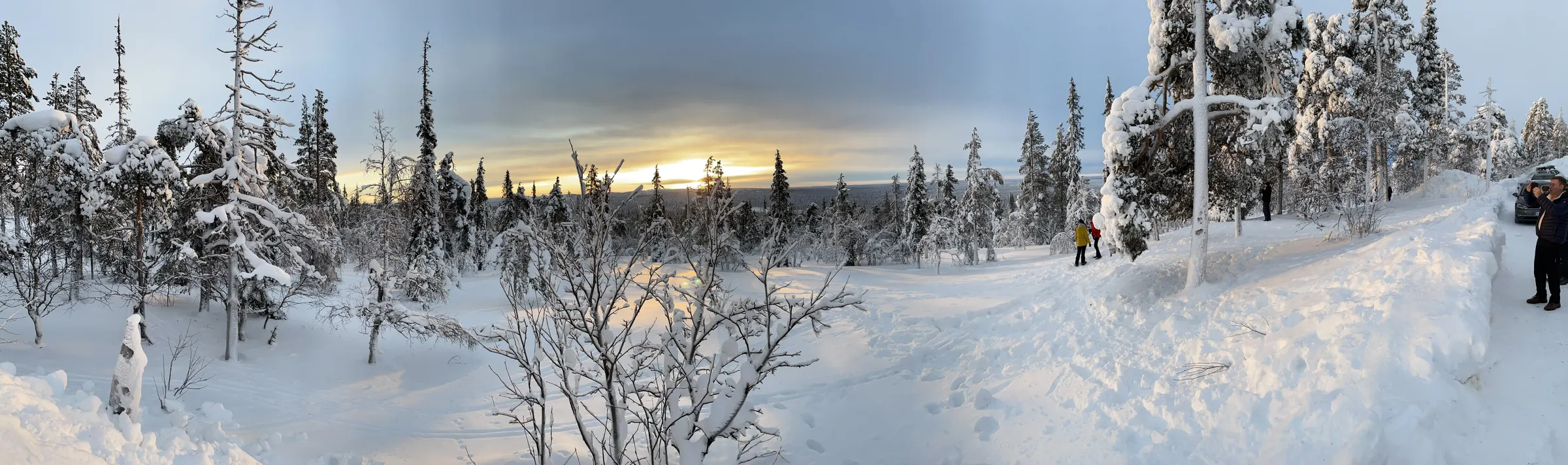
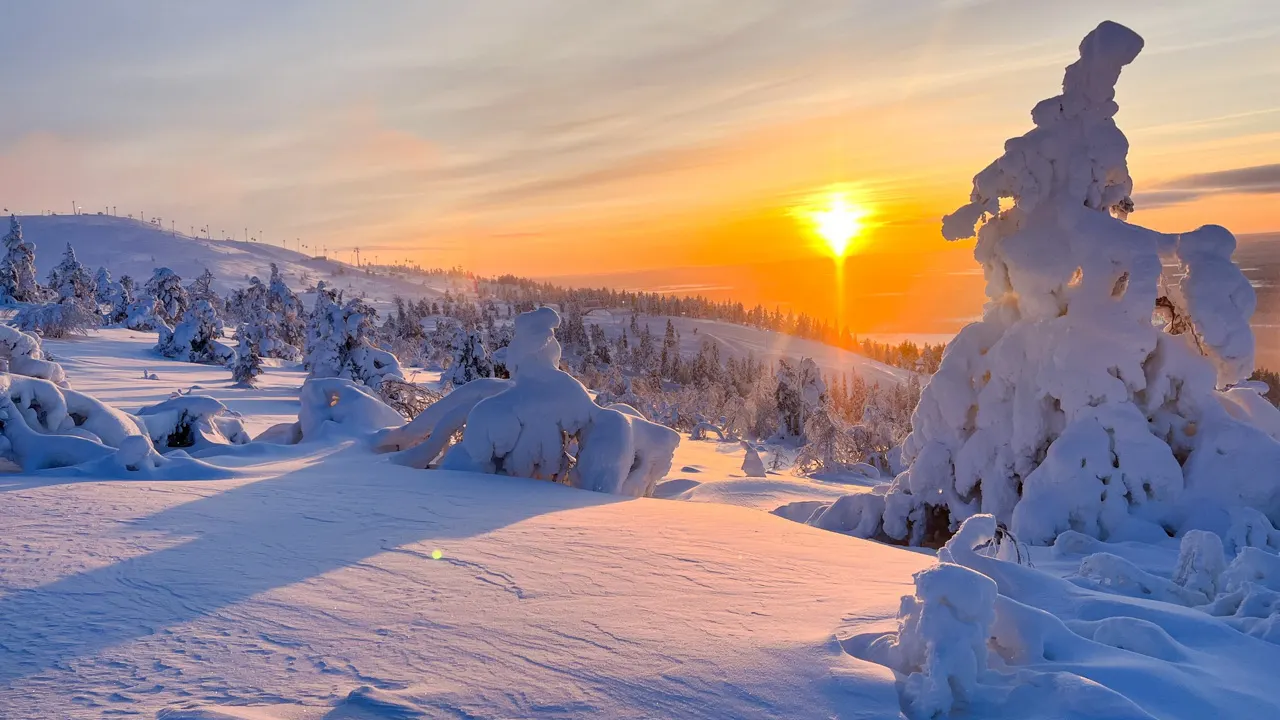
The western Lapland landscape is a reason to travel slowly, not a reason to rush between attractions. Photograph: Villa Lapland.
At Villa Lapland itself, the aim is to give guests a base for slower travel: a private place to return to after an excursion, or simply somewhere to enjoy a full day without needing to go anywhere. If that sounds like your kind of journey, read our independent Lapland trip guide and season-by-season guide.
Pyhä–Luosto and Ruka: compare the nearest transport hub
For Pyhä–Luosto, Rovaniemi and Kemijärvi can be useful arrival points depending on the exact destination and available services. Ruka is typically approached through Kuusamo. These are excellent regions for outdoor holidays, but the same rule applies: plan backwards from your accommodation and activities rather than choosing an airport first.
8. Small Things Worth Knowing Before You Go
Booking the cheapest flight without checking the final transfer. A low fare is not a bargain if reaching your accommodation costs significantly more or requires an inconvenient overnight stop. Compare door-to-door travel, not airport to airport.
Assuming every “Lapland cabin” is near a town. An address can be in a municipality that covers a very large area. Check the precise location and travel distances. Confirm grocery shops, restaurants and taxi availability before booking.
Planning a different region every day. Lapland looks surprisingly compact on a small map. Weather, road conditions and winding routes make repeated long day trips tiring. Explore one region thoroughly rather than trying to tick off every destination.
Trusting navigation times too literally in winter. An estimate may not include snow, reduced visibility, an animal on the road or a stop to clear the windscreen. Leave margin for travel to airport check-in, tours and rail departures.
Driving too fast because local drivers appear confident. People who use a route daily know its bends, maintenance patterns and potential hazards. That familiarity is not transferable. Choose a speed that is safe for your vehicle, visibility and experience.
Driving too slowly in the wrong place without allowing others to pass. If a line builds behind you, use a genuinely safe pull-off when available. Do not accelerate beyond your comfort zone or stop in an unsafe location just to accommodate another driver.
Ignoring cancellation conditions and rental insurance. Read what is covered, what excess applies, and how damage from stones, animals or underbody contact is treated. Photograph the car at pickup and return and follow the rental company's reporting procedures.
Assuming a rural taxi can be arranged immediately. Check availability and get a quote in advance. If you are travelling during Christmas week or need a very early flight connection, book especially carefully.
Leaving the car without proper winter clothing. Even a short drive should not be treated as an excuse to leave warm layers behind. If something goes wrong, waiting outside or in an unheated car can become uncomfortable quickly.
Trying to fit too much into a short stay. The northern lights are not scheduled, and heavy snow may change plans. Build flexibility into your trip. Sometimes the best answer is to stay where you are and enjoy the scenery outside your window.
9. Questions Before the Journey
Can I visit Lapland without renting a car?
Yes. A central stay in Rovaniemi or a major resort can work very well with public transport, pre-booked transfers and guided activities. Rural cabins require more planning, especially for groceries and day trips.
Do I need a four-wheel-drive vehicle in winter?
Not necessarily. Appropriate winter tyres, vehicle condition, route suitability and safe driving are more important. All-wheel drive may help traction in some situations but does not compensate for poor grip when braking.
Are roads in Finnish Lapland cleared of snow?
Major and many local roads are maintained in winter, but that does not mean you will see bare asphalt. Packed snow and ice can remain, and heavy snowfall can temporarily outpace maintenance.
Is it safe to drive during the polar night?
Driving is a normal part of life in the North, but visitors need to account for darkness, animals, ice and changing visibility. If you lack winter driving experience or feel uncomfortable, consider an organised transfer.
Which airport should I use for Pallas or Raattama?
Kittilä is usually the first airport to compare for the Pallas–Raattama region. However, flight schedules, fares and the practical onward connection matter more than the airport name alone.
Can I reach Villa Lapland without a car?
Yes, with an arranged transfer. If you intend to remain at the villa, organise food and any activities in advance. If you want to visit several towns, restaurants or distant trails independently, a rental car is usually more convenient.
Can I use an electric rental car in Lapland?
Yes, provided you plan for cold-weather range, the current charging network and the correct charger type. Confirm charging terms and equipment at your accommodation before choosing the car.
How much does a Lapland rental car cost?
There is no reliable universal daily price. Costs vary significantly by season, airport, vehicle category and rental terms. Compare live quotations for your dates and include fuel, insurance options and transfer alternatives.
Is public transport available every day?
Not necessarily on every rural route. Timetables differ by service, season, weekday and holiday. Use Matkahuolto and confirm the exact outward and return journeys before relying on a bus.
Do I have to buy studded tyres for Finland?
No. Finnish rules allow both appropriate studded and non-studded winter tyres. The general winter tyre requirement from November to March depends on weather and road conditions. Check the applicable requirements and rental-car equipment.
10. Leave Room for Wonder
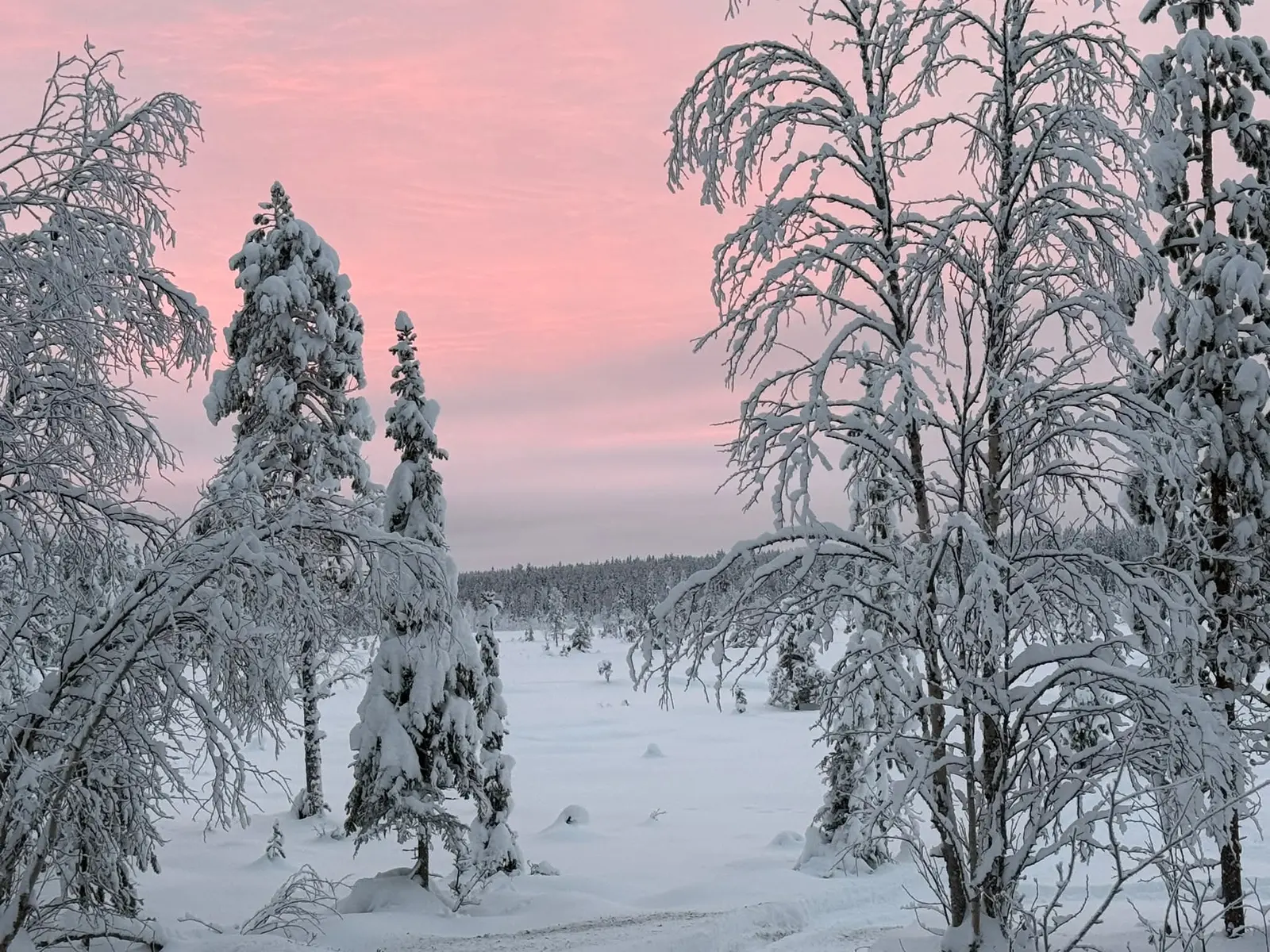
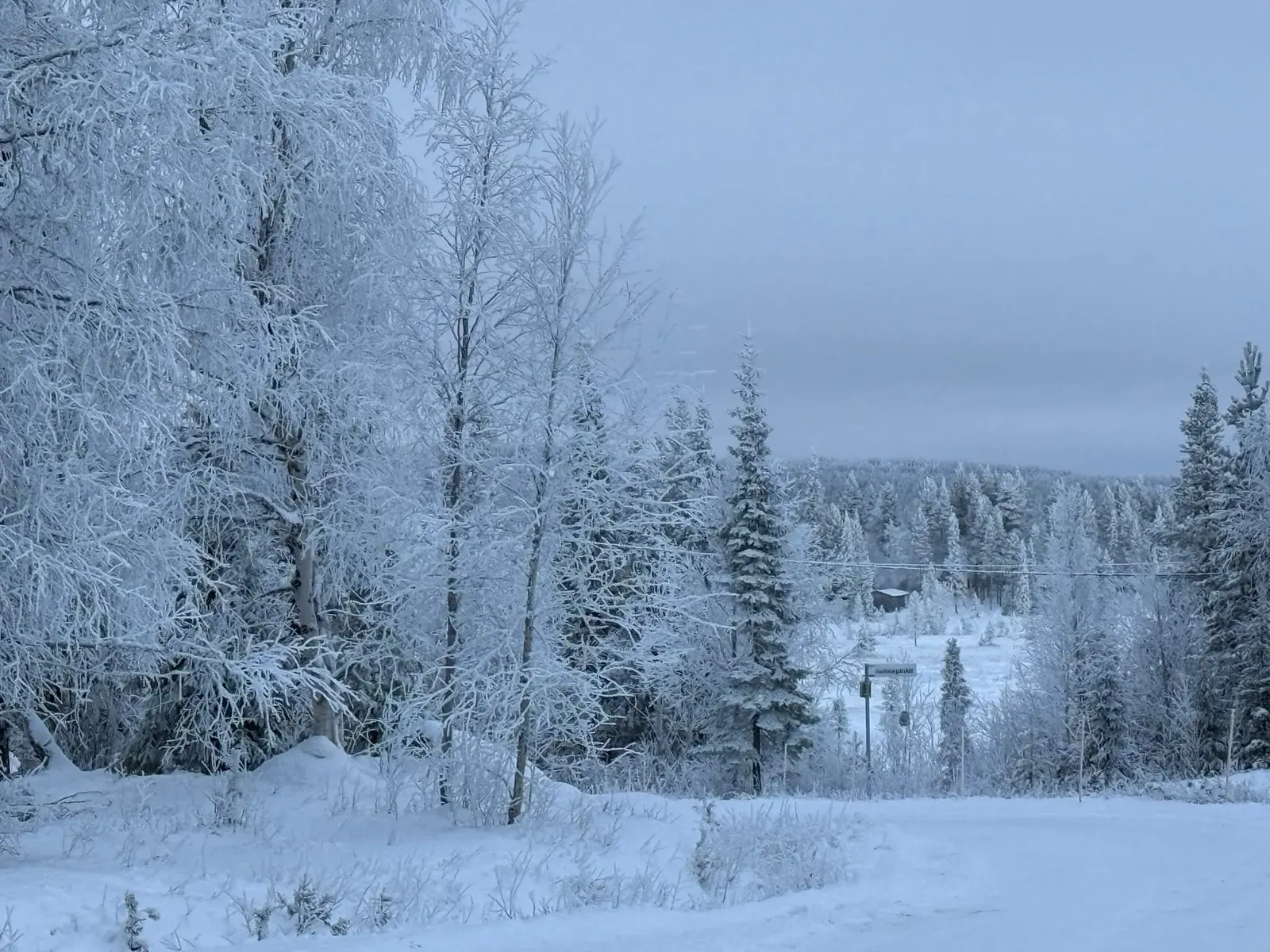
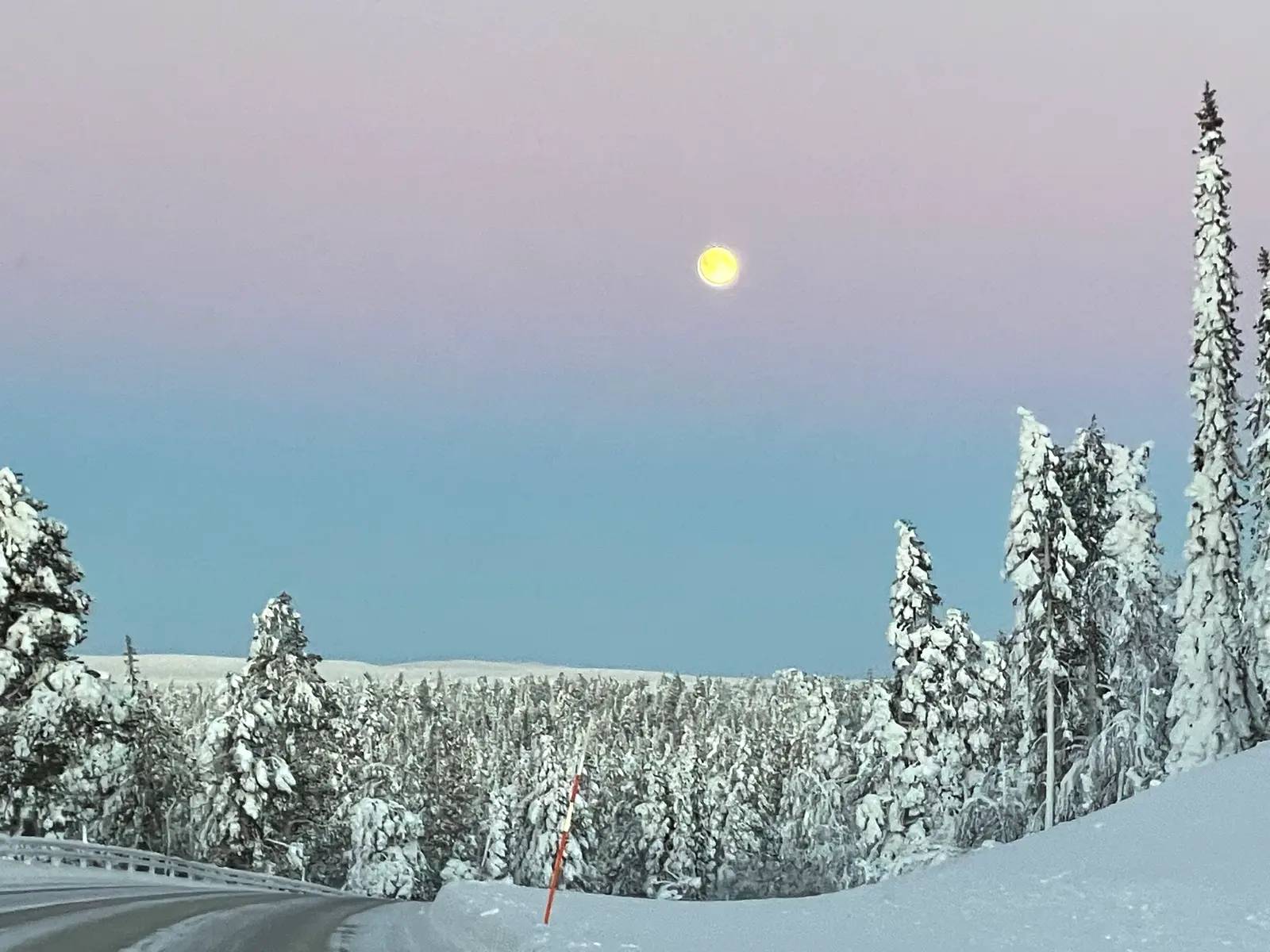
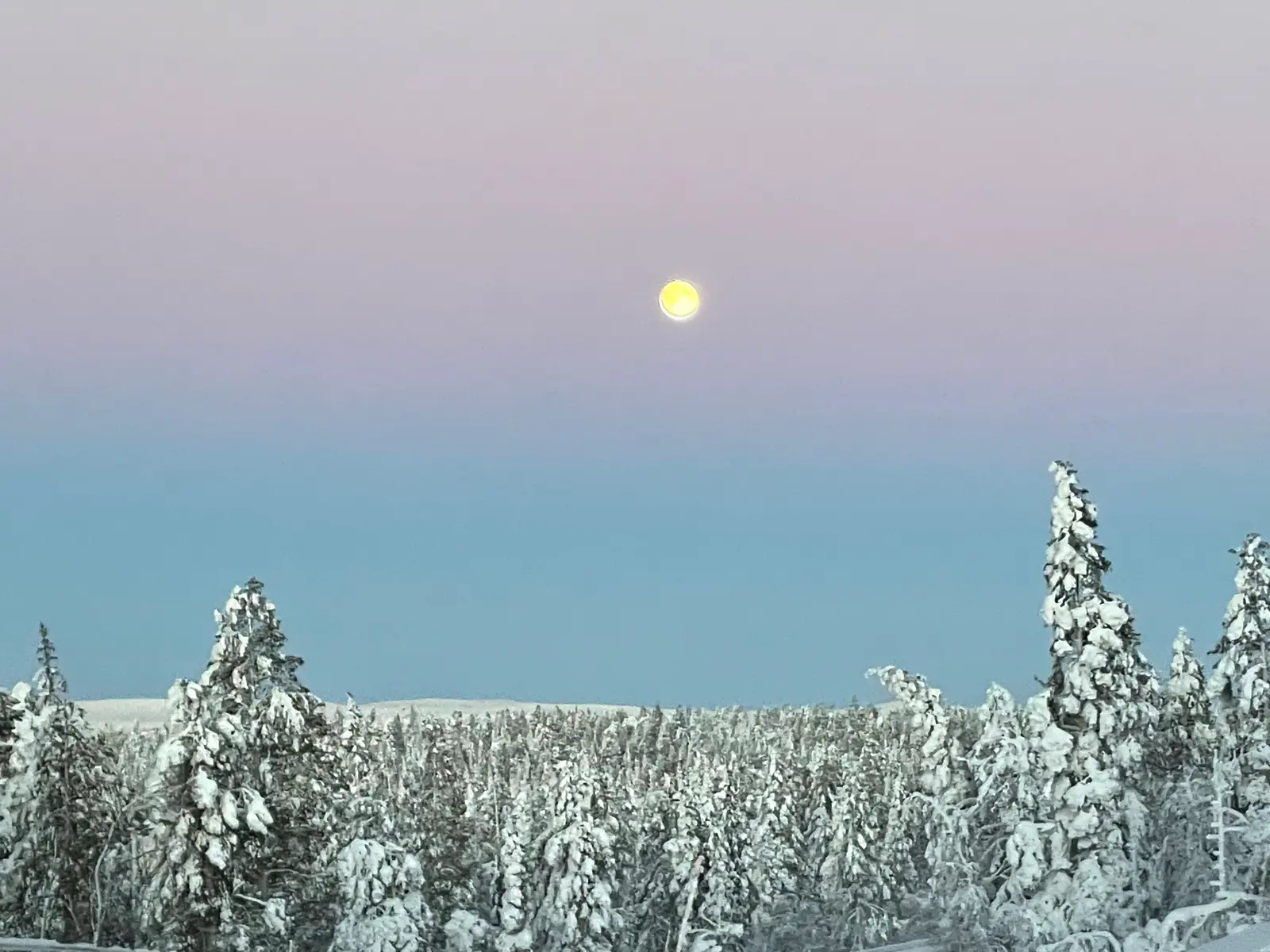
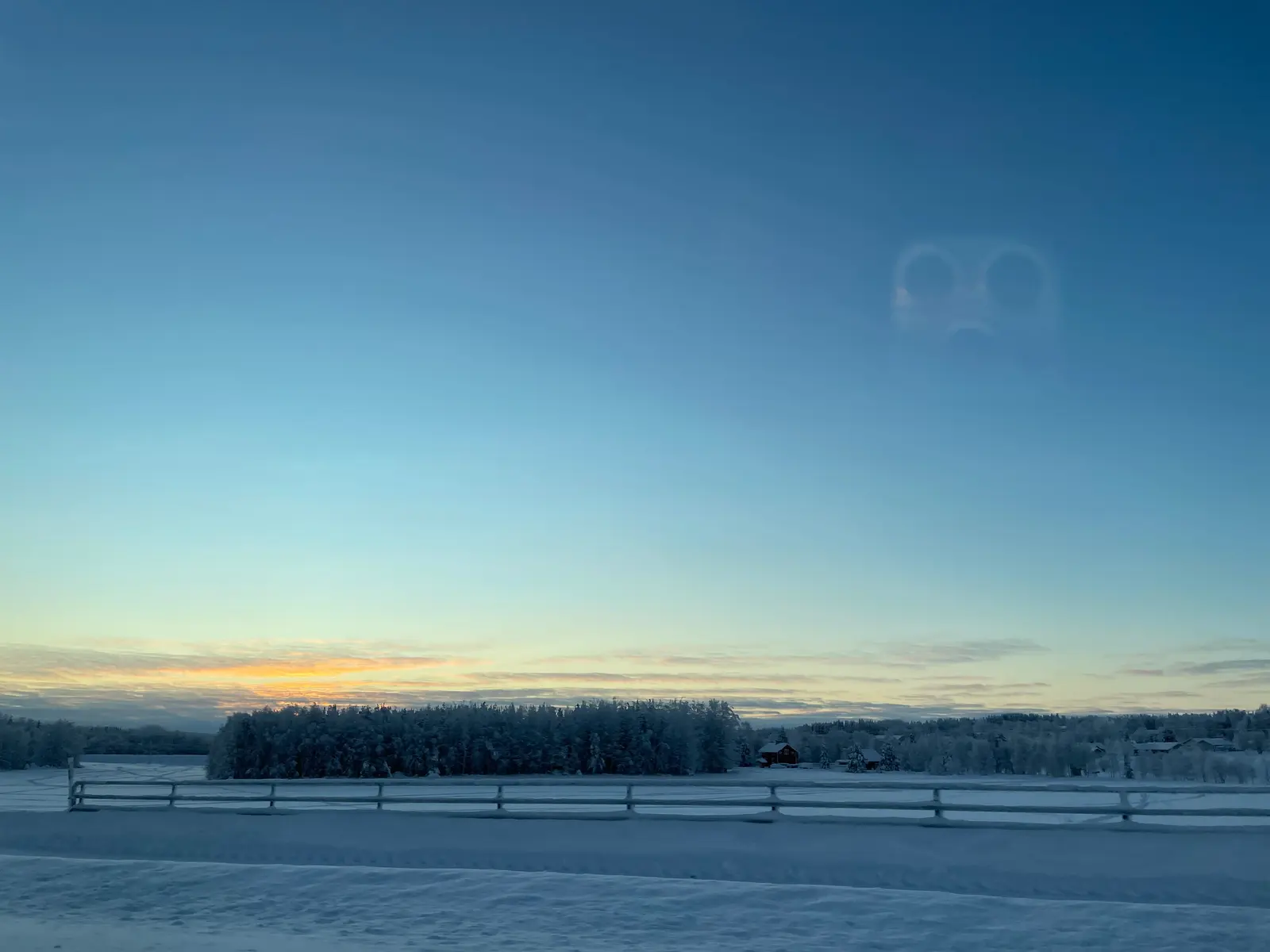
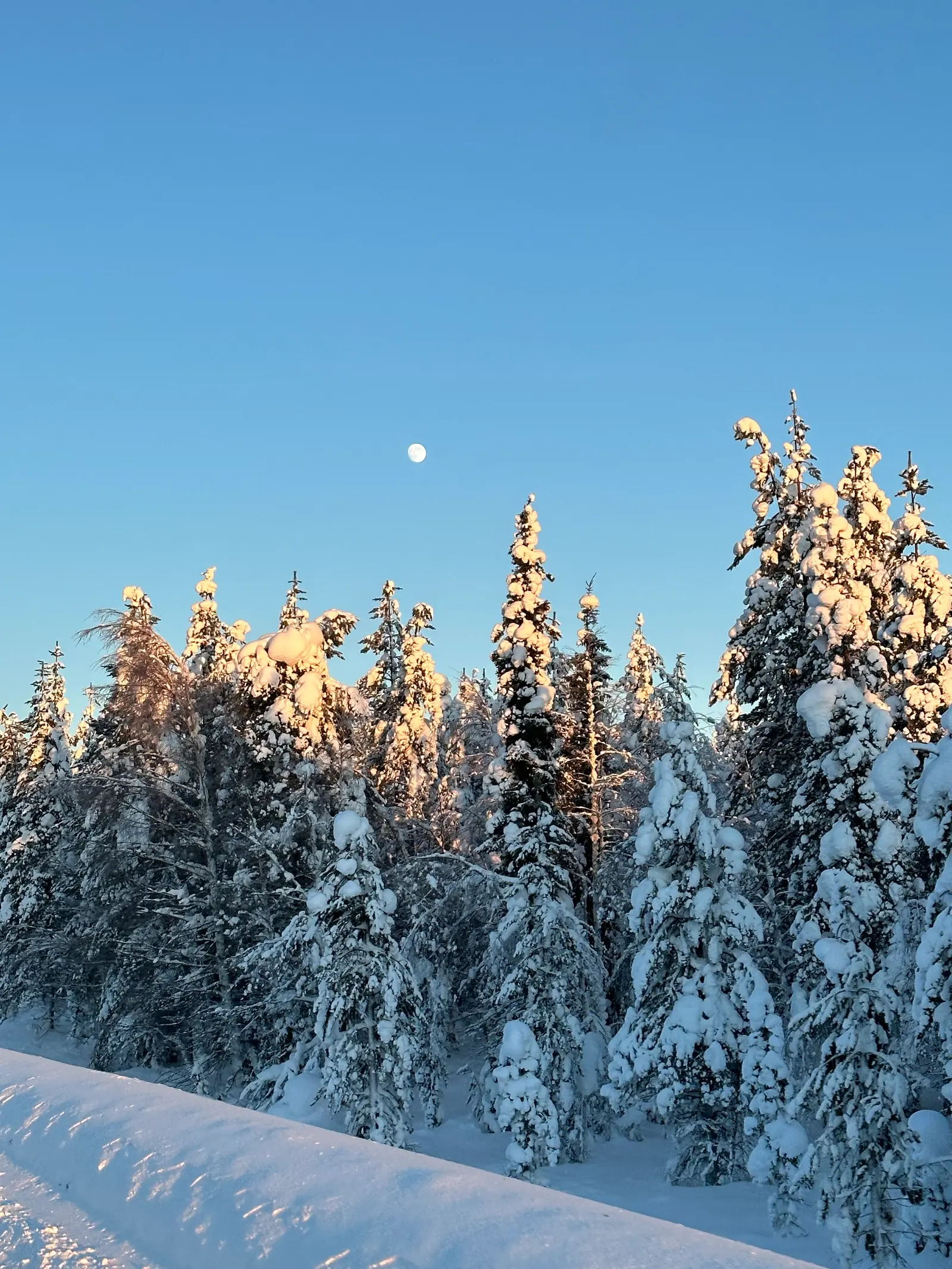
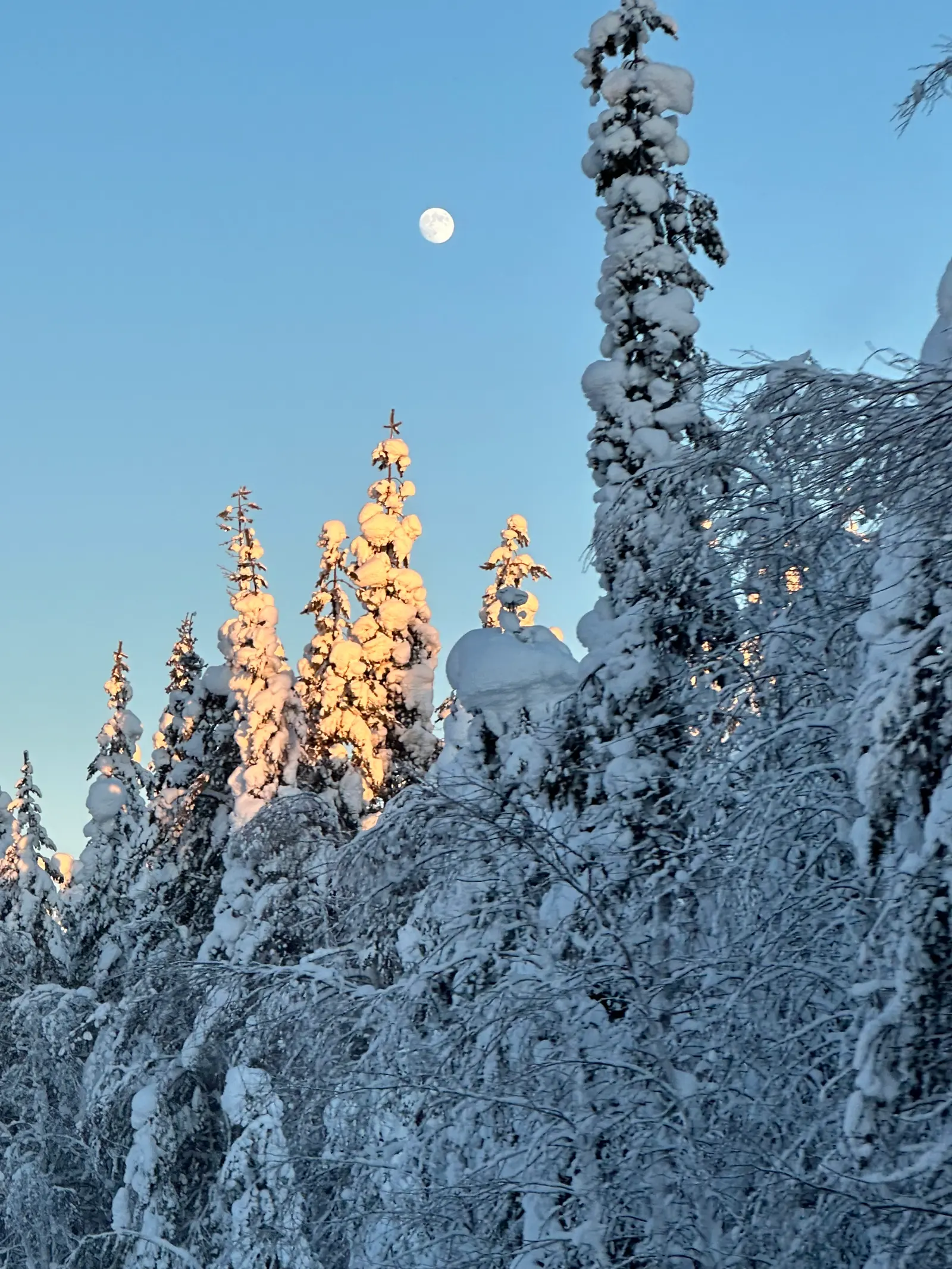
Some of the North’s most memorable moments are not destinations at all: a blue hour between the trees, the hush after fresh snow, the sudden movement of reindeer beyond the roadside. The fells have their own pace. There is no need to race them.
The best journey is not necessarily the one that covers the greatest distance. Choose a way of travelling that gives you time to notice where you are — whether that means a slow night train, a careful winter drive, or a whole day spent at your accommodation beneath an immense northern sky.
Neither way is inherently better. The best journey is the one that leaves you with time to enjoy the place.
Stay near Pallas–Yllästunturi National Park
Arrive. Unwind. Let the North Find You.
At Villa Lapland in Raattama, the landscape is never far away. Come by car to explore the Pallas region, or arrive with a pre-arranged transfer and let the days grow quiet. There is no itinerary you have to complete.
Editorial note: This is general travel guidance, not a transport booking service. All schedules, fares, pickup areas, vehicle availability and road conditions should be reconfirmed with the relevant provider. Updated November 2026.

 This link opens a real-time trail maintenance tracking system. The colors indicate when the trails were last maintained. You can also open the tracking system on your smartphone, which will show your location while skiing on the trail. This same tracking system has also been introduced in Levi and Ylläs as a paid service. Raattaman Reitit does not charge a fee for using the system. By purchasing a trail sticker and map, you support trail maintenance.
 Hommakierros
